Tell us about the job
Takes about a minute. No obligation.
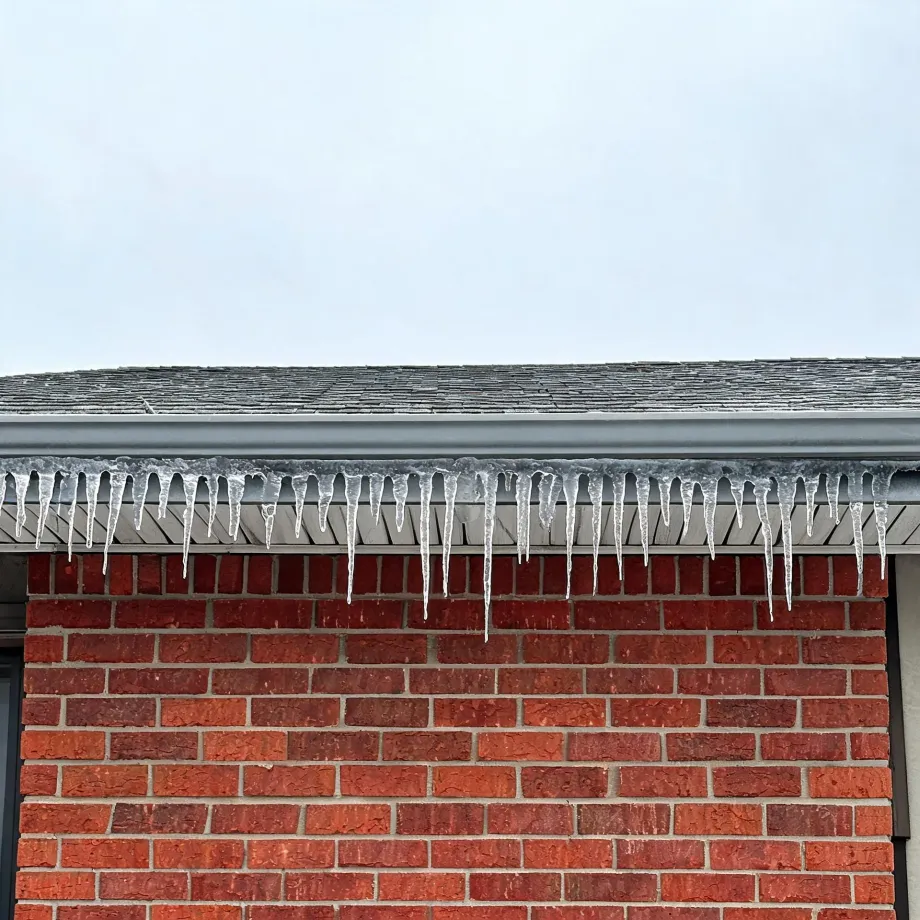
Sizing a heat pump for this county is not a generic calculation. A contractor has to work out the coldest outdoor temperatures the system will face and how far below its rated capacity it will fall on those nights, because backup heat is not optional here if the primary unit comes up short. Homes in Pulaski County, MO run heat about seven months a year, from October through April. The compressor carries that load across most of the calendar, which means an installation that cuts corners on load math shows the error in winter, when the unit runs long cycles and still cannot hold temperature.
Ductwork and electrical service are what a heat pump installation turns on, and in Pulaski County both are worth looking at before a unit is ever priced. Half the homes in Pulaski County, Missouri were built in 1994 or earlier (2020-2024 ACS 5-year). Houses built by then were wired for smaller loads, and a heat pump draws more current than whatever the original system pulled. A contractor checking the service panel first is not being cautious for its own sake; if the panel cannot carry the new load, that gets resolved before any equipment decision is final.
What a Heat Pump Installation Covers
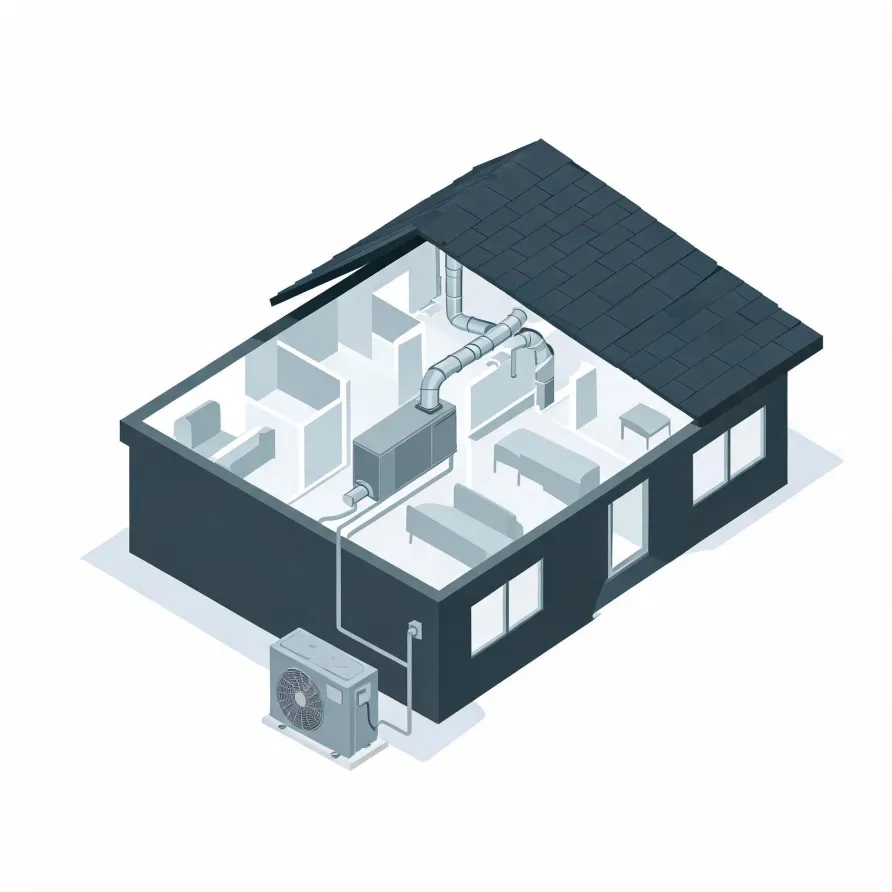
The outdoor unit is the piece a homeowner sees first, sitting on a pad beside the house, and it holds the compressor and the coil that exchange heat with the outside air. Inside, the air handler mounts in a utility space, closet, or attic and pushes conditioned air through the home.
A refrigerant line set runs between the two units, connecting them through a small penetration in the wall. A thermostat goes on an interior wall where it can read the home's temperature and signal the system to run.
The drawing shows a typical layout, and a licensed contractor determines exactly what applies to your house.
Find a contractor in Pulaski CountyPulaski County, by the numbers
115 severe weather events were recorded in Pulaski County, Missouri between 2015 and 2024.
NOAA National Centers for Environmental Information, Storm Events Database, bulk CSV export, events 2015-01-01 through 2024-12-31.Half the homes in Pulaski County, Missouri were built in 1994 or earlier (2020-2024 ACS 5-year).
U.S. Census Bureau, 2020-2024 American Community Survey 5-Year EstimatesPulaski County, Missouri holds 19,431 housing units (2020-2024 ACS 5-year).
U.S. Census Bureau, 2020-2024 American Community Survey 5-Year EstimatesOwners occupy 61.2% of the occupied homes in Pulaski County, Missouri (2020-2024 ACS 5-year).
U.S. Census Bureau, 2020-2024 American Community Survey 5-Year EstimatesSevere Weather Events in Pulaski County
Weather in this part of Missouri puts real demands on heating and cooling equipment, and those demands shape what a heat pump here needs to handle over its working life. How hard a system runs, how long it lasts, and what capacity makes sense for a home are all local questions, and the pattern of severe weather in Pulaski County is part of that local picture.
115 severe weather events, 2015–2024. Source: NOAA National Centers for Environmental Information, Storm Events Database.