Tell us about the job
Takes about a minute. No obligation.
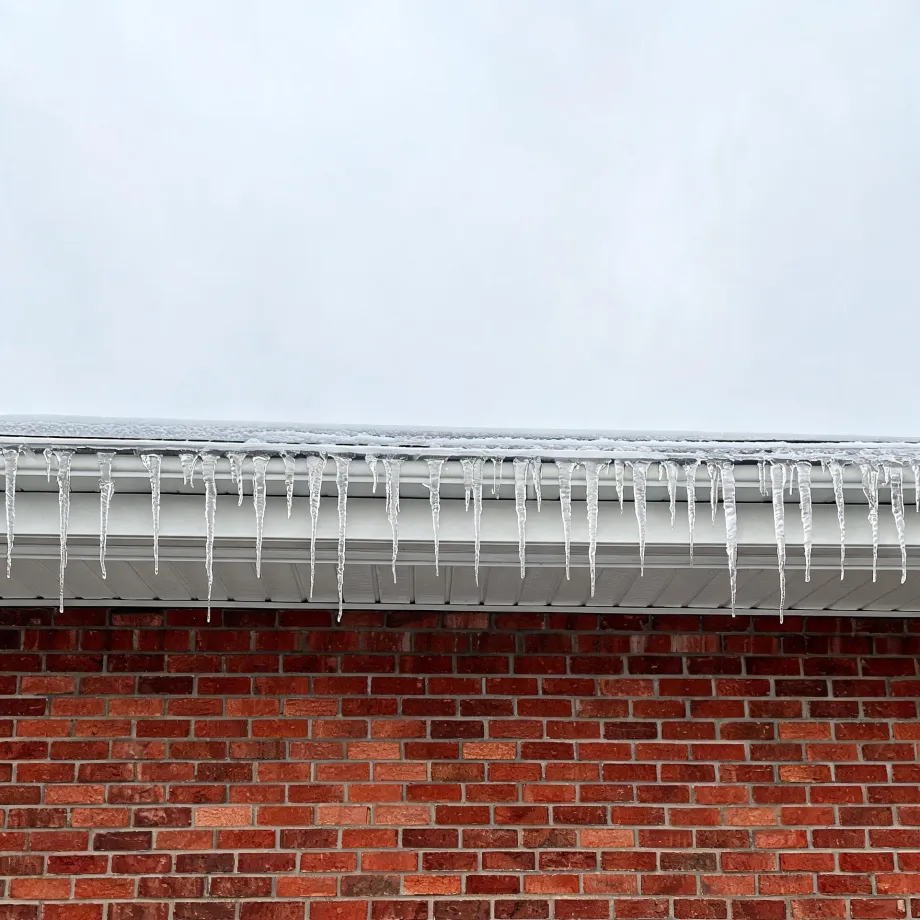
Sizing a heat pump for Phelps County means working out what the equipment can deliver on the coldest nights, not just what it delivers at mild outdoor temperatures. Homes in Phelps County, MO run heat about seven months a year, from October through April. A heat pump's output drops as temperatures fall, so the gap between what the unit can produce and what the house needs grows widest exactly when the heating load peaks. A contractor has to establish that gap before they can specify backup heat correctly. Undersize the backup and the house falls short; oversize the primary unit and the compressor cycles inefficiently through the shoulder months when the load is light.
Ductwork laid out for a furnace and a window unit does not automatically carry a heat pump's airflow requirements. A contractor quoting a heat pump installation in Phelps County has to assess what is already in the walls and crawlspaces, not just what goes in the equipment bay. Half the homes in Phelps County, Missouri were built in 1984 or earlier (2020-2024 ACS 5-year). That spread across the housing stock means a meaningful share of houses were ducted for something fundamentally different from what a heat pump delivers, and the electrical service may have been sized to match. The duct layout, the return air paths, and the panel capacity are what the quote actually turns on.
What Goes Into a Heat Pump Installation
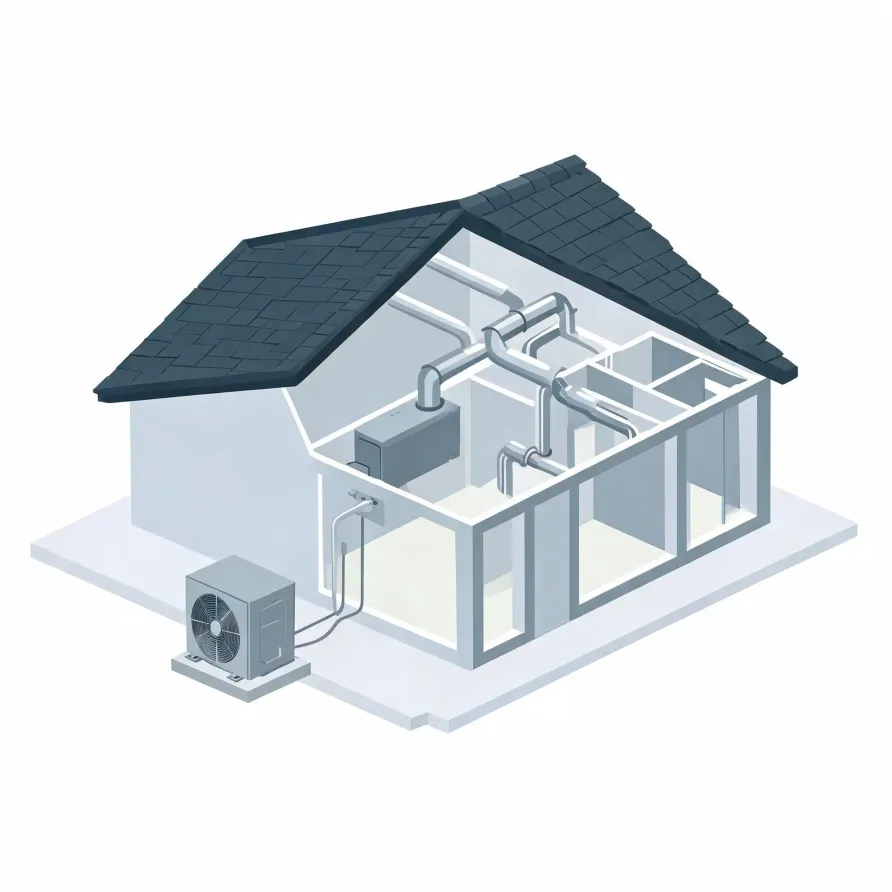
The outdoor unit sits on a pad beside the house and holds the compressor and the condenser coil, which together handle the transfer of heat between the refrigerant and the outside air. Inside, the air handler mounts in a utility space, basement, or closet and pushes conditioned air through the home. These two units are the core of what a contractor places and connects.
A refrigerant line set runs between the outdoor unit and the air handler, carrying refrigerant back and forth through insulated copper tubing. A thermostat mounts on an interior wall and gives the homeowner control over the system. The condensate drain line runs from the air handler to a floor drain or outside, carrying away any moisture the system pulls from the air.
The drawing shows a typical layout, and a licensed contractor determines exactly what applies to your house.
Find a contractor in Phelps CountyPhelps County by the numbers
130 severe weather events were recorded in Phelps County, Missouri between 2015 and 2024.
NOAA National Centers for Environmental Information, Storm Events Database, bulk CSV export, events 2015-01-01 through 2024-12-31.Half the homes in Phelps County, Missouri were built in 1984 or earlier (2020-2024 ACS 5-year).
U.S. Census Bureau, 2020-2024 American Community Survey 5-Year EstimatesPhelps County, Missouri holds 20,295 housing units (2020-2024 ACS 5-year).
U.S. Census Bureau, 2020-2024 American Community Survey 5-Year EstimatesOwners occupy 61.7% of the occupied homes in Phelps County, Missouri (2020-2024 ACS 5-year).
U.S. Census Bureau, 2020-2024 American Community Survey 5-Year EstimatesSevere Weather Events in Phelps County
Weather puts a measurable load on heating and cooling equipment, and that load varies by where you live. A heat pump sized and installed for local conditions handles it differently than one spec'd for somewhere else.
130 severe weather events, 2015–2024. Source: NOAA National Centers for Environmental Information, Storm Events Database.