Tell us about the job
Takes about a minute. No obligation.
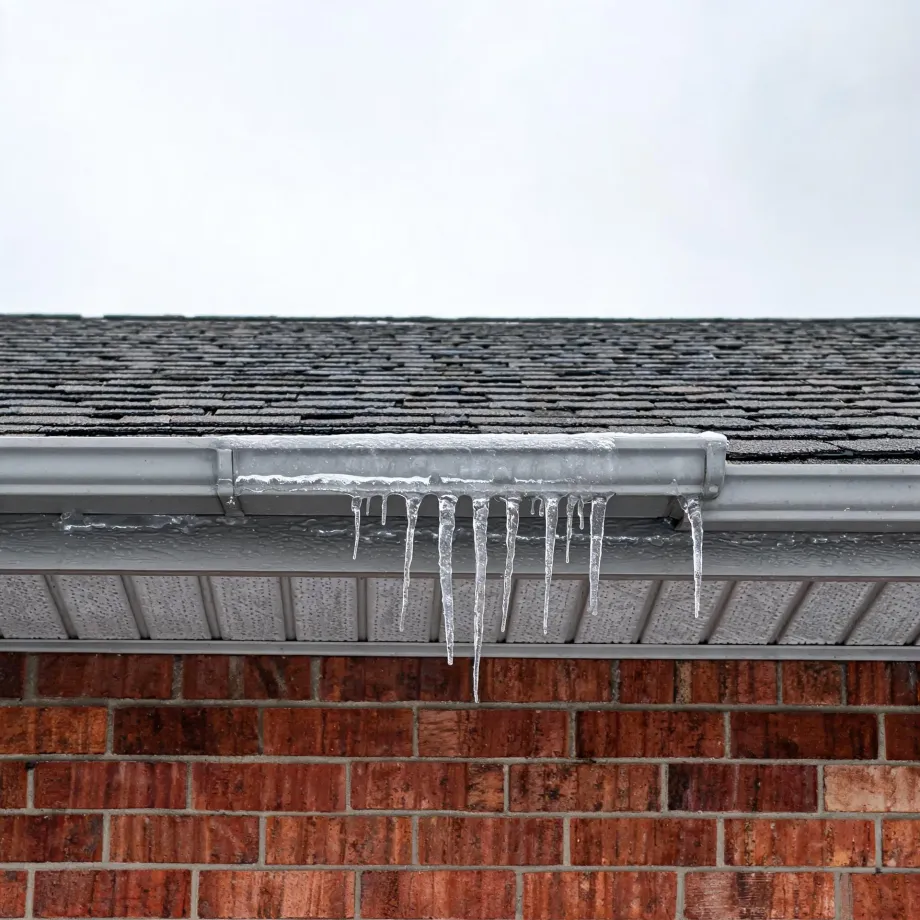
Sizing a heat pump for Maries County starts with a load calculation, not a guess at the next unit up. Homes in Maries County, MO run heat about seven months a year, from October through April. A system that is undersized runs harder as outdoor temperatures fall, and in a county with this kind of heating demand, the compressor spends months near the edge of its rated capacity rather than cycling comfortably through short runs. That gap between what the unit can deliver and what the house needs on the hardest days is what a contractor has to close before the install, not after. Back-up heat is part of that answer, and a contractor will size it to the same load.
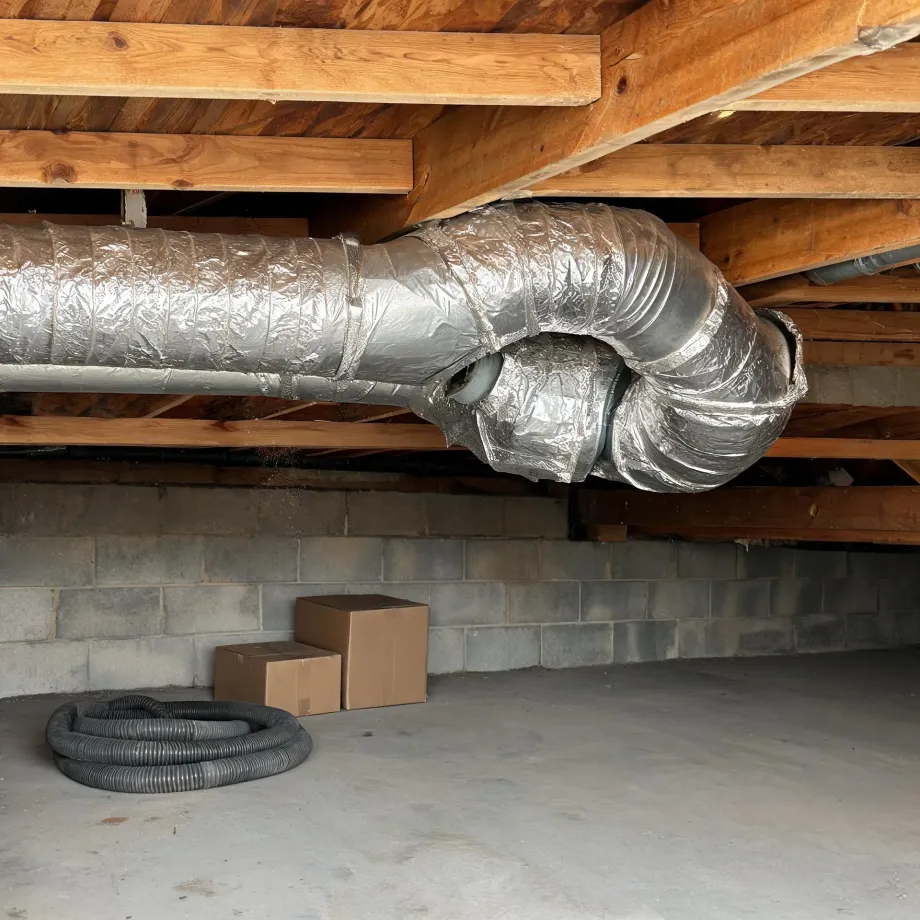
Ductwork laid out for an older forced-air system was sized and routed for that system's pressure and airflow, and a heat pump does not necessarily share those requirements. Half the homes in Maries County, Missouri were built in 1985 or earlier (2020-2024 ACS 5-year). A contractor installing a heat pump in this county opens register runs, checks trunk dimensions, and finds out whether the existing layout will carry the new load before the equipment selection means much. Where it will not, the duct work becomes the real scope of the job.
What a Heat Pump Installation Covers
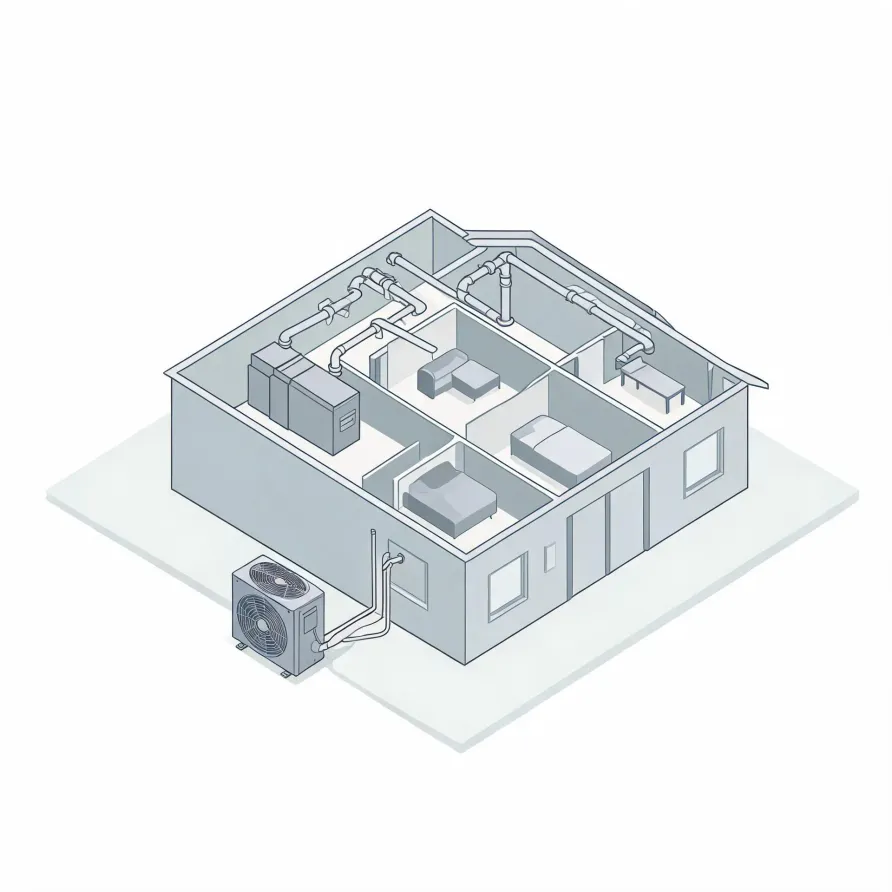
The outdoor unit sits on a pad beside the house and holds the compressor and coil that do the core work of moving heat. Inside, an air handler mounts in a utility space, basement, or closet and pushes conditioned air through the home. Together these two units are what a new installation puts in place.
A refrigerant line set runs between the outdoor unit and the air handler, connecting the two halves of the system. A thermostat goes on an interior wall where it reads the living space and tells the system when to run. Both pieces are part of what a contractor installs alongside the main equipment.
The drawing shows a typical layout, and a licensed contractor determines what applies to your specific house.
Find a contractor in Maries CountyMaries County, by the numbers
48 severe weather events were recorded in Maries County, Missouri between 2015 and 2024.
NOAA National Centers for Environmental Information, Storm Events Database, bulk CSV export, events 2015-01-01 through 2024-12-31.Half the homes in Maries County, Missouri were built in 1985 or earlier (2020-2024 ACS 5-year).
U.S. Census Bureau, 2020-2024 American Community Survey 5-Year EstimatesMaries County, Missouri holds 4,261 housing units (2020-2024 ACS 5-year).
U.S. Census Bureau, 2020-2024 American Community Survey 5-Year EstimatesOwners occupy 78.3% of the occupied homes in Maries County, Missouri (2020-2024 ACS 5-year).
U.S. Census Bureau, 2020-2024 American Community Survey 5-Year EstimatesWeather Stress on HVAC Equipment in Maries County
Heating and cooling loads in Missouri shift with the weather, and equipment sized or installed without accounting for local conditions works harder than it should. What happens in Maries County shapes what a heat pump is asked to do year after year.
48 severe weather events, 2015–2024. Source: NOAA National Centers for Environmental Information, Storm Events Database.