Tell us about the job
Takes about a minute. No obligation.
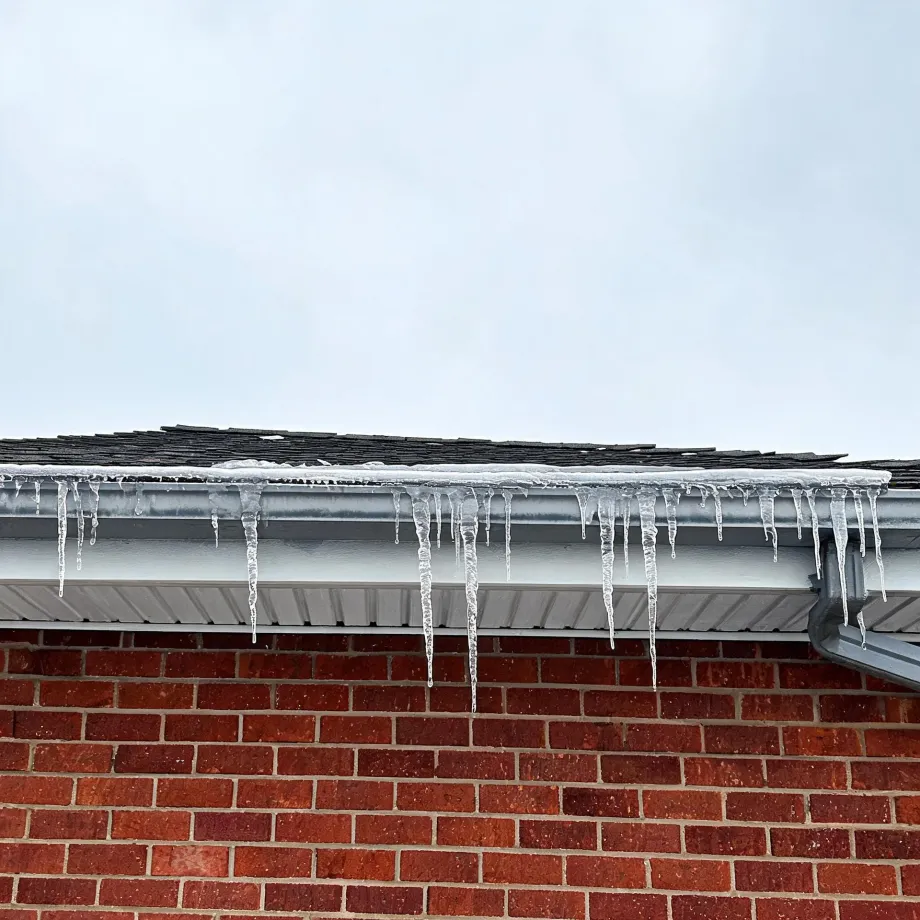
Sizing a heat pump for this area starts with the heating load, not the cooling one. Homes in Camden County, MO run heat about seven months a year, from October through April. Outdoor temperatures in a Missouri winter push a heat pump toward the bottom of its operating range, where capacity drops and the system has to work harder to hold the setpoint. A contractor who does not account for that when pulling a load calculation will spec a unit that runs the backup strip longer than it should, driving up operating costs from the first cold snap. The refrigerant circuit, the reversing valve, and the defrost controls all carry the weight of that heating demand.
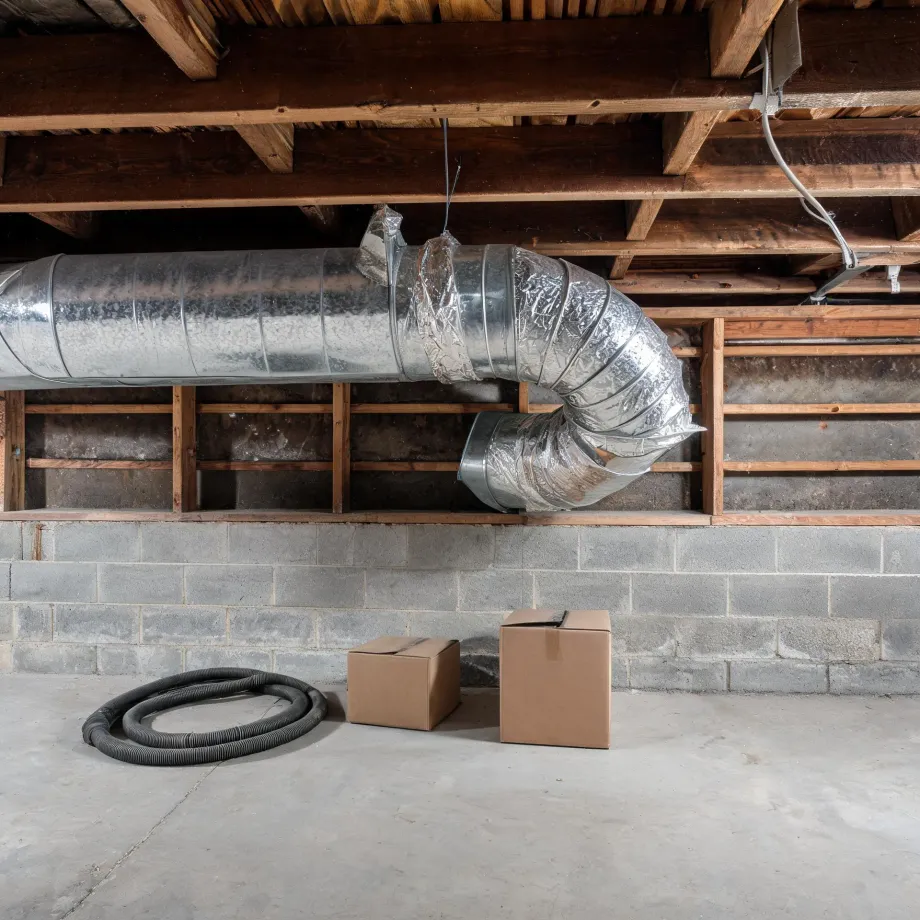
Existing ductwork is where a heat pump installation in Camden County gets decided. Half the homes in Camden County, Missouri were built in 1988 or earlier (2020-2024 ACS 5-year). Houses built to that point were ducted for furnace-based systems, which move air differently than a heat pump does, and a contractor has to measure what is already in the walls before a quote means anything. If the duct sizing is wrong for the new unit's airflow, the electrical panel comes second in line, not first.
What a Heat Pump Installation Covers
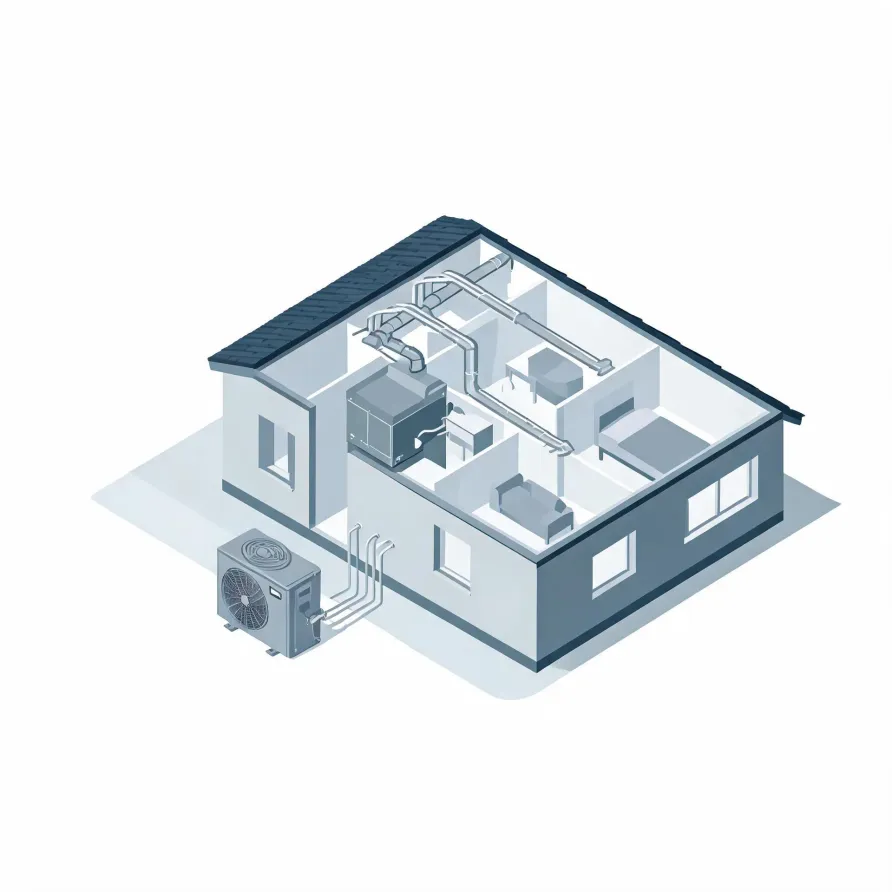
The outdoor unit sits on a pad beside the house and holds the compressor and the condenser coil, which together move heat between the refrigerant and the outside air. The indoor air handler mounts in a utility space, closet, or attic and pushes conditioned air through the home. Both units are what a contractor sets in place during an installation.
A refrigerant line set runs between the two units, carrying refrigerant back and forth through insulated copper tubing. A thermostat goes on an interior wall and gives the homeowner control over the system. The contractor also connects a condensate drain line from the air handler to carry away moisture the unit pulls from the air.
The drawing shows the typical layout of these components, and a licensed contractor determines exactly how each one applies to your house.
Find a contractor in Camden CountyCamden County, Missouri, by the numbers
142 severe weather events were recorded in Camden County, Missouri between 2015 and 2024.
NOAA National Centers for Environmental Information, Storm Events Database, bulk CSV export, events 2015-01-01 through 2024-12-31.Half the homes in Camden County, Missouri were built in 1988 or earlier (2020-2024 ACS 5-year).
U.S. Census Bureau, 2020-2024 American Community Survey 5-Year EstimatesCamden County, Missouri holds 40,072 housing units (2020-2024 ACS 5-year).
U.S. Census Bureau, 2020-2024 American Community Survey 5-Year EstimatesOwners occupy 82.5% of the occupied homes in Camden County, Missouri (2020-2024 ACS 5-year).
U.S. Census Bureau, 2020-2024 American Community Survey 5-Year EstimatesSevere Weather Events in Camden County
Heat pump performance is tied directly to what the climate demands of it, and weather extremes are part of that load. How hard the equipment works, and how well it holds up, is shaped by local conditions.
142 severe weather events, 2015–2024. Source: NOAA National Centers for Environmental Information, Storm Events Database.