Tell us about the job
Takes about a minute. No obligation.
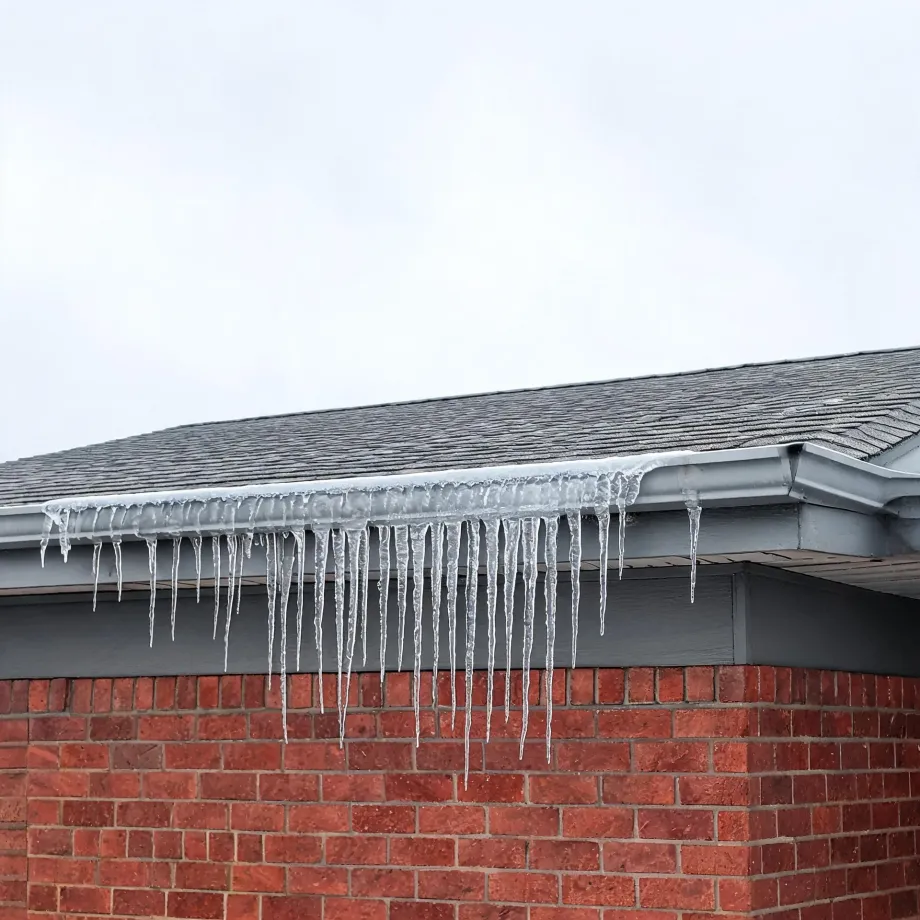
Sizing a heat pump for St. Louis County means accounting for what cold outdoor temperatures do to its output. Homes in St. Louis County, MO run heat about seven months a year, from October through April. A heat pump loses capacity as temperatures fall, so a system that handles a mild October day comfortably can fall short on a hard February night. The contractor running a load calculation here has to establish where that shortfall begins and what backup heat fills it, because an undersized install will cycle harder and longer through the coldest weeks. Getting that threshold wrong at installation is difficult and expensive to correct later.
Ductwork designed for a different system is what a contractor has to measure and pressure-check before a heat pump quote means anything. Half the homes in St. Louis County, Missouri were built in 1969 or earlier (2020-2024 ACS 5-year). A house built in that era was ducted for whatever heating plant it came with originally, and those trunks and runs were sized to move air at volumes and static pressures that do not map cleanly onto what a heat pump needs. Electrical service from the same period is a second check: the panel has to carry the load the new equipment draws. Both variables get resolved before the unit is ever ordered.
What a Heat Pump Installation Puts in Your Home
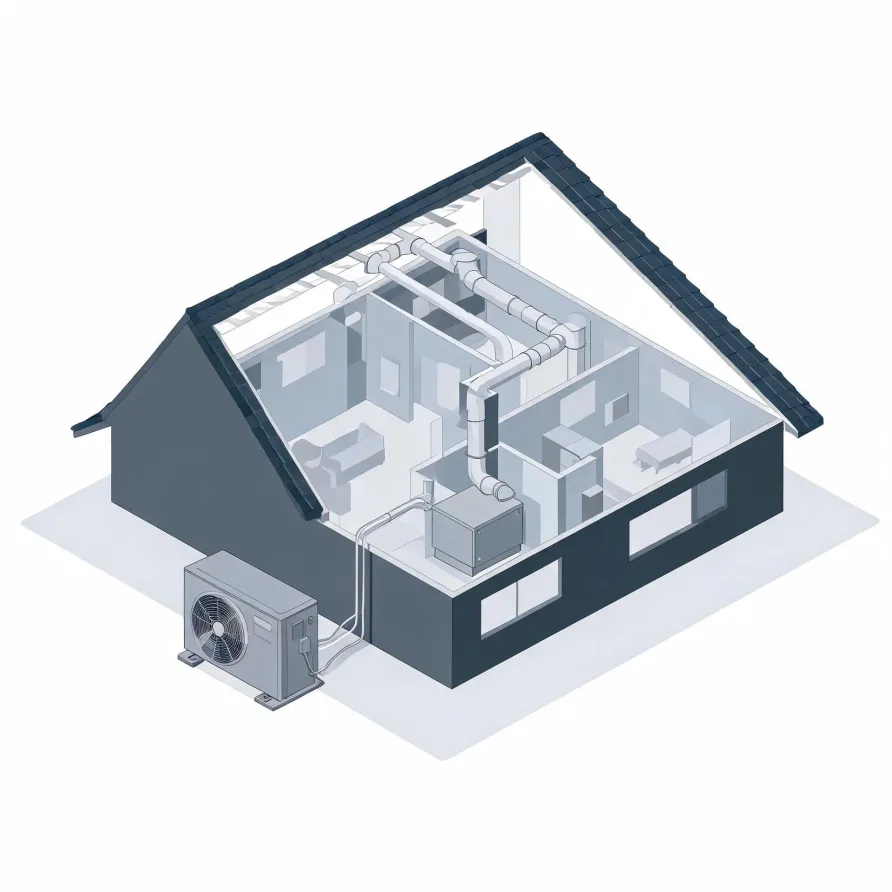
The outdoor unit sits on a pad beside the house and holds the compressor and the main coil. It is the largest piece of the installation and the one most visible from outside. Inside, the air handler mounts in a closet, basement, or utility space and moves conditioned air through the home.
A refrigerant line set runs between the two units, connecting them through a small penetration in the wall. A thermostat goes on an interior wall where it can read the living space accurately and give the homeowner control over the system.
The drawing shows the typical layout of these components, and a licensed contractor determines exactly how each one fits the conditions of your house.
Find a contractor in St. Louis CountySt. Louis County, by the numbers
208 severe weather events were recorded in St. Louis County, Missouri between 2015 and 2024.
NOAA National Centers for Environmental Information, Storm Events Database, bulk CSV export, events 2015-01-01 through 2024-12-31.Half the homes in St. Louis County, Missouri were built in 1969 or earlier (2020-2024 ACS 5-year).
U.S. Census Bureau, 2020-2024 American Community Survey 5-Year EstimatesSt. Louis County, Missouri holds 446,192 housing units (2020-2024 ACS 5-year).
U.S. Census Bureau, 2020-2024 American Community Survey 5-Year EstimatesOwners occupy 69.2% of the occupied homes in St. Louis County, Missouri (2020-2024 ACS 5-year).
U.S. Census Bureau, 2020-2024 American Community Survey 5-Year EstimatesSevere Weather Events in St. Louis County
St. Louis County weather puts real demands on heating and cooling equipment year after year. How hard a heat pump works, and how long it lasts, is partly a local question, and the record below shows what local looks like.
208 severe weather events, 2015–2024. Source: NOAA National Centers for Environmental Information, Storm Events Database.