Tell us about the job
Takes about a minute. No obligation.
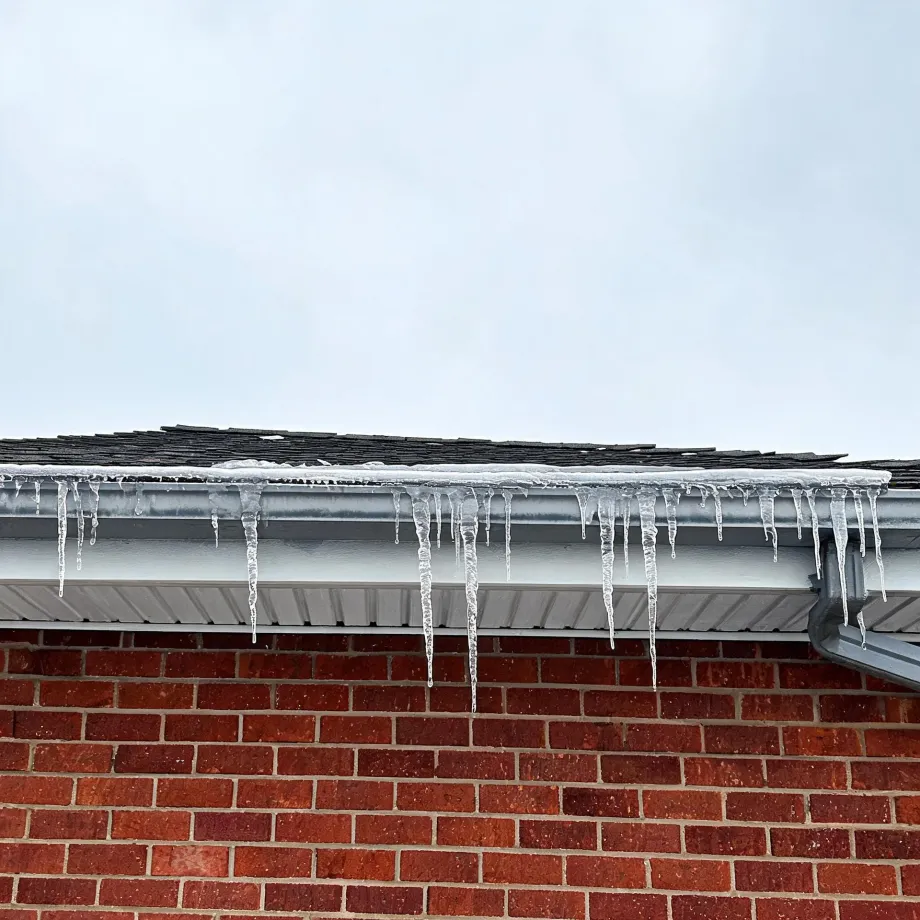
Sizing a heat pump for Lincoln County means settling a question about cold-weather capacity before anything else gets quoted. Homes in Lincoln County, MO run heat about seven months a year, from October through April. As outdoor temperatures drop through those months, a heat pump moves less heat per unit of electricity, and a unit that tests fine in October can fall short in February. A contractor has to know where the system's capacity curve crosses the house's actual heating load, and at what outdoor temperature backup heat has to carry the difference. Get that line wrong in the design and the backup resistance coils run constantly, not occasionally, which drives operating costs well past what the original quote implied.
Ductwork laid into a house carries a load profile it was built around, and in Lincoln County that profile belongs to whatever system ran first in those walls. Half the homes in Lincoln County, Missouri were built in 1997 or earlier (2020-2024 ACS 5-year). A heat pump draws differently than what much of this stock was originally ducted for, which means the duct layout and the service panel are where a contractor's evaluation starts, not where it ends. A house that looks like a straightforward swap can require rework at both before a new unit is sized.
What Gets Installed With a New Heat Pump
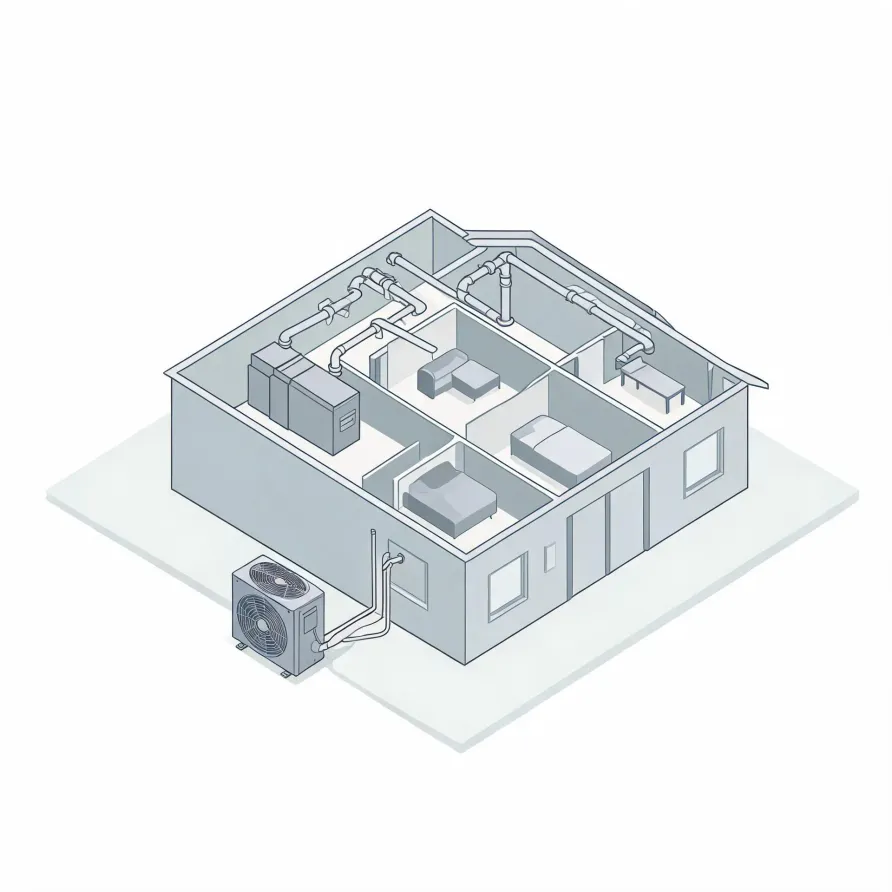
The outdoor unit sits on a pad beside the house and holds the compressor and the condenser coil, the two components that do the core work of moving heat between outside air and the refrigerant lines. Inside, the air handler mounts in a utility space, basement, or closet and pushes conditioned air through the home's supply system.
A refrigerant line set runs between the outdoor unit and the air handler, connecting the two halves of the system through the wall or floor. A thermostat goes on an interior wall and gives the homeowner control over when and how the system runs.
The drawing shows a representative layout, and a licensed contractor determines what the installation involves in this specific house.
Find a contractor in Lincoln CountyLincoln County, Missouri, by the numbers
64 severe weather events were recorded in Lincoln County, Missouri between 2015 and 2024.
NOAA National Centers for Environmental Information, Storm Events Database, bulk CSV export, events 2015-01-01 through 2024-12-31.Half the homes in Lincoln County, Missouri were built in 1997 or earlier (2020-2024 ACS 5-year).
U.S. Census Bureau, 2020-2024 American Community Survey 5-Year EstimatesLincoln County, Missouri holds 23,790 housing units (2020-2024 ACS 5-year).
U.S. Census Bureau, 2020-2024 American Community Survey 5-Year EstimatesOwners occupy 79.0% of the occupied homes in Lincoln County, Missouri (2020-2024 ACS 5-year).
U.S. Census Bureau, 2020-2024 American Community Survey 5-Year EstimatesSevere Weather Events in Lincoln County
Heating and cooling equipment in Lincoln County works against whatever the local climate delivers, and weather stress is part of what determines how hard a heat pump has to run and how long it lasts. Sizing and installation decisions are local decisions for that reason.
64 severe weather events, 2015–2024. Source: NOAA National Centers for Environmental Information, Storm Events Database.