Tell us about the job
Takes about a minute. No obligation.
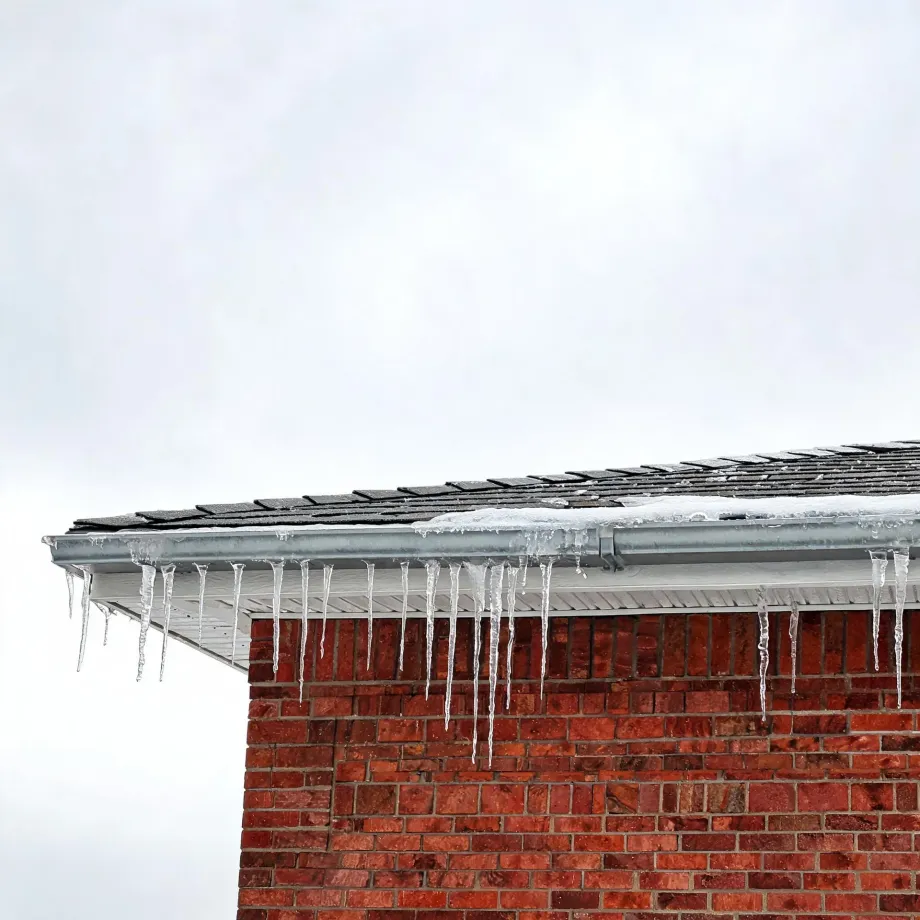
Sizing a heat pump for Pike County means working out what the system is asked to do at the low end of winter, not the middle of it. Homes in Pike County, MO run heat about seven months a year, from October through April. A heat pump's capacity drops as outdoor temperatures fall, so the coldest weeks of that stretch are the ones a contractor has to design around. A system that is undersized for those weeks runs its backup resistance elements hard, and backup heat is expensive to run. The installer has to nail the load calculation before any equipment gets specified.
Ductwork laid out for an older furnace or window unit follows a logic that heat pumps do not share. The volumes, the returns, the register placement all reflect what the original system needed, and a contractor installing a heat pump works out whether that layout carries the new system before anything else gets priced. Half the homes in Pike County, Missouri were built in 1971 or earlier (2020-2024 ACS 5-year). That tells you what a contractor is walking into on a typical job here: a house whose duct runs were drawn up around equipment that is long gone, and whose electrical service may need to be looked at before a heat pump can run on it.
What Gets Installed With a New Heat Pump
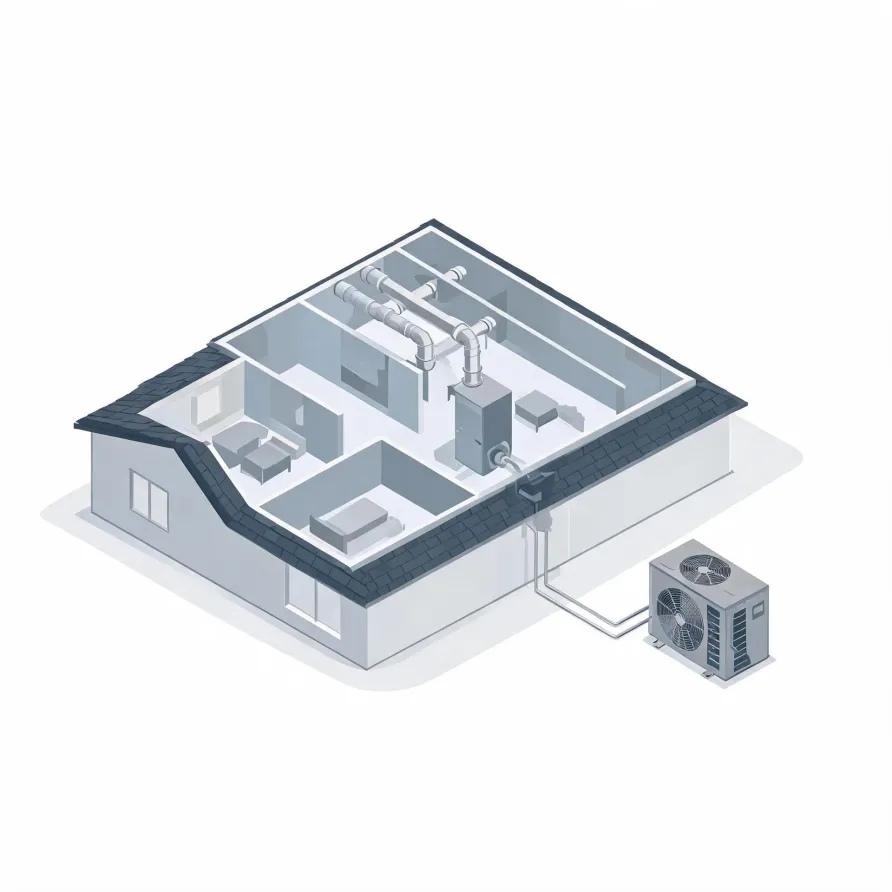
The outdoor unit is the piece a homeowner sees first, mounted on a pad beside the house, and it holds the compressor and the outdoor coil that do the main work of moving heat. Inside, the air handler sits in a utility space, basement, or closet and pushes conditioned air through the home. Together these two units are the core of what a contractor installs.
A refrigerant line set runs between the outdoor unit and the air handler, connecting the two through an exterior wall. A thermostat mounts on an interior wall and gives the homeowner control over the whole system. The disconnect box goes on the exterior wall near the outdoor unit and lets a technician cut power safely.
The drawing shows the general layout of these components, and a licensed contractor determines exactly how each one is placed and configured for your specific house.
Find a contractor in Pike CountyPike County, Missouri, by the numbers
56 severe weather events were recorded in Pike County, Missouri between 2015 and 2024.
NOAA National Centers for Environmental Information, Storm Events Database, bulk CSV export, events 2015-01-01 through 2024-12-31.Half the homes in Pike County, Missouri were built in 1971 or earlier (2020-2024 ACS 5-year).
U.S. Census Bureau, 2020-2024 American Community Survey 5-Year EstimatesPike County, Missouri holds 7,620 housing units (2020-2024 ACS 5-year).
U.S. Census Bureau, 2020-2024 American Community Survey 5-Year EstimatesOwners occupy 73.3% of the occupied homes in Pike County, Missouri (2020-2024 ACS 5-year).
U.S. Census Bureau, 2020-2024 American Community Survey 5-Year EstimatesSevere Weather Events in Pike County
Pike County's climate puts real demands on heating and cooling equipment, and those demands vary with what the weather actually does year to year. A heat pump sized and installed for local conditions handles that workload better than one specified against a generic standard.
56 severe weather events, 2015–2024. Source: NOAA National Centers for Environmental Information, Storm Events Database.