Tell us about the job
Takes about a minute. No obligation.
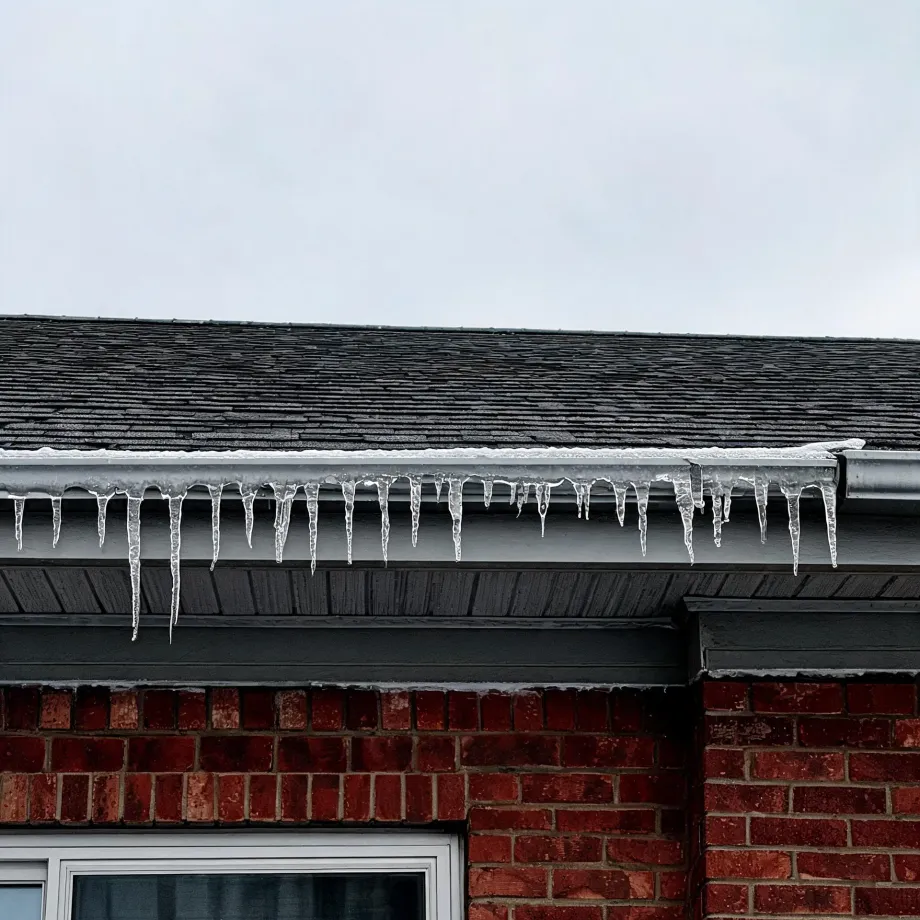
Sizing a heat pump for this county starts with understanding what the heating side is actually asked to carry. Homes in Montgomery County, MO run heat about seven months a year, from October through April. A heat pump loses capacity as outdoor temperatures drop, so the coldest weeks of that run are what drive the sizing decision, not the mild ones. A contractor who works from a rule of thumb rather than a full load calculation will land on a system that can keep up in October but falls behind in January, leaving a backup heat source to carry more load than it was priced to handle. That gap shows up in the first utility bill after the first hard cold snap.
Ductwork sized and routed for an older forced-air system does not automatically suit a heat pump, and that gap is where most of the real work on an installation sits. Half the homes in Montgomery County, Missouri were built in 1978 or earlier (2020-2024 ACS 5-year). A contractor going into a house from that era of the local stock has to assess whether the existing trunk lines and branch runs will move the volume of air the new equipment needs, and whether the electrical service has capacity for the load. If the ducts fall short, the install expands. Those two assessments, ductwork and electrical, are what set the actual scope before any equipment is priced.
What a Heat Pump Installation Puts in Your Home
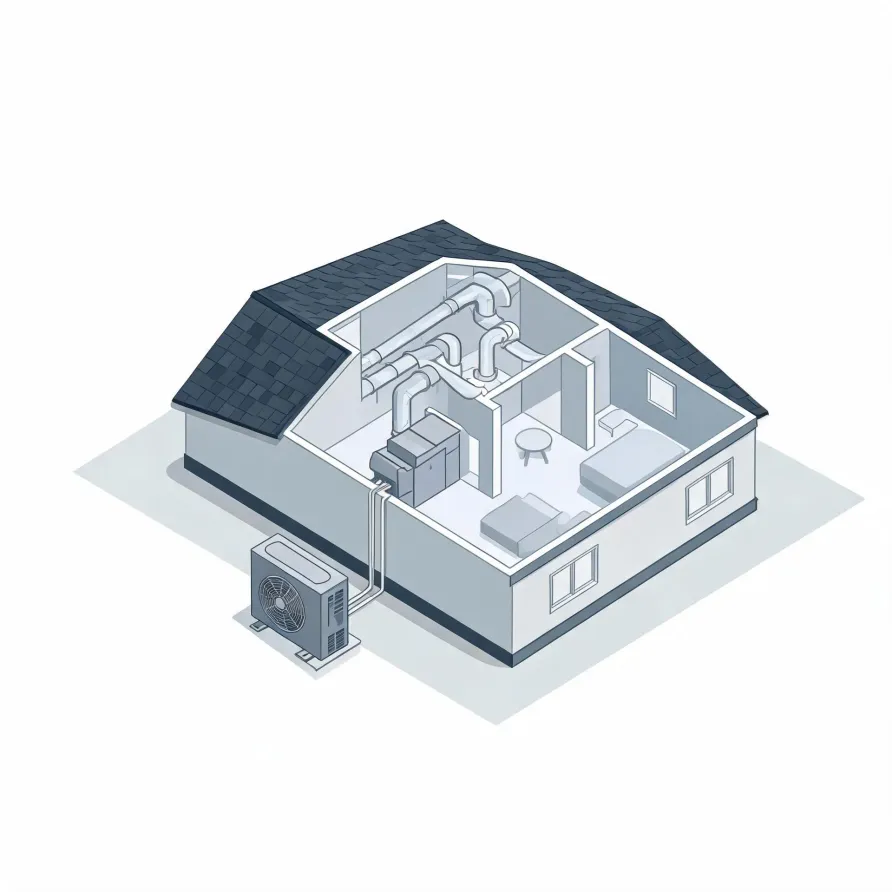
The outdoor unit is the piece most homeowners see first. It sits on a concrete pad or wall bracket outside the house and holds the compressor and one set of coils. Inside, an air handler mounts in a utility closet, attic, or basement and moves conditioned air through the house.
A refrigerant line set runs between the two units, carrying the working fluid back and forth through insulated copper tubing. A thermostat on an interior wall ties the whole system together, giving the homeowner control over when and how hard the equipment runs.
The drawing shows a typical layout, and a licensed contractor determines exactly what applies to your house.
Find a contractor in Montgomery CountyMontgomery County, by the numbers
59 severe weather events were recorded in Montgomery County, Missouri between 2015 and 2024.
NOAA National Centers for Environmental Information, Storm Events Database, bulk CSV export, events 2015-01-01 through 2024-12-31.Half the homes in Montgomery County, Missouri were built in 1978 or earlier (2020-2024 ACS 5-year).
U.S. Census Bureau, 2020-2024 American Community Survey 5-Year EstimatesMontgomery County, Missouri holds 5,832 housing units (2020-2024 ACS 5-year).
U.S. Census Bureau, 2020-2024 American Community Survey 5-Year EstimatesOwners occupy 73.4% of the occupied homes in Montgomery County, Missouri (2020-2024 ACS 5-year).
U.S. Census Bureau, 2020-2024 American Community Survey 5-Year EstimatesSevere Weather Events in Montgomery County
Heat pumps in Montgomery County work against whatever the local climate throws at them, and that workload shapes what equipment is right for the area. A chart of recorded severe weather events gives a contractor the local picture before sizing or installing anything.
59 severe weather events, 2015–2024. Source: NOAA National Centers for Environmental Information, Storm Events Database.