Tell us about the job
Takes about a minute. No obligation.
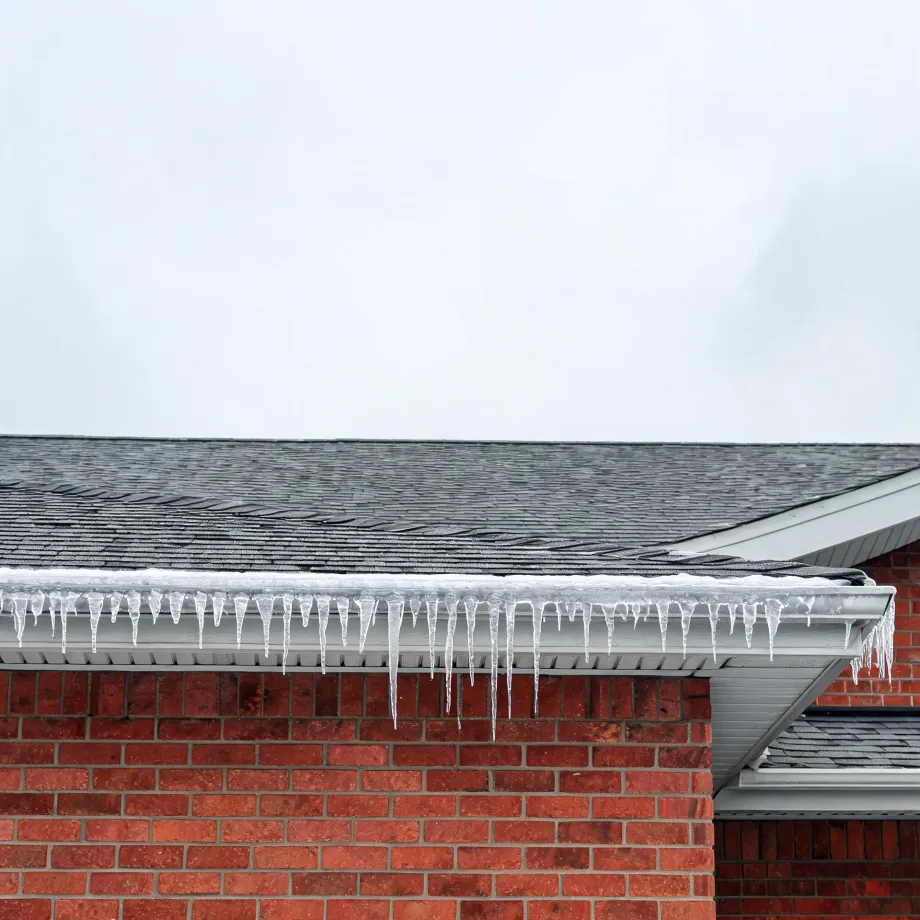
A contractor quoting a heat pump installation in Macon County has to settle two questions before anything else: how much capacity the unit actually delivers on the coldest days, and what backup heat fills the gap when outdoor temperatures drop the unit's output below what the house needs. Homes in Macon County, MO run heat about seven months a year, from October through April. The compressor and the reversing valve carry real load through that stretch, and a system sized for average conditions rather than the hard days at each end of the heating season will run longer cycles, recover slower, and wear its components faster than one the installer matched to local conditions.
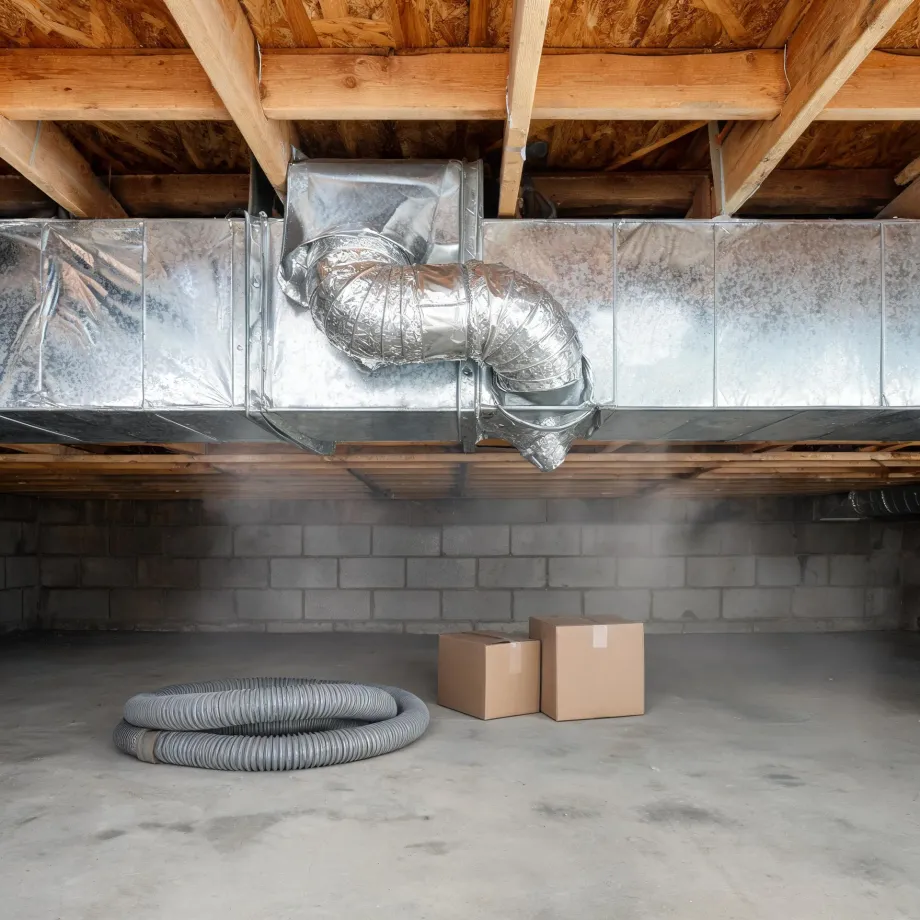
Ductwork sized and routed for a different era of heating is what a contractor finds in a large share of Macon County houses, and whether that ductwork moves air the way a heat pump needs it to is what shapes the scope of the job. Half the homes in Macon County, Missouri were built in 1972 or earlier (2020-2024 ACS 5-year). Electrical service is the second question: panels in houses of that vintage were not designed around the load a modern heat pump draws, and a contractor has to measure what is there before any equipment gets priced.
What a Heat Pump Installation Covers
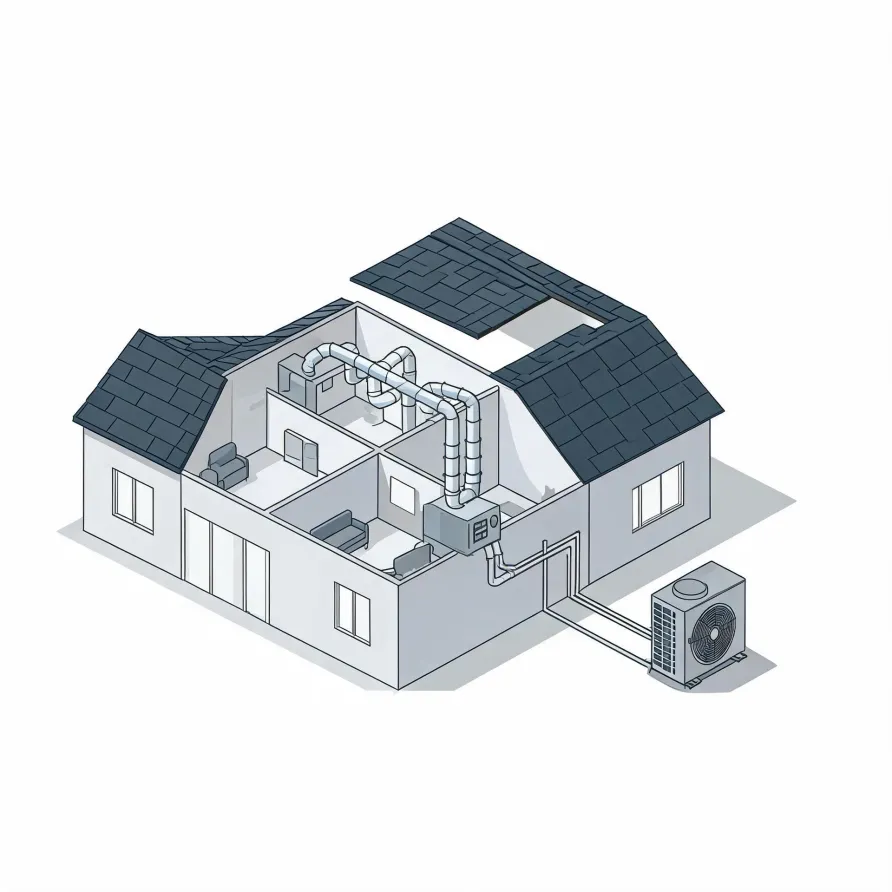
The outdoor unit sits on a pad beside the house and holds the compressor and the condenser coil, which are the parts doing the heaviest work. Inside, the air handler mounts in a utility space, attic, or closet and moves conditioned air through the home. Both units get set in place and connected as part of the same job.
A refrigerant line set runs between the two units, carrying the working fluid back and forth through insulated copper tubing. The thermostat goes on an interior wall where it reads the living space and tells the system when to run. A condensate drain line also gets routed from the air handler to carry away moisture.
The drawing shows a typical layout, and a licensed contractor determines exactly what the installation requires in your house.
Find a contractor in Macon CountyMacon County, by the numbers
57 severe weather events were recorded in Macon County, Missouri between 2015 and 2024.
NOAA National Centers for Environmental Information, Storm Events Database, bulk CSV export, events 2015-01-01 through 2024-12-31.Half the homes in Macon County, Missouri were built in 1972 or earlier (2020-2024 ACS 5-year).
U.S. Census Bureau, 2020-2024 American Community Survey 5-Year EstimatesMacon County, Missouri holds 7,419 housing units (2020-2024 ACS 5-year).
U.S. Census Bureau, 2020-2024 American Community Survey 5-Year EstimatesOwners occupy 76.8% of the occupied homes in Macon County, Missouri (2020-2024 ACS 5-year).
U.S. Census Bureau, 2020-2024 American Community Survey 5-Year EstimatesSevere Weather Events in Macon County
Weather patterns in Macon County put real demands on heating and cooling equipment, shaping how hard a heat pump works and how long it holds up. That load profile is local, which is why the installation decisions that suit this area are worth understanding on their own terms.
57 severe weather events, 2015–2024. Source: NOAA National Centers for Environmental Information, Storm Events Database.