Tell us about the job
Takes about a minute. No obligation.
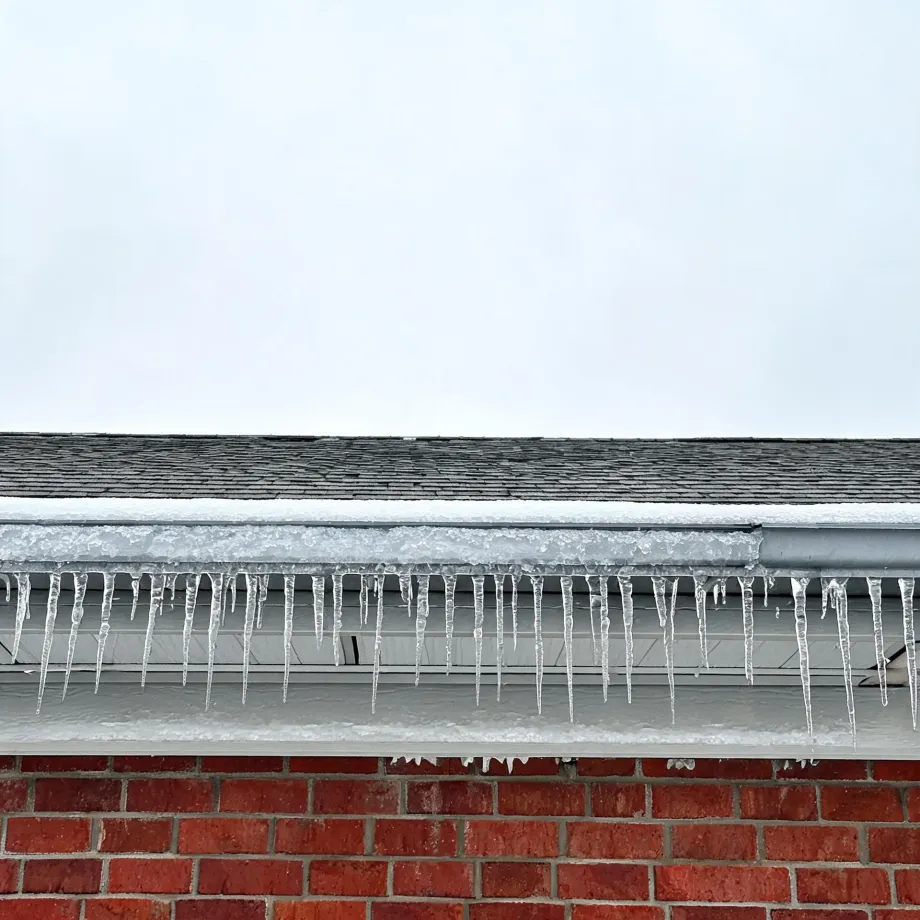
Before a contractor can quote a heat pump install in Linn County, they have to work out what the system will actually deliver on the coldest nights, because a heat pump loses heating capacity as outdoor temperatures fall. Homes in Linn County, MO run heat about seven months a year, from October through April. That heating load is where sizing decisions become consequential: a unit that clears the shoulder-season demand can still come up short when temperatures bottom out in January or February, leaving a house to depend entirely on backup resistance heat. The contractor has to size the system and specify the backup stage together, for this climate, not for a generic mid-continental baseline.
Ductwork sized and routed for an older forced-air system carries assumptions a heat pump does not share about airflow, static pressure, and return capacity. Half the homes in Linn County, Missouri were built in 1964 or earlier (2020-2024 ACS 5-year). That vintage of construction means a contractor pulling permits here regularly opens up trunk lines and finds configurations that work against what a heat pump needs to do efficiently. The electrical service in a house that old also gets checked early, because the load a heat pump draws at startup is a different number than what the original panel was built around. Both have to clear before the equipment selection matters.
What a Heat Pump Installation Covers
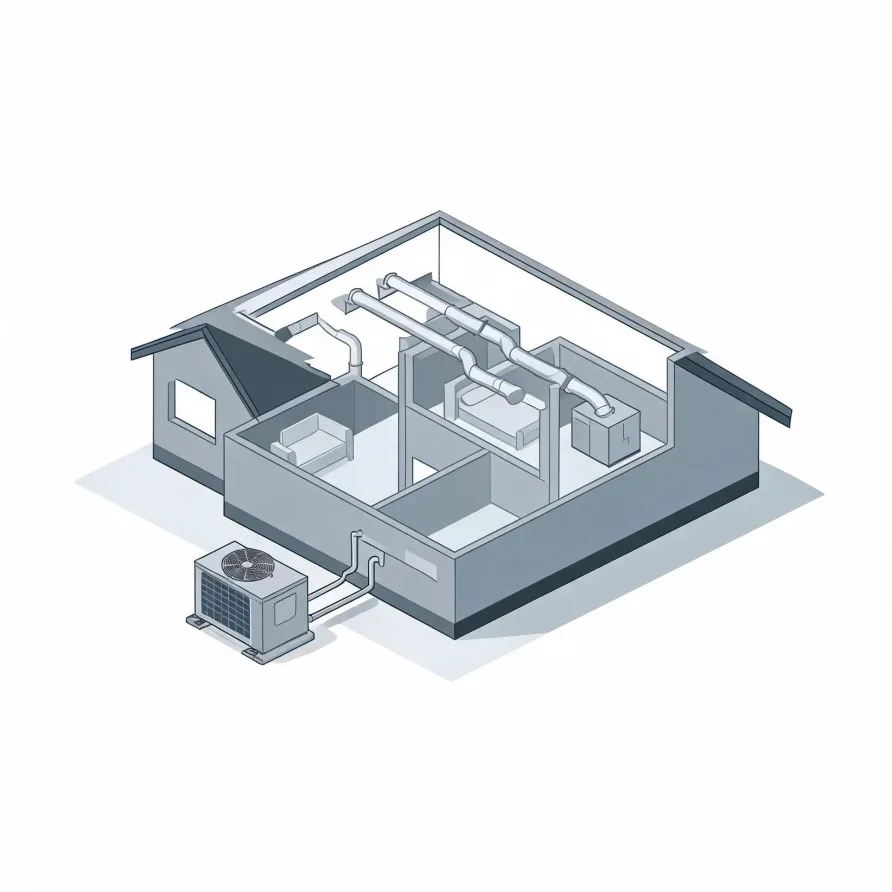
The outdoor unit sits on a pad beside the house and holds the compressor and coil that do the system's core work. Inside, an air handler mounts in a utility space, basement, or closet and moves conditioned air through the home. Together these two units are what a contractor sets in place when a heat pump goes in.
A refrigerant line set runs between the outdoor unit and the air handler, carrying the working fluid that links the two sides of the system. A thermostat mounts on an interior wall and gives the homeowner direct control over the system's output. Both pieces are part of a full installation.
The drawing shows a typical heat pump layout, and a licensed contractor determines exactly what applies to this house.
Find a contractor in Linn CountyLinn County by the numbers
63 severe weather events were recorded in Linn County, Missouri between 2015 and 2024.
NOAA National Centers for Environmental Information, Storm Events Database, bulk CSV export, events 2015-01-01 through 2024-12-31.Half the homes in Linn County, Missouri were built in 1964 or earlier (2020-2024 ACS 5-year).
U.S. Census Bureau, 2020-2024 American Community Survey 5-Year EstimatesLinn County, Missouri holds 5,988 housing units (2020-2024 ACS 5-year).
U.S. Census Bureau, 2020-2024 American Community Survey 5-Year EstimatesOwners occupy 78.5% of the occupied homes in Linn County, Missouri (2020-2024 ACS 5-year).
U.S. Census Bureau, 2020-2024 American Community Survey 5-Year EstimatesSevere Weather Events in Linn County
Weather here shapes how hard heating and cooling equipment has to work, and how long it lasts. A heat pump sized and installed for local conditions handles that workload differently than one that was not.
63 severe weather events, 2015–2024. Source: NOAA National Centers for Environmental Information, Storm Events Database.