Tell us about the job
Takes about a minute. No obligation.
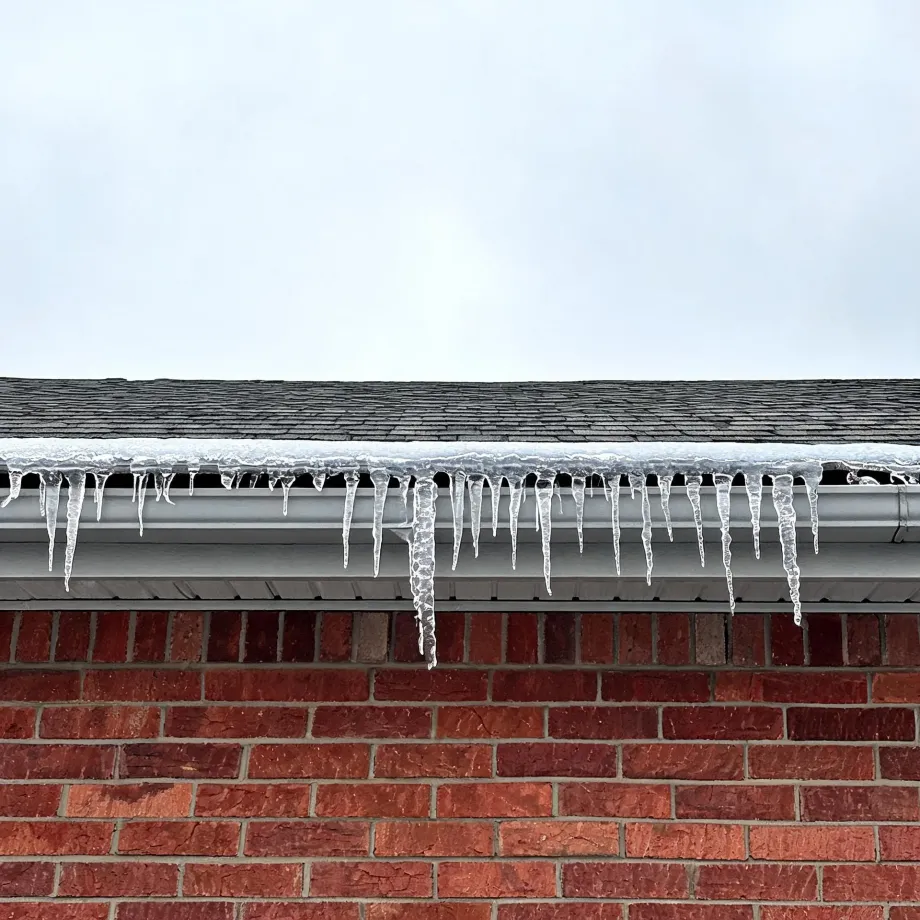
Sizing a heat pump for Livingston County requires a contractor to work out what happens to the unit's output on the coldest nights of a long heating season, not just on an average day. Homes in Livingston County, MO run heat about seven months a year, from October through April. As outdoor temperatures fall below freezing, a heat pump's capacity drops, and a system that was undersized at the drawing stage cannot compensate by running harder. A contractor establishing the right size has to look at the local winter floor, the house envelope, and whether backup resistance heat is wired to cover the gap.
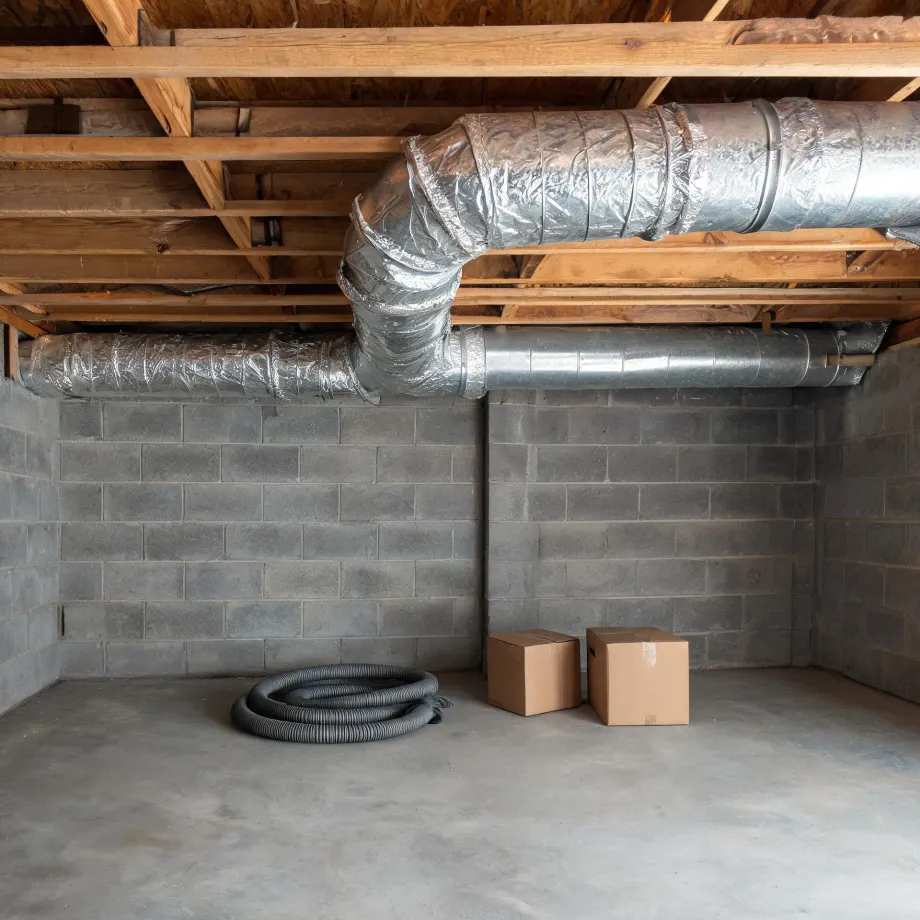
Ductwork laid out for a furnace-and-central-air setup follows different rules than what a heat pump needs to distribute heat efficiently, and a house whose ducts were designed around that earlier logic may require rebalancing, sealing, or resizing before a new unit performs as intended. Half the homes in Livingston County, Missouri were built in 1968 or earlier (2020-2024 ACS 5-year). That age of construction also means the electrical service predates the load a modern heat pump draws, so a contractor sizing a new system will check the panel before the equipment selection means anything. What the house already contains sets the scope of the job.
What a Heat Pump Installation Covers
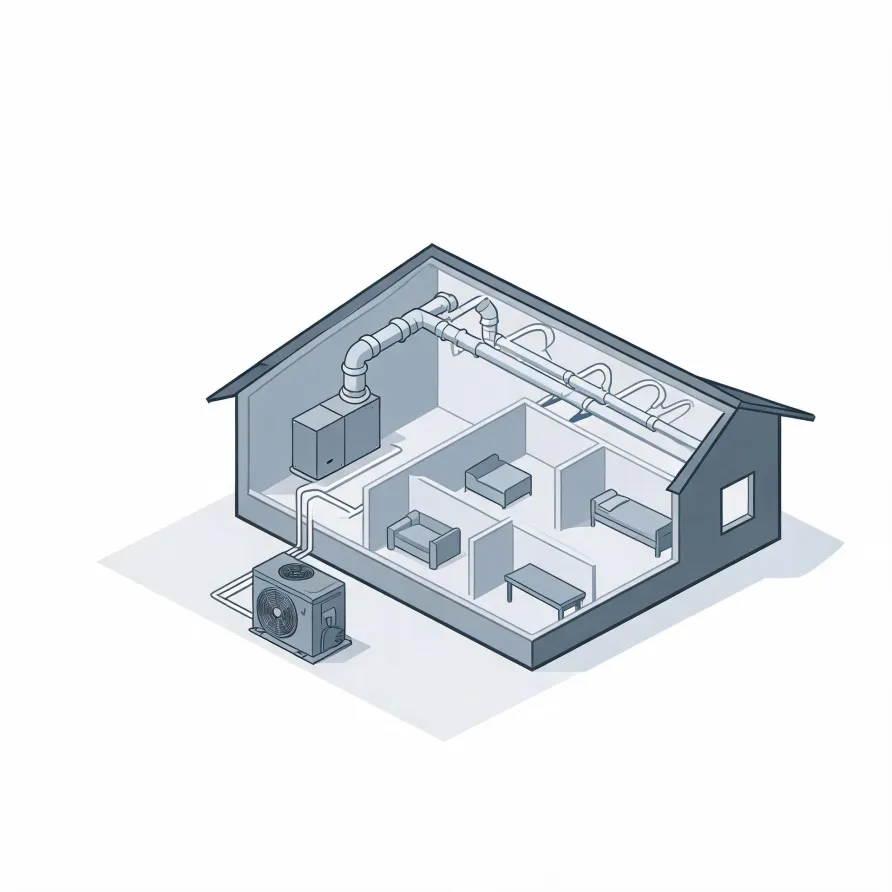
The outdoor unit is the piece a homeowner sees first, mounted on a pad beside the house, and it holds the compressor and the coil that pull heat from outside air. The indoor air handler sits in a utility space, basement, or closet and circulates conditioned air through the home.
A refrigerant line set runs between the two units, carrying the working fluid back and forth through insulated copper tubing. The thermostat, mounted on an interior wall, is the control point a contractor wires into the system so the homeowner can set temperatures and operating modes.
The drawing shows a typical layout, and a licensed contractor determines exactly which components and configurations apply to your house.
Find a contractor in Livingston CountyLivingston County, by the numbers
44 severe weather events were recorded in Livingston County, Missouri between 2015 and 2024.
NOAA National Centers for Environmental Information, Storm Events Database, bulk CSV export, events 2015-01-01 through 2024-12-31.Half the homes in Livingston County, Missouri were built in 1968 or earlier (2020-2024 ACS 5-year).
U.S. Census Bureau, 2020-2024 American Community Survey 5-Year EstimatesLivingston County, Missouri holds 6,399 housing units (2020-2024 ACS 5-year).
U.S. Census Bureau, 2020-2024 American Community Survey 5-Year EstimatesOwners occupy 72.3% of the occupied homes in Livingston County, Missouri (2020-2024 ACS 5-year).
U.S. Census Bureau, 2020-2024 American Community Survey 5-Year EstimatesSevere Weather Events in Livingston County
Weather in this part of Missouri puts real demands on heating and cooling equipment over its lifetime. How hard a heat pump works, and how long it holds up, is shaped by what the local climate actually does.
44 severe weather events, 2015–2024. Source: NOAA National Centers for Environmental Information, Storm Events Database.