Tell us about the job
Takes about a minute. No obligation.
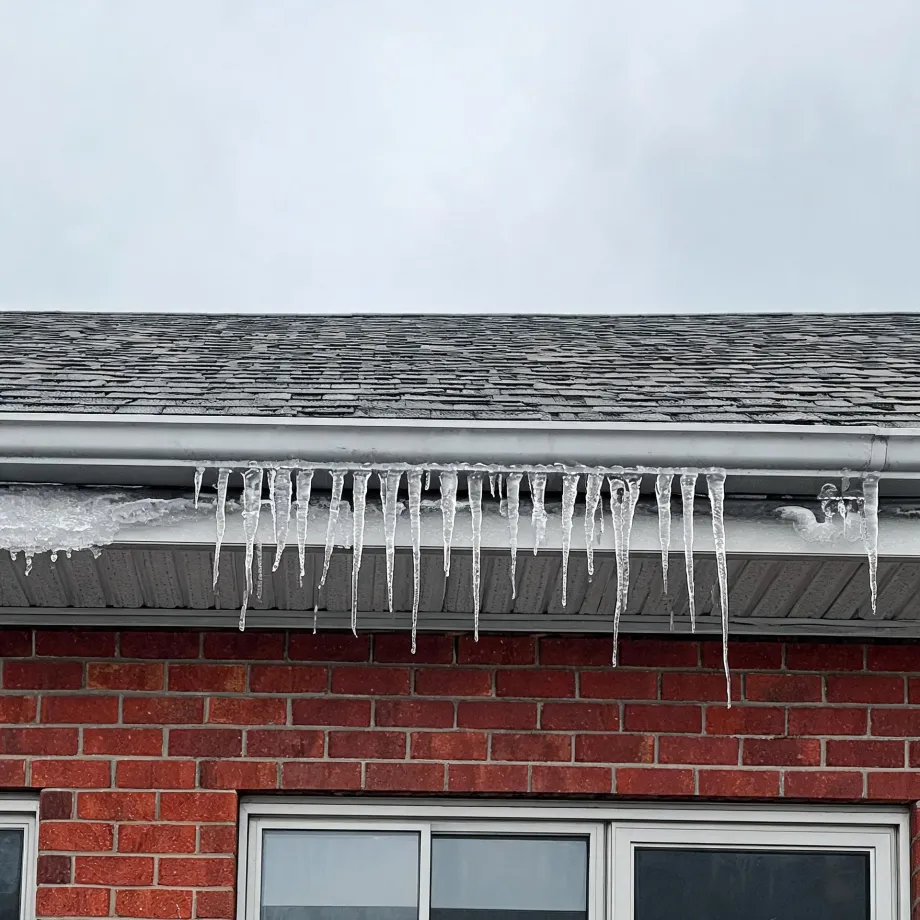
On a heat pump repair call in Washington County, a contractor checks the refrigerant charge and the reversing valve before anything else. Homes in Washington County, MO run heat about seven months a year, from October through April. Capacity drops as temperatures fall, so a system that is even slightly low on charge struggles hardest in the months it is needed most. That stress shows up in the compressor and the reversing valve long before it shows up anywhere else. A contractor who skips those components first and works outward is likely to replace parts that are not the source of the fault.
Parts availability is where heat pump repairs in Washington County get decided. Half the homes in Washington County, Missouri were built in 1985 or earlier (2020-2024 ACS 5-year). Equipment installed in houses that old has cycled through at least one full replacement generation, and the refrigerant lines, coil configurations, and control boards that those earlier systems used are not what manufacturers stock today. A contractor opening a unit here checks what the system actually takes before quoting the repair, because a part that looks standard on paper may have to come from a specialty supplier or may not come at all.
The Parts of a Heat Pump a Contractor Checks First
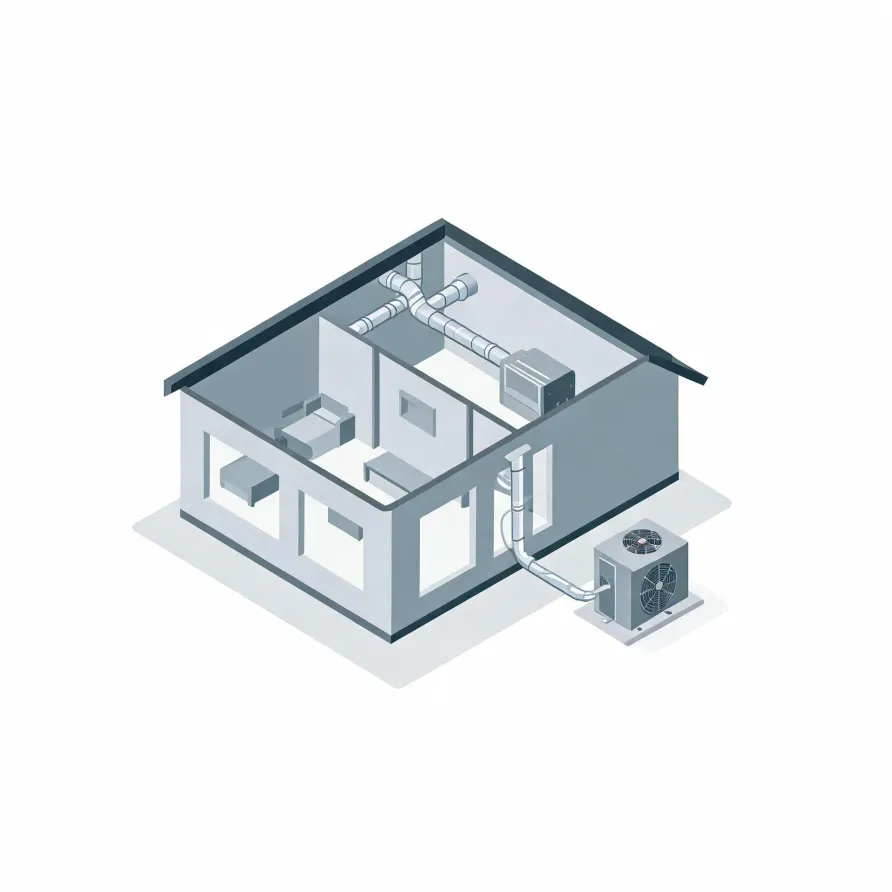
The outdoor unit is the piece most homeowners recognize on sight, sitting on a pad beside the house. It holds the compressor and the outdoor coil, and when either one fails, the system loses its ability to move heat in either direction. The air handler inside the house, usually in a closet, basement, or utility room, holds the indoor coil and the blower that pushes conditioned air through the home.
The reversing valve lives inside the outdoor unit and is what lets a heat pump switch between heating and cooling modes. A contractor also looks at the refrigerant lines connecting the two units, the expansion device, and the thermostat, since any of these can be the source of a complaint the homeowner thought was something larger.
The drawing shows the general layout of a heat pump system, and a licensed contractor determines which components are relevant to your specific home and situation.
Find a contractor in Washington CountyWashington County, Missouri, by the numbers
64 severe weather events were recorded in Washington County, Missouri between 2015 and 2024.
NOAA National Centers for Environmental Information, Storm Events Database, bulk CSV export, events 2015-01-01 through 2024-12-31.Half the homes in Washington County, Missouri were built in 1985 or earlier (2020-2024 ACS 5-year).
U.S. Census Bureau, 2020-2024 American Community Survey 5-Year EstimatesWashington County, Missouri holds 10,734 housing units (2020-2024 ACS 5-year).
U.S. Census Bureau, 2020-2024 American Community Survey 5-Year EstimatesOwners occupy 78.4% of the occupied homes in Washington County, Missouri (2020-2024 ACS 5-year).
U.S. Census Bureau, 2020-2024 American Community Survey 5-Year EstimatesSevere Weather Events in Washington County
Weather puts a measurable load on heat pump systems, and that load varies by where you live. Repair frequency in Washington County tracks directly with what the climate asks of the equipment.
64 severe weather events, 2015–2024. Source: NOAA National Centers for Environmental Information, Storm Events Database.