Tell us about the job
Takes about a minute. No obligation.
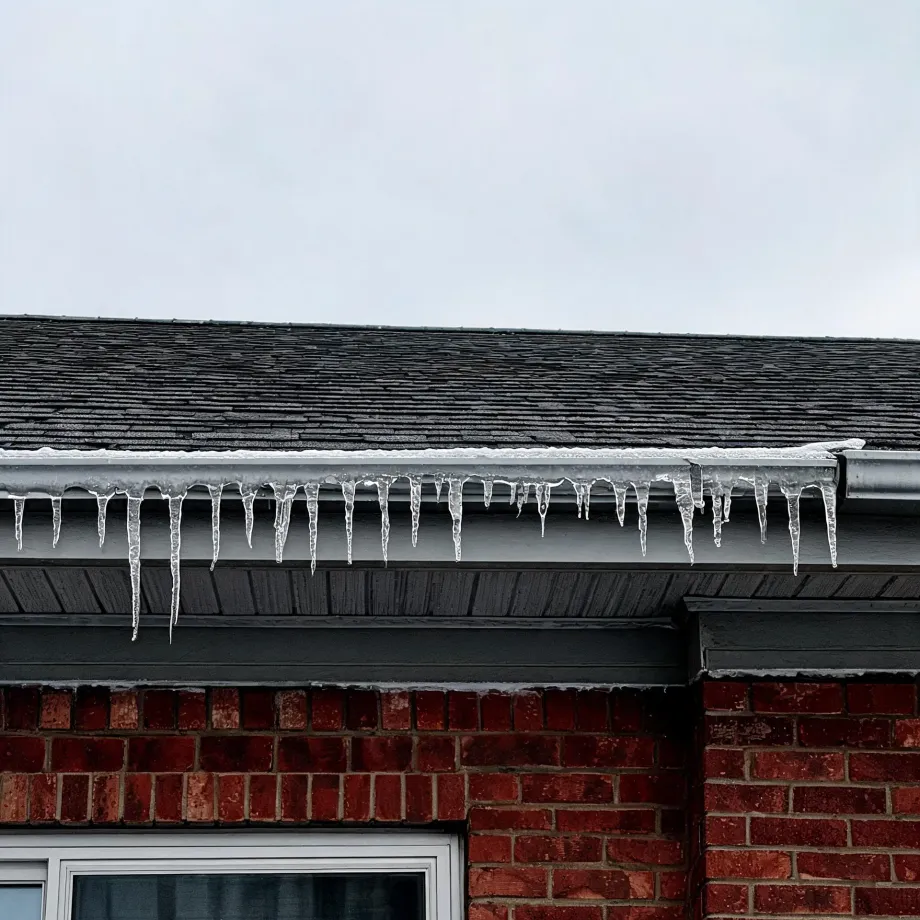
Sizing a heat pump for this area requires a contractor to work out what happens in January, not just what happens in October. Homes in Washington County, MO run heat about seven months a year, from October through April. Heat pump capacity drops as outdoor temperatures fall, so the coldest weeks of that stretch are where an undersized system stops keeping pace and leans on backup heat instead. A contractor quoting an install here has to establish the low-end design temperature before committing to a unit, because a system that fits the mild part of the season may be wrong for the hard part of it.
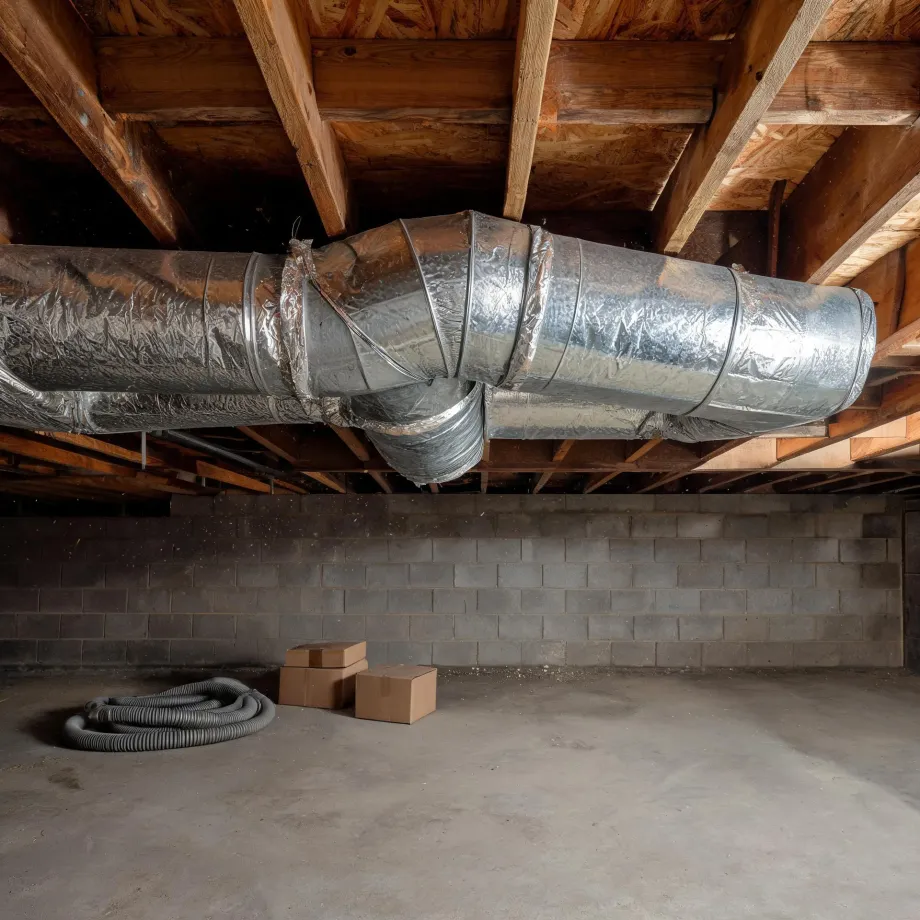
Ductwork laid in for an older system was sized to move air for that system, and a heat pump does not simply inherit what is there and run cleanly through it. Half the homes in Washington County, Missouri were built in 1985 or earlier (2020-2024 ACS 5-year). A contractor quoting a new heat pump in this county measures those runs, checks their condition, and decides what carries over and what needs to be recut before the equipment is ever priced. The electrical service gets the same look, because the draw a heat pump puts on a panel differs from what the house was originally wired to handle.
What a Heat Pump Installation Covers
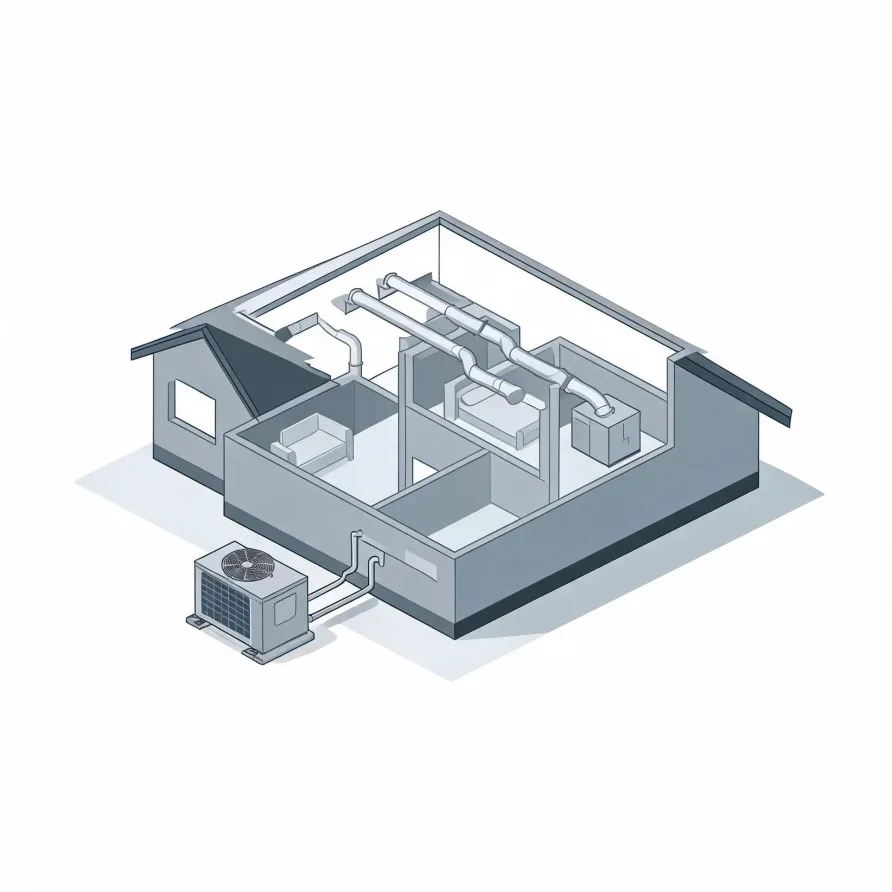
The outdoor unit is the piece a homeowner sees first, sitting on a pad beside the house, and it holds the compressor and the outdoor coil that do the core work of the system. Inside the house, the air handler mounts in a utility space, basement, or closet and moves conditioned air through the home.
A refrigerant line set runs between the two units, carrying the working fluid that ties the outdoor and indoor sides together. A thermostat mounts on an interior wall and gives the homeowner control over the whole system. Each of these pieces gets placed and connected as part of a full installation.
The drawing shows a general layout of these components, and a licensed contractor determines exactly how each one applies to this house.
Find a contractor in Washington CountyWashington County, Missouri, by the numbers
64 severe weather events were recorded in Washington County, Missouri between 2015 and 2024.
NOAA National Centers for Environmental Information, Storm Events Database, bulk CSV export, events 2015-01-01 through 2024-12-31.Half the homes in Washington County, Missouri were built in 1985 or earlier (2020-2024 ACS 5-year).
U.S. Census Bureau, 2020-2024 American Community Survey 5-Year EstimatesWashington County, Missouri holds 10,734 housing units (2020-2024 ACS 5-year).
U.S. Census Bureau, 2020-2024 American Community Survey 5-Year EstimatesOwners occupy 78.4% of the occupied homes in Washington County, Missouri (2020-2024 ACS 5-year).
U.S. Census Bureau, 2020-2024 American Community Survey 5-Year EstimatesSevere Weather Events in Washington County
Weather extremes put real demand on heating and cooling equipment, and what a heat pump faces in Washington County shapes how it should be sized and installed. A system built for this area's conditions runs differently than one built to a generic spec.
64 severe weather events, 2015–2024. Source: NOAA National Centers for Environmental Information, Storm Events Database.