Tell us about the job
Takes about a minute. No obligation.
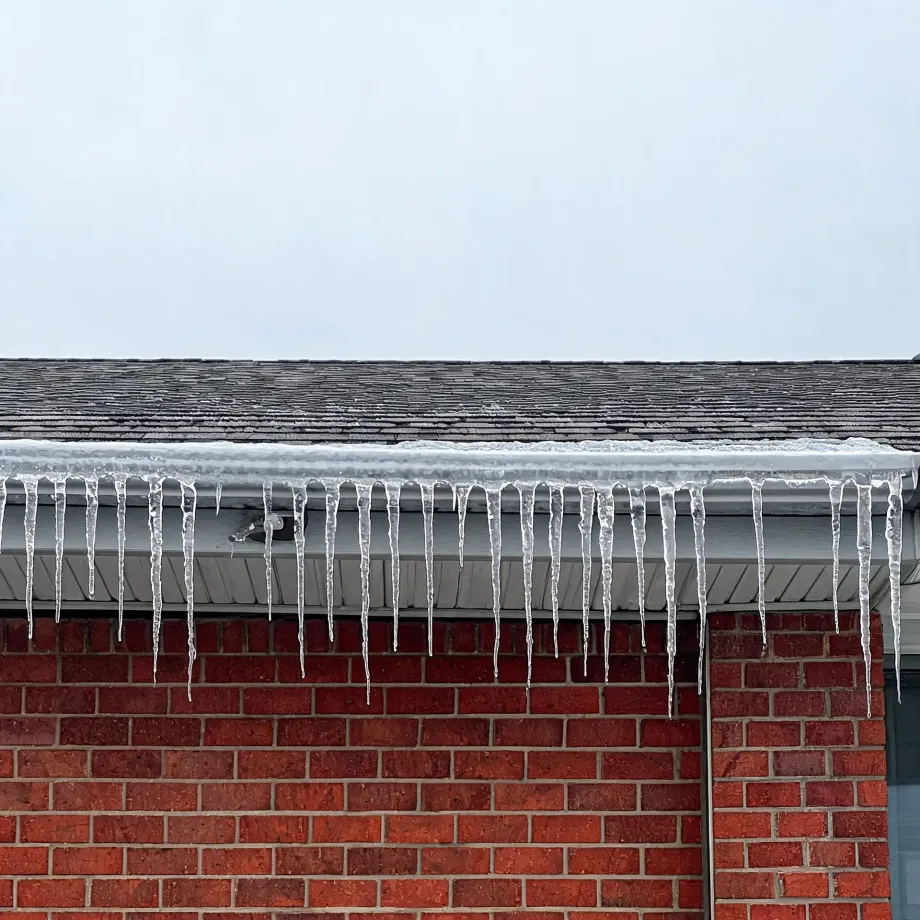
Sizing a heat pump for this house means working out what the system is asked to carry when outdoor temperatures fall hardest, because that is exactly when a heat pump's capacity drops. Homes in Buchanan County, MO run heat about seven months a year, from October through April. Across those months, the compressor cycles through the coldest stretches of the year, and if the unit is undersized, the backup resistance heat fills the gap. A contractor doing a load calculation here has to account for the depth of the cold, not just its length, before they can set equipment capacity and specify whether supplemental heat is built in or added separately.
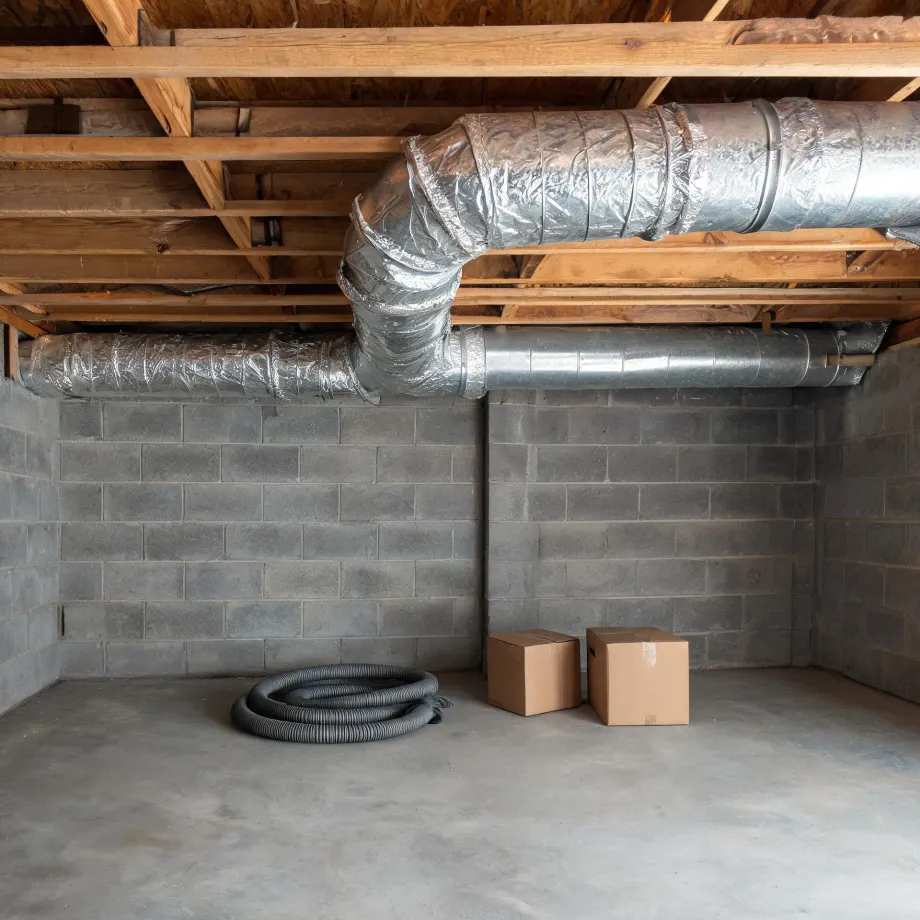
Ductwork routed for older heating systems and service panels sized for smaller electrical loads are what a contractor runs into across much of Buchanan County's housing stock. Half the homes in Buchanan County, Missouri were built in 1964 or earlier (2020-2024 ACS 5-year). A house ducted around a furnace that ran for decades carries air at volumes and through pathways a heat pump does not use the same way, and the electrical service that fed the old equipment may not carry what the new unit draws. What the contractor opens, measures, and prices first is the infrastructure already in the house.
What a Heat Pump Installation Puts in Your Home
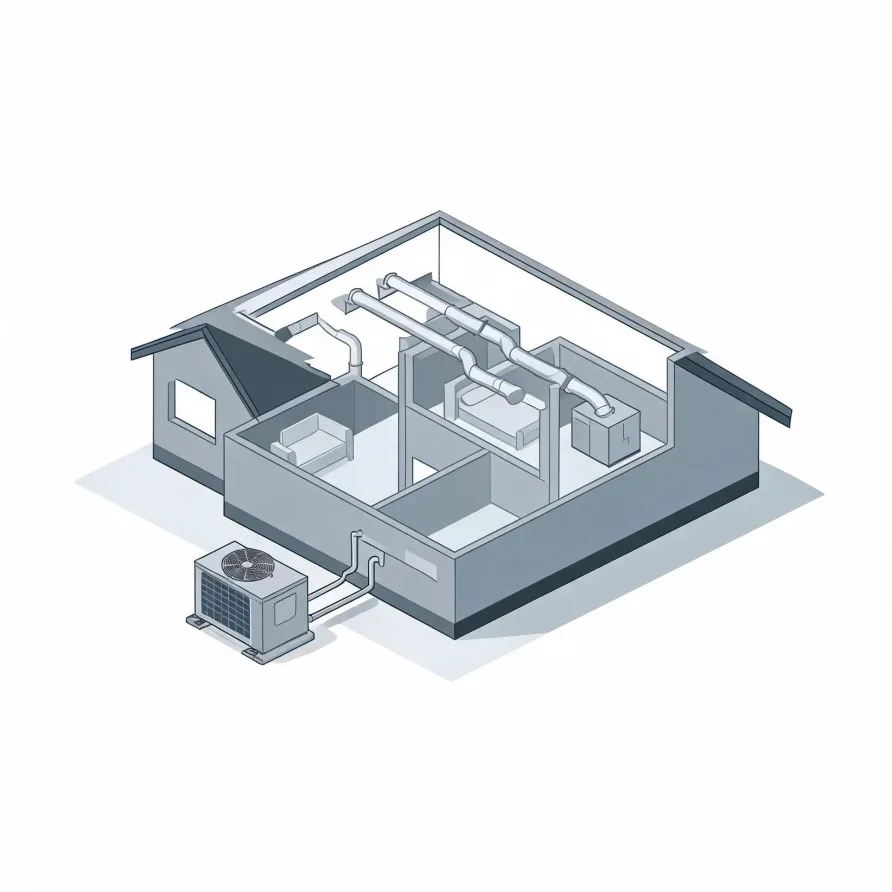
The outdoor unit is the piece most homeowners see first, mounted on a concrete pad or brackets at the side or rear of the house. Inside, the air handler sits in a utility closet, basement, or attic and moves conditioned air through the home. These two units are the core of what a contractor brings in and places.
A refrigerant line set runs between the outdoor unit and the air handler, passing through the wall to connect the two. A thermostat goes on an interior wall where it reads the living space and tells the system when to run. Some installations also include a supplemental electric heat strip inside the air handler for the coldest stretches.
The drawing shows a typical layout, and a licensed contractor determines exactly how each piece fits the conditions in your home.
Find a contractor in Buchanan CountyBuchanan County, by the numbers
106 severe weather events were recorded in Buchanan County, Missouri between 2015 and 2024.
NOAA National Centers for Environmental Information, Storm Events Database, bulk CSV export, events 2015-01-01 through 2024-12-31.Half the homes in Buchanan County, Missouri were built in 1964 or earlier (2020-2024 ACS 5-year).
U.S. Census Bureau, 2020-2024 American Community Survey 5-Year EstimatesBuchanan County, Missouri holds 38,472 housing units (2020-2024 ACS 5-year).
U.S. Census Bureau, 2020-2024 American Community Survey 5-Year EstimatesOwners occupy 66.3% of the occupied homes in Buchanan County, Missouri (2020-2024 ACS 5-year).
U.S. Census Bureau, 2020-2024 American Community Survey 5-Year EstimatesSevere Weather Events in Buchanan County
Buchanan County weather puts real demands on heating and cooling equipment over its lifetime. A heat pump sized and installed for local conditions handles those demands better than one spec'd to a national average.
106 severe weather events, 2015–2024. Source: NOAA National Centers for Environmental Information, Storm Events Database.