Tell us about the job
Takes about a minute. No obligation.
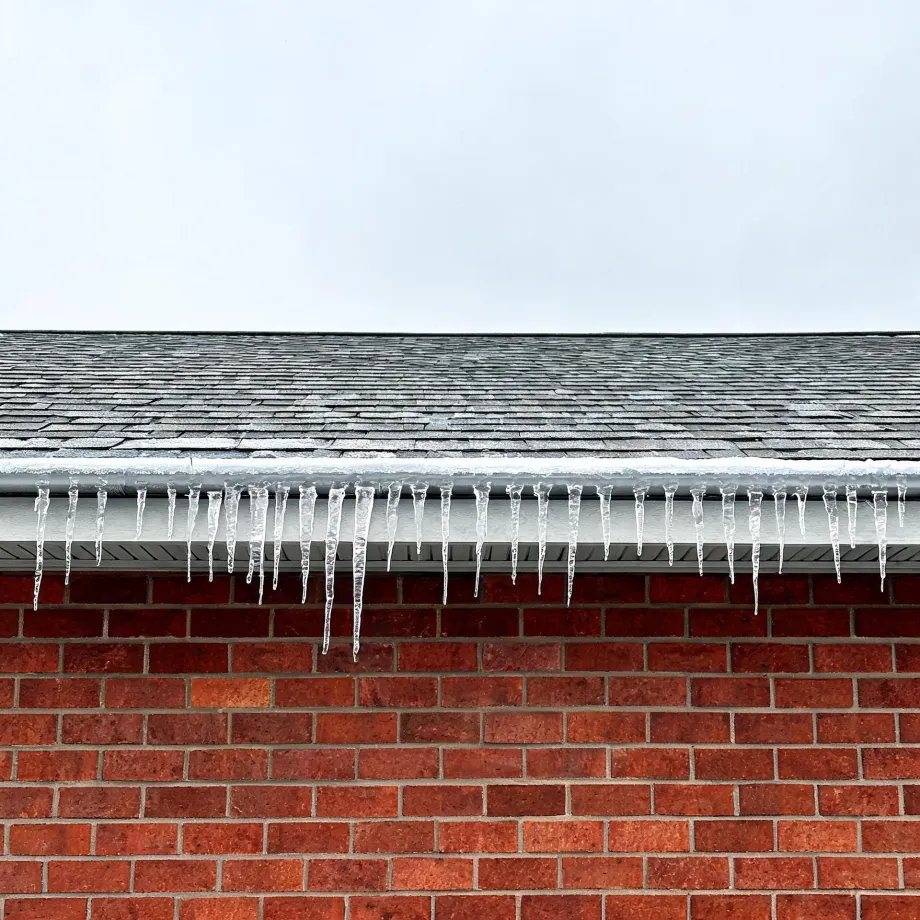
Sizing a heat pump for Platte County requires a contractor to work out how much capacity the unit loses at the low end of winter temperatures, and how much back-up heat has to cover that gap. Homes in Platte County, MO run heat about seven months a year, from October through April. The compressor handles the bulk of the heating load, but its output falls as outdoor air gets colder, which means the coldest weeks of that season are where an undersized system falls behind. A contractor quoting the job has to calculate that floor and spec back-up resistance or auxiliary heat to meet it, or the homeowner ends up with a system that runs continuously and still cannot hold temperature.
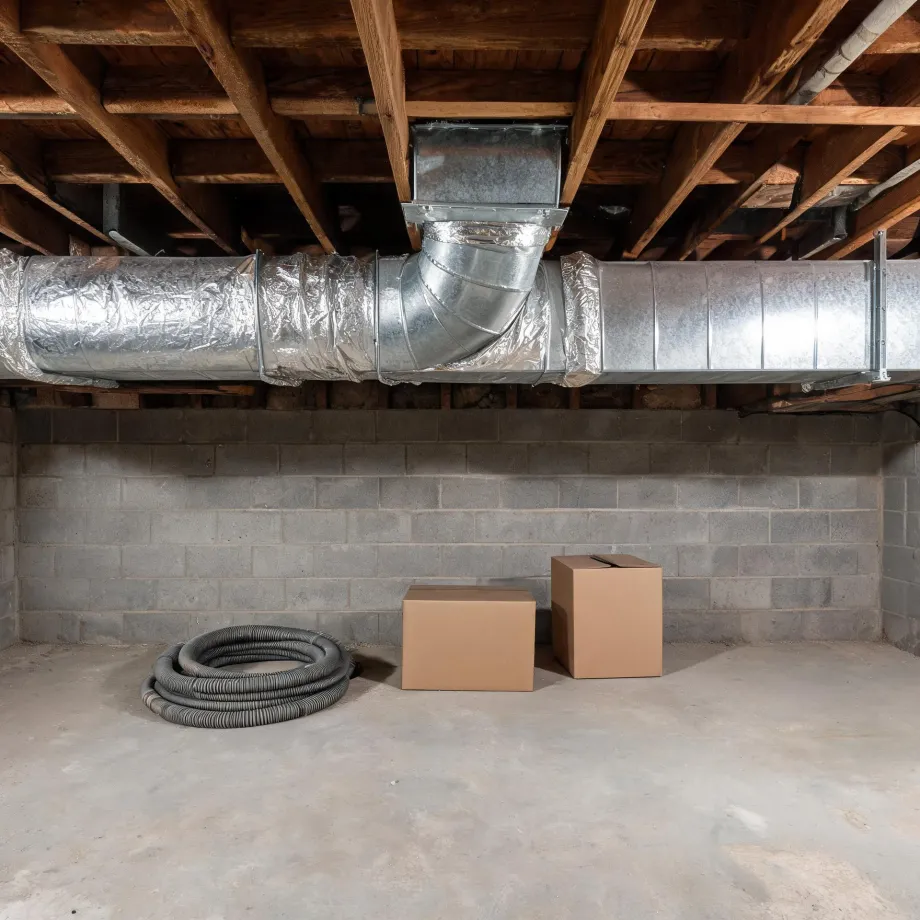
Ductwork sized for a different era of equipment is what a contractor has to assess before a heat pump installation can be quoted with confidence. Half the homes in Platte County, Missouri were built in 1992 or earlier (2020-2024 ACS 5-year). That spread across the county means a contractor pulling a permit here will regularly open supply and return runs designed around systems that no longer exist in the house and check whether they move enough air for what the new unit needs. The electrical service gets the same look, because the load a heat pump draws does not always land within what the original panel was built to handle.
What a Heat Pump Installation Covers
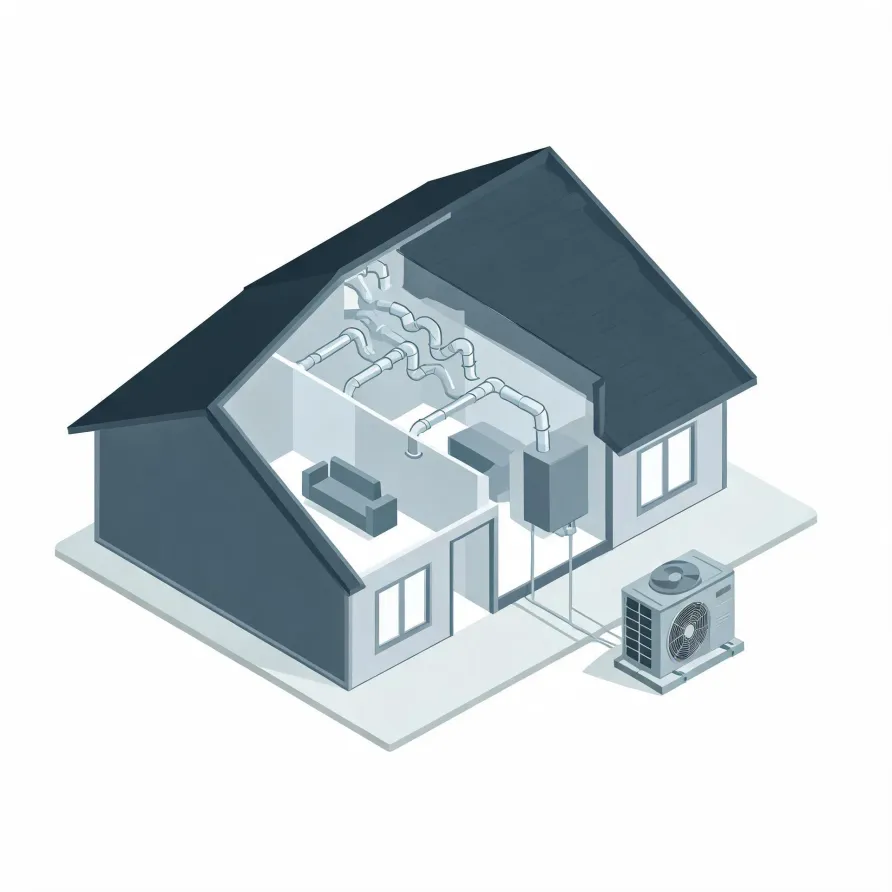
The outdoor unit sits on a pad beside the house and holds the compressor and condenser coil, the hardware that does the heaviest work in the system. Inside, the air handler mounts in a utility space, basement, or closet and moves conditioned air through the home. Both units arrive as part of the installation.
A refrigerant line set runs between the two units, connecting them through the wall or along the exterior. A thermostat mounts on an interior wall and gives the homeowner control over the whole system. Where an existing thermostat wiring setup is present, a contractor determines whether it carries over or gets replaced.
The drawing shows a typical layout, and a licensed contractor determines what applies to this particular house.
Find a contractor in Platte CountyPlatte County, by the numbers
169 severe weather events were recorded in Platte County, Missouri between 2015 and 2024.
NOAA National Centers for Environmental Information, Storm Events Database, bulk CSV export, events 2015-01-01 through 2024-12-31.Half the homes in Platte County, Missouri were built in 1992 or earlier (2020-2024 ACS 5-year).
U.S. Census Bureau, 2020-2024 American Community Survey 5-Year EstimatesPlatte County, Missouri holds 46,606 housing units (2020-2024 ACS 5-year).
U.S. Census Bureau, 2020-2024 American Community Survey 5-Year EstimatesOwners occupy 67.4% of the occupied homes in Platte County, Missouri (2020-2024 ACS 5-year).
U.S. Census Bureau, 2020-2024 American Community Survey 5-Year EstimatesSevere Weather Events in Platte County
Weather in Platte County puts real demands on heating and cooling equipment, and those demands shape what a heat pump here needs to handle over its working life. A system sized and installed for local conditions holds up where a generic approach falls short.
169 severe weather events, 2015–2024. Source: NOAA National Centers for Environmental Information, Storm Events Database.