




Heat Pump Missouri
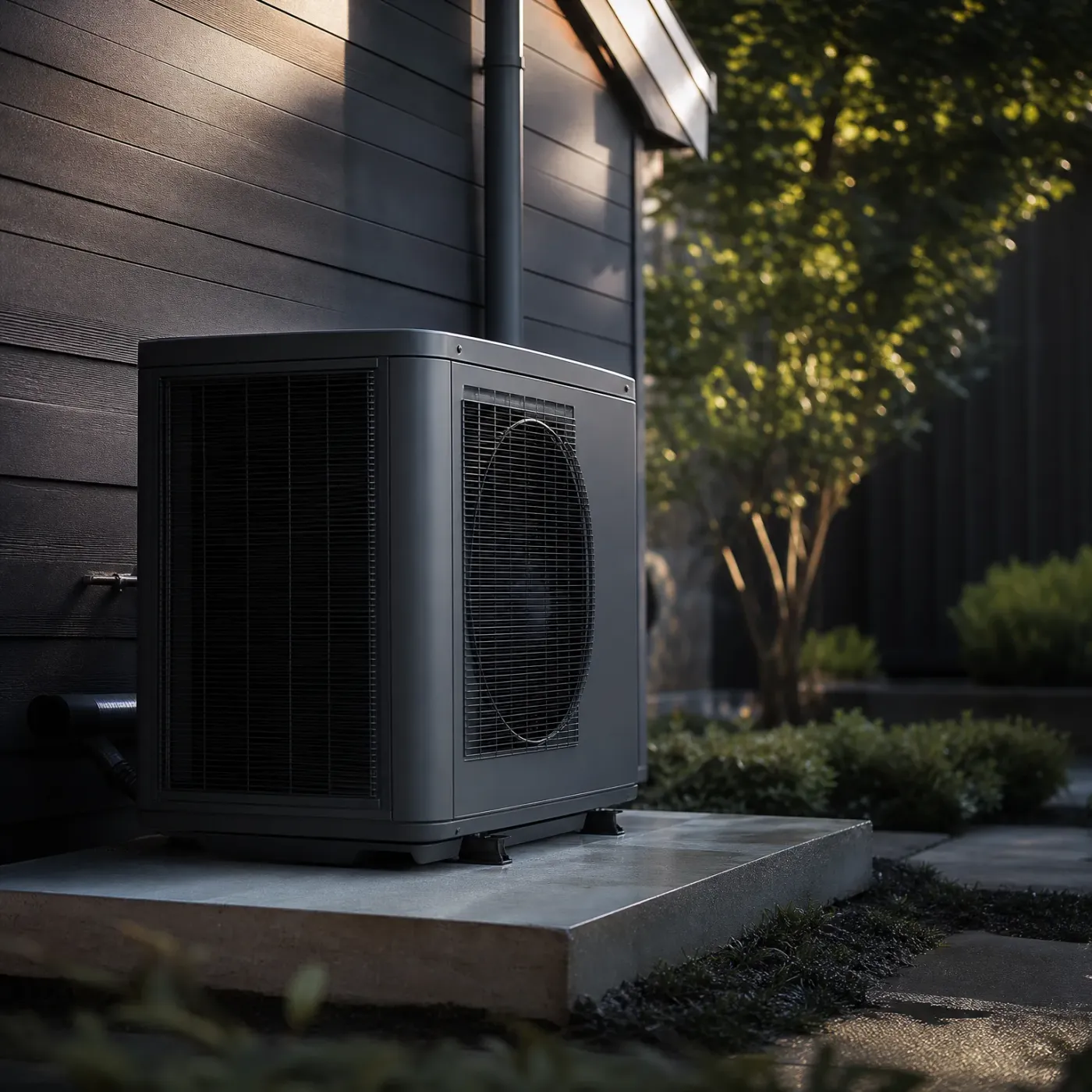
A gray outdoor condenser/heat pump unit with a side fan grille sits on a concrete pad beside a dark horizontal wood-sided house, with shrubs and a small tree nearby.

No quotes to chase

When to replace a heat pump in Troy, MO

A heat pump in Lincoln County earns its keep both ways, running your AC through the sticky summers and carrying your heat all winter. That double duty is why the question of replacing one isn't simple. This page walks through the signs that matter, the age to watch for, and what a straight comparison of quotes looks like instead of calling around and explaining your system to every contractor who picks up.

Skip the calls

Most heat pumps in Lincoln County last 10 to 15 years. Past that, the compressor is working harder each season, and your winter heat is the first thing to suffer, since the unit leans on backup electric heat strips more often to keep up on the coldest days. If your system is in that age range and you're seeing ice building up on the outdoor unit that won't clear, rooms that stay cold no matter what the thermostat says, or repair bills showing up every year, replacement is usually the better call. A heat pump that's struggling to heat is also struggling to cool, so the same unit that leaves you cold in January will run long and still fall short in July and August. If your system is newer and the problem is a single failed part, repair likely makes more sense. The age of the unit and what it's doing right now, together, point to the answer.

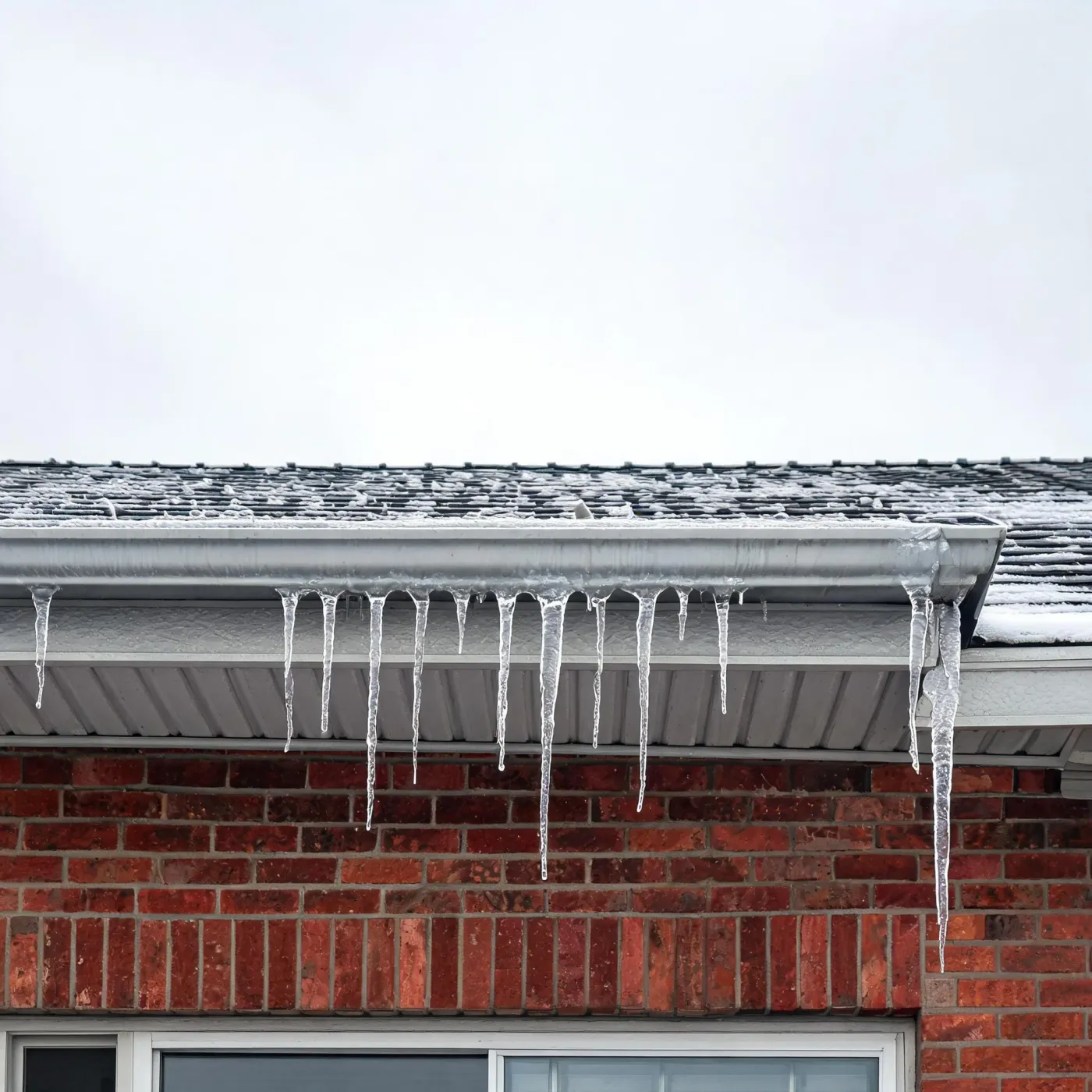
Icicles hang from a metal gutter along the eave of a red brick house with a snow-dusted shingle roof under an overcast white sky.

Winter nights here average 23°F, December through February, according to NOAA climate data for Lincoln County. That's cold enough that your heat pump is pulling heat out of outside air that barely has any to give. On nights like that, an older unit may run long stretches without feeling like it's catching up, and you'll notice the backup heat strips kicking in more than they used to. That costs more to run than the heat pump alone, and it's a sign the compressor isn't keeping pace. A heat pump still in good shape handles 23°F nights without leaning on backup heat all night.

NOAA nClimDiv 1991-2020

Is your heat pump keeping up this winter?

Walk through your house on a cold night and check the vents. If the air feels cooler than it used to, or some rooms stay chilly while others are fine, the unit is struggling. Listen for it running almost constantly without the house ever feeling quite warm enough. Check your breaker panel too. If the backup heat strips are kicking on often, your electric bill will show it, since strip heat costs more to run than the heat pump alone. A unit that short cycles, turning on and off in quick bursts, or one that's developed a knock or rattle, is wearing out parts faster than it should. Left alone, a failing heat pump can leave your household without reliable heat on the nights you need it most.

A woman in a knitted shawl sits in a living room with a fireplace, shelves, a sofa with cushions, and a lamp by a bright window, looking off to the side.
A woman with long brown wavy hair in a green shirt over a white top stands in a living room with built-in white shelves, a ceiling fan, a potted plant and a sliding glass door.
A woman with shoulder-length gray-streaked hair in a light gray knit sweater stands smiling and looking off to the side in a living room with a sofa, houseplant, framed picture, and sunlit sliding glass door.
A woman with shoulder-length curly gray hair wearing a gray knit sweater stands near a window with a sheer curtain, looking to the side, with a blurred interior room behind her.

Repair the Heat Pump or Replace It

Repair

  • A single repair, like a failed capacitor or a stuck reversing valve, is worth fixing if the unit is still within its 10 to 15 year range.
  • If the compressor itself is sound, a part replacement can keep the system running through several more Lincoln County winters.
  • Repairing makes sense when the heat pump still holds a steady temperature on those 23°F January nights without leaning hard on the backup strips.
  • A unit with one isolated problem and a clean repair history has more life left than one with a string of unrelated breakdowns.
  • If the refrigerant charge is low from a small leak that gets sealed and recharged, the system can run efficiently again for years.

Replace

  • Once the compressor is failing, replacing it usually costs close to a new system, so putting that money toward a new unit goes further.
  • A unit past 15 years was built to older efficiency standards and will cost more to run than a current heat pump of the same size.
  • If backup electric heat strips are kicking on most cold nights, the heat pump itself is no longer carrying the load it was sized for.
  • Frequent repairs in the same season point to a system that is wearing out broadly, not failing at one fixable point.
  • Replacing now means a system sized and matched to your house, rather than one that was already struggling before the last repair.
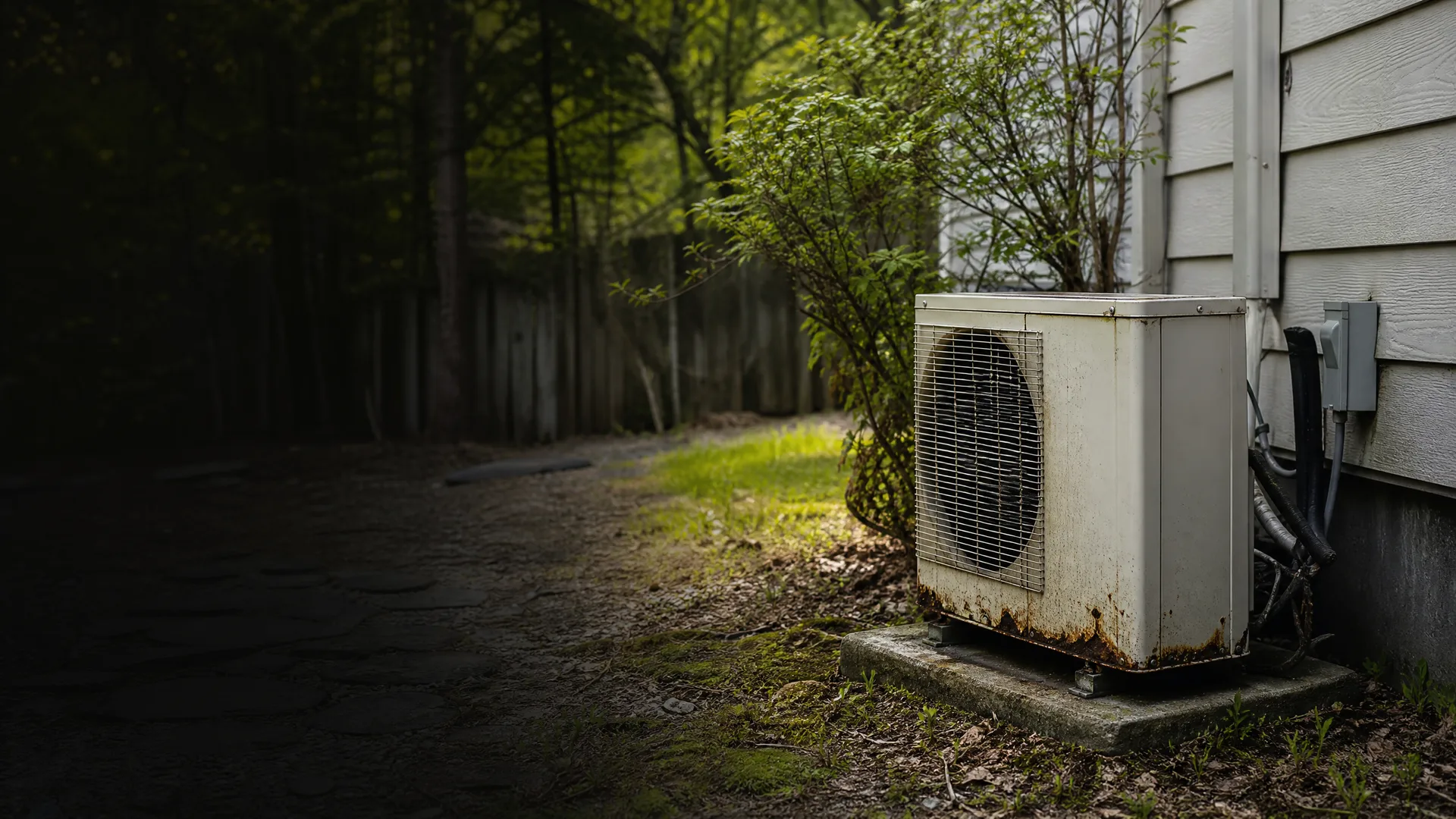
A weathered, rust-streaked outdoor heat pump unit on a concrete pad beside a house with horizontal siding, with shrubs, moss and a dim wooded yard and fence to the left.

You're out checking the yard in April, after the last cold snap, when you notice the outdoor unit sitting by the side of the house. Rust has crept along the base, flaking where the metal meets the ground. You crouch down and press a thumb to it, and a little of it comes away. You think back on the winter just passed, the mornings the vents ran warm and the ones they didn't. You've got a number in your phone for a guy who fixed the ice maker two years back, but heat pumps aren't his trade, and you're not in the mood to call around Lincoln County hoping someone picks up who actually works on these.

Skip calling around

One installer gets your project, so there's no bidding war over it.

You only hire the pro if you want to.

What the reversing valve does

The reversing valve is what lets one unit heat your home in January and cool it in July. It switches the direction of the refrigerant so the same coils that pull heat out of your house in summer pull heat in from outside air in winter. It's always working, every time the system switches between heating and cooling, so it takes more wear than almost any other part. When it sticks or fails, you might get cool air when you called for heat, or the system can't settle into either mode. On an older unit, a stuck reversing valve is often the sign the compressor isn't far behind.
What backup heat strips cost you

Electric heat strips are the backup system built into your heat pump for the coldest nights, the ones below freezing when outside air doesn't hold enough heat for the unit to pull from efficiently. They work by resistance heating, the same way a toaster does, with no compressor involved. That makes them reliable, but they use far more electricity than the heat pump running on its own. A unit in good shape leans on them only on the harshest nights. One that's aging leans on them more and more often, and your power bill in January shows it before anything else does.

How much of the year does your heat pump have to work?

  • Winter nights average 23°F

    Winter nights average 23°F, which means your heat pump has to pull warmth from outside air that holds almost none. That strain adds up over years.

  • Heat runs October through April

    Heat runs October through April here. Seven months is more than half the year resting on one unit, with no break until spring.

  • Cooling runs May through September

    Cooling runs May through September. Add that to the heating months and this unit works nearly year round with barely a pause.

NOAA nClimDiv 1991-2020

Keep paying for repairs on a unit that's still within its 10 to 15 year window, and you're likely getting several more winters and summers out of it before the compressor itself gives out.

Keep paying for repairs on a unit past that window, and you're patching a compressor that's already losing the fight, with the next failure landing on the coldest night of the year.

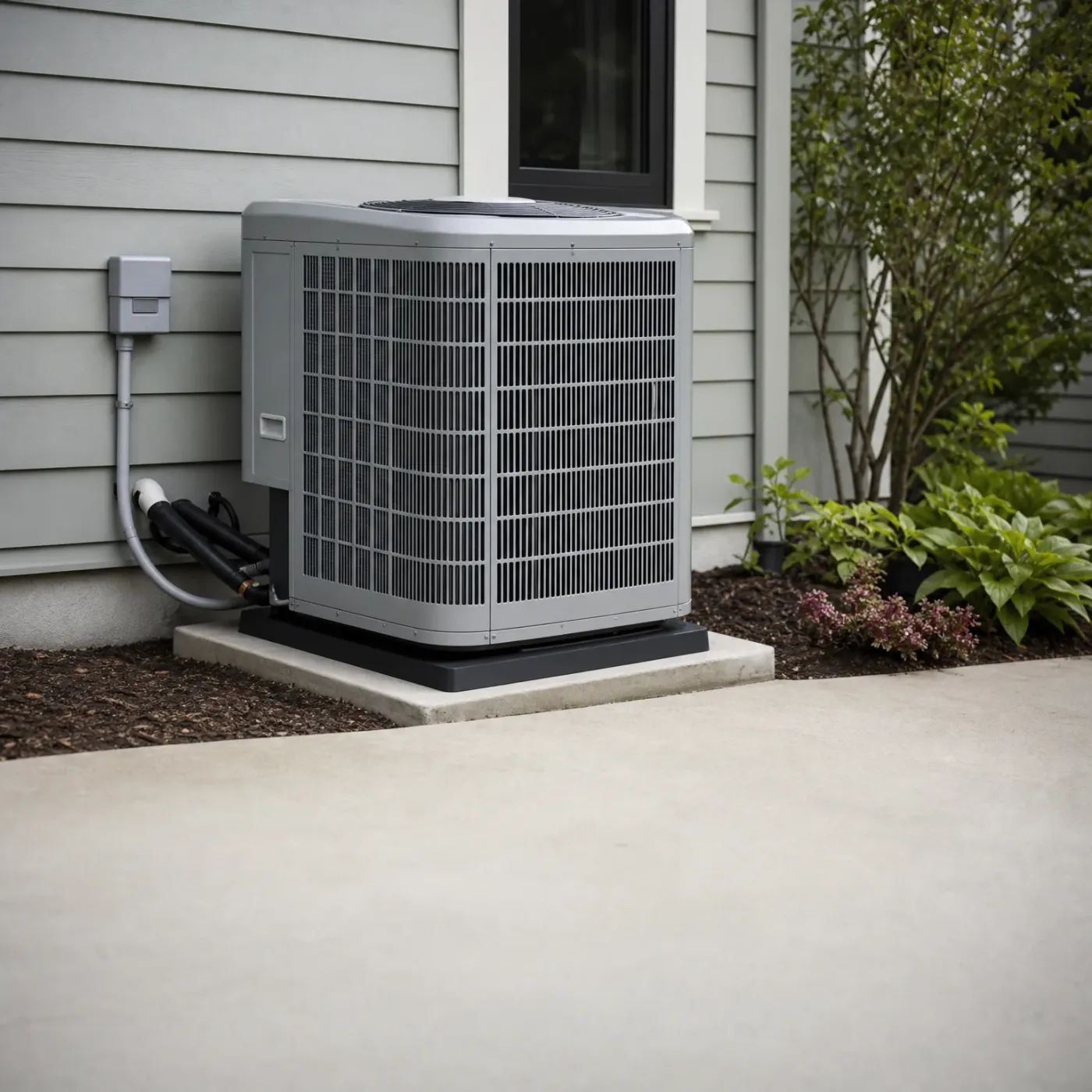
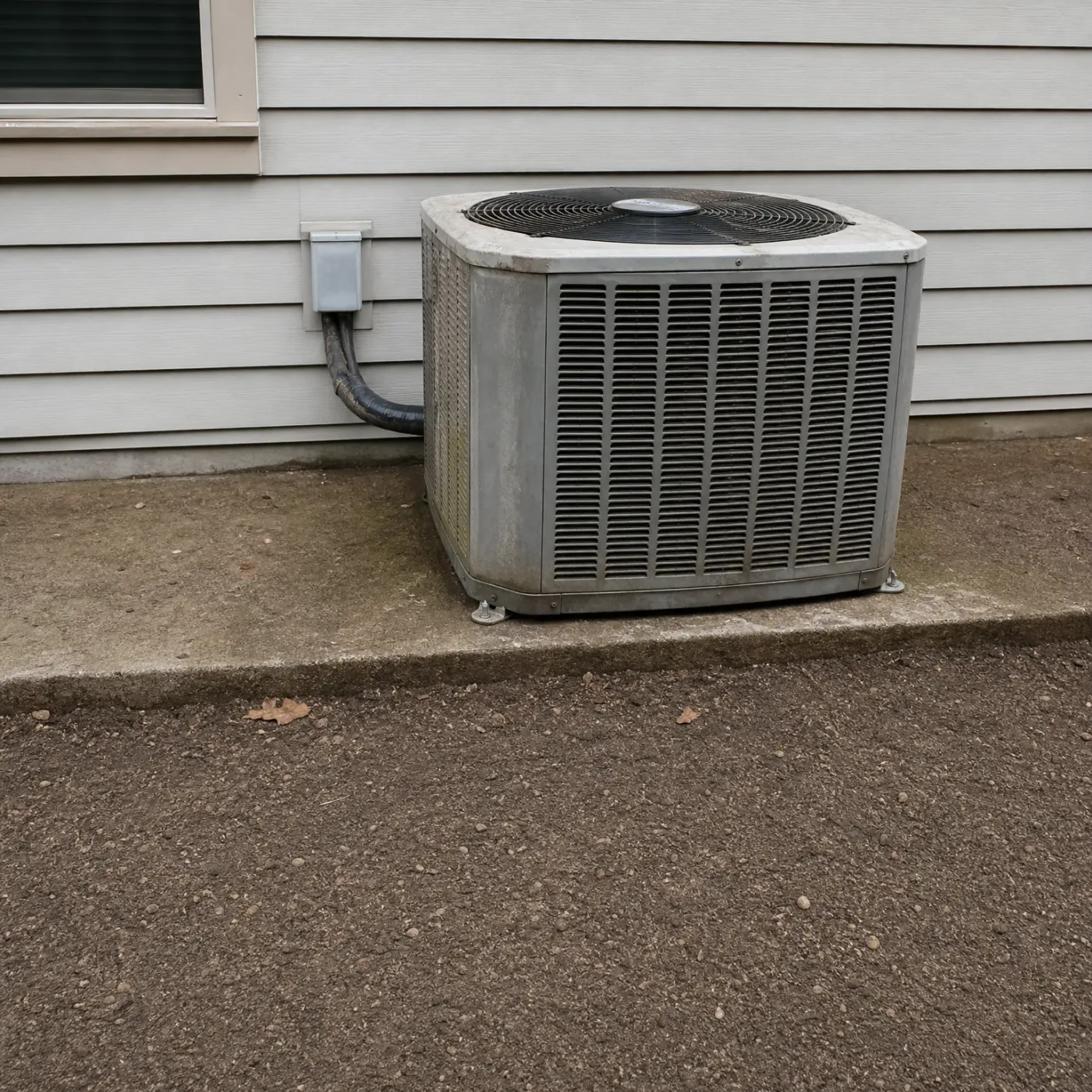
An outdoor air conditioner condenser unit on a concrete pad beside a light gray vinyl-sided house, with an electrical disconnect box and conduit on the wall and bare soil in the foreground.
Before you get your heat pump installation
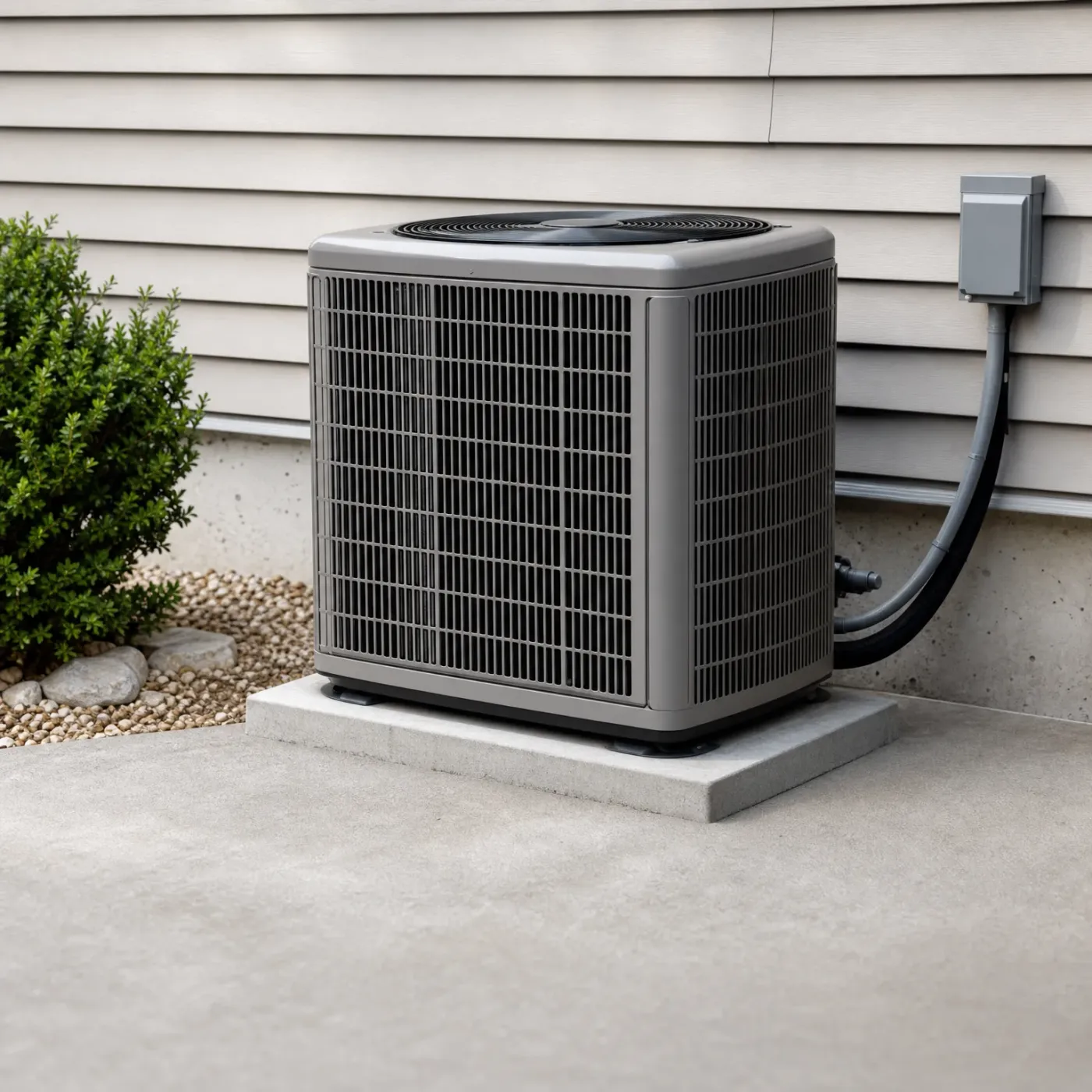
A gray outdoor condenser unit on a concrete pad beside a house with horizontal lap siding, connected by conduit and lines to a wall-mounted disconnect box, with a shrub and gravel bed to the left.
After you get your heat pump installation

How your heat pump defrosts itself

  • The defrost board checks outdoor coil temperature every 30 to 90 minutes and triggers a defrost cycle when frost builds up.
  • During defrost, the reversing valve flips the system into cooling mode briefly so hot refrigerant melts ice off the outdoor coil.
  • An aging defrost board can misread the coil temperature and either skip cycles, letting ice build up, or run them too often, wasting heat.
  • A heat pump stuck mid-defrost blows cold air through your vents for several minutes, which feels like a malfunction but is normal if brief.
  • Iced-over coils force the compressor to work against the blockage, and that extra strain shortens its life faster than normal winter use.
  • Auxiliary heat strips kick in automatically during defrost to offset the cold air, so a failing heat strip makes those cycles feel colder and longer.

On a cold night, your outdoor unit is pulling heat from air that's already near freezing, and moisture in that air turns to frost on the coil. Left alone, that frost would choke off airflow and the system would stop working. So the defrost board watches the coil temperature on a set schedule, usually checking every half hour to ninety minutes, and when it senses enough frost built up, it starts a defrost cycle. The reversing valve, the same part that lets your unit switch between heating and cooling, flips briefly into cooling mode. Hot refrigerant runs through the outdoor coil instead of the indoor one, which melts the ice off in a few minutes. That's also why you'll feel a few minutes of cold air through your vents during defrost. It's normal, and the heat strips are there to take the edge off while it happens. What's not normal is a cycle that runs long or happens too often. A defrost board that's starting to fail can misjudge the coil temperature, either skipping cycles so ice builds up unchecked, or triggering them so often that the unit spends more time defrosting than heating. Either way, the compressor ends up working against a problem it shouldn't have, and that kind of strain wears it down faster than a normal Lincoln County winter would on its own.

A gray outdoor condenser unit on a concrete pad beside a light-colored lap-sided house, with a wall-mounted disconnect box, refrigerant lines, mulch bed and shrubs, and a concrete walkway in the foreground.
A heat pump running the way it should: steady cycles, clean lines, nothing leaking onto the pad.
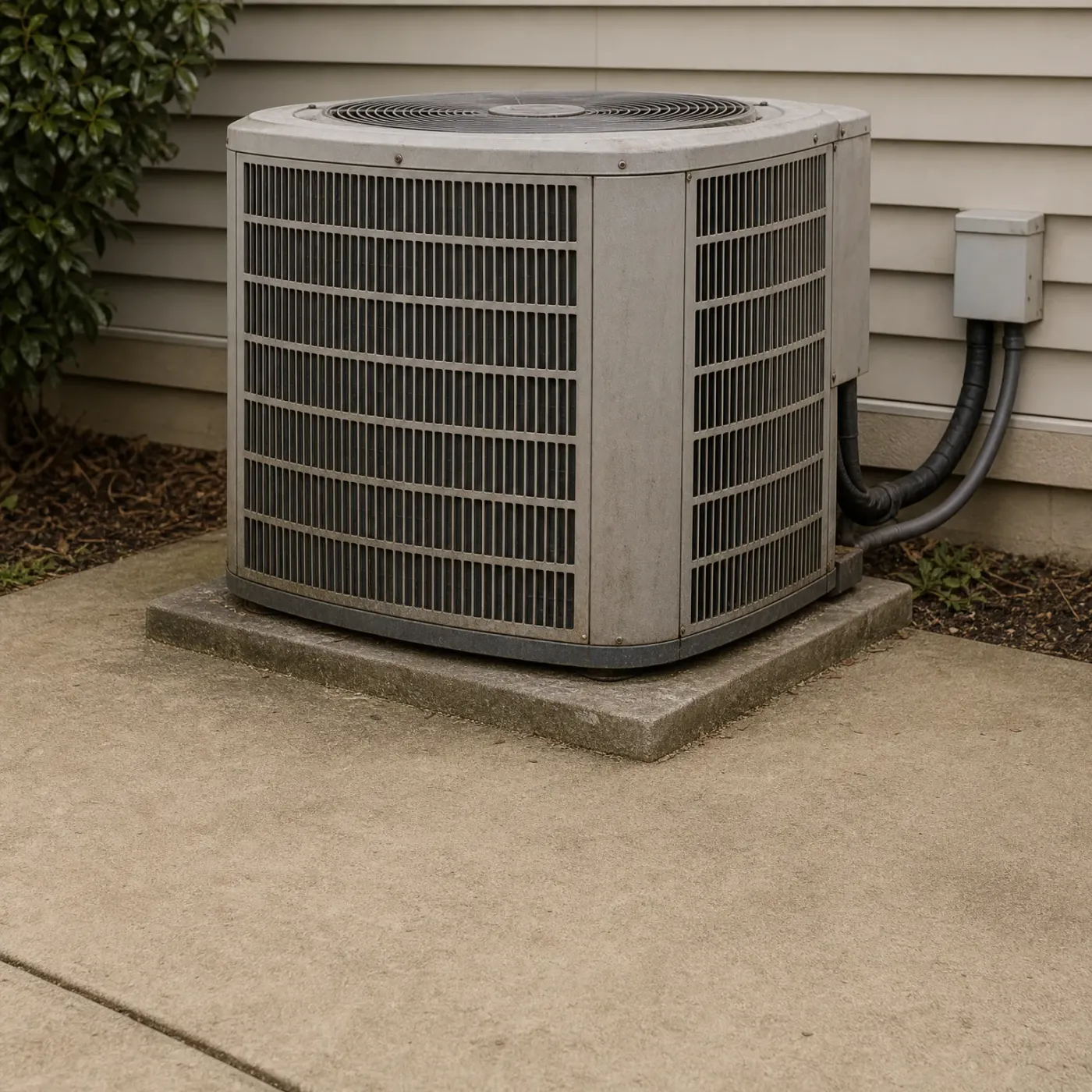
An outdoor condenser unit sits on a concrete pad beside a house with horizontal vinyl siding, with a gray electrical disconnect box and conduit on the wall and a shrub at left.
Trouble at the disconnect box: a unit working past its years, leaning harder on every cycle to keep the house warm.
  1. Technician checks refrigerant charge and pressures at the service valves.

  2. Technician tests the reversing valve under both heating and cooling modes.

  3. Technician inspects the compressor for amp draw and unusual noise.

  4. Technician decides whether a repair or full replacement makes sense.

A closed silver laptop and a glazed ceramic mug on a wooden table, with a blurred kitchen counter, potted plant, cutting board and window in the background.

Where that leaves you

If your heat pump is inside its 10 to 15 year window and the problem is one part, a repair makes sense. If it's past that window and leaning on the electric heat strips to get through a cold night, replacing it is the sounder call. You've seen what to check and what it means.

Finding someone to do that work usually means calling around, explaining the same problem to three different companies, and sorting through quotes that don't quite match up. This connects you with one licensed contractor local to Lincoln County, someone who works on these units every winter and knows what tends to fail first in a Troy heat pump that's run its course. One call, one visit, one straight answer about whether your unit is worth fixing or worth replacing.

A gray upholstered sofa with a beige cushion and knit blanket beside a curtained window, with a white mug and a book on a dark wooden table in the foreground and a lit lamp in the background.
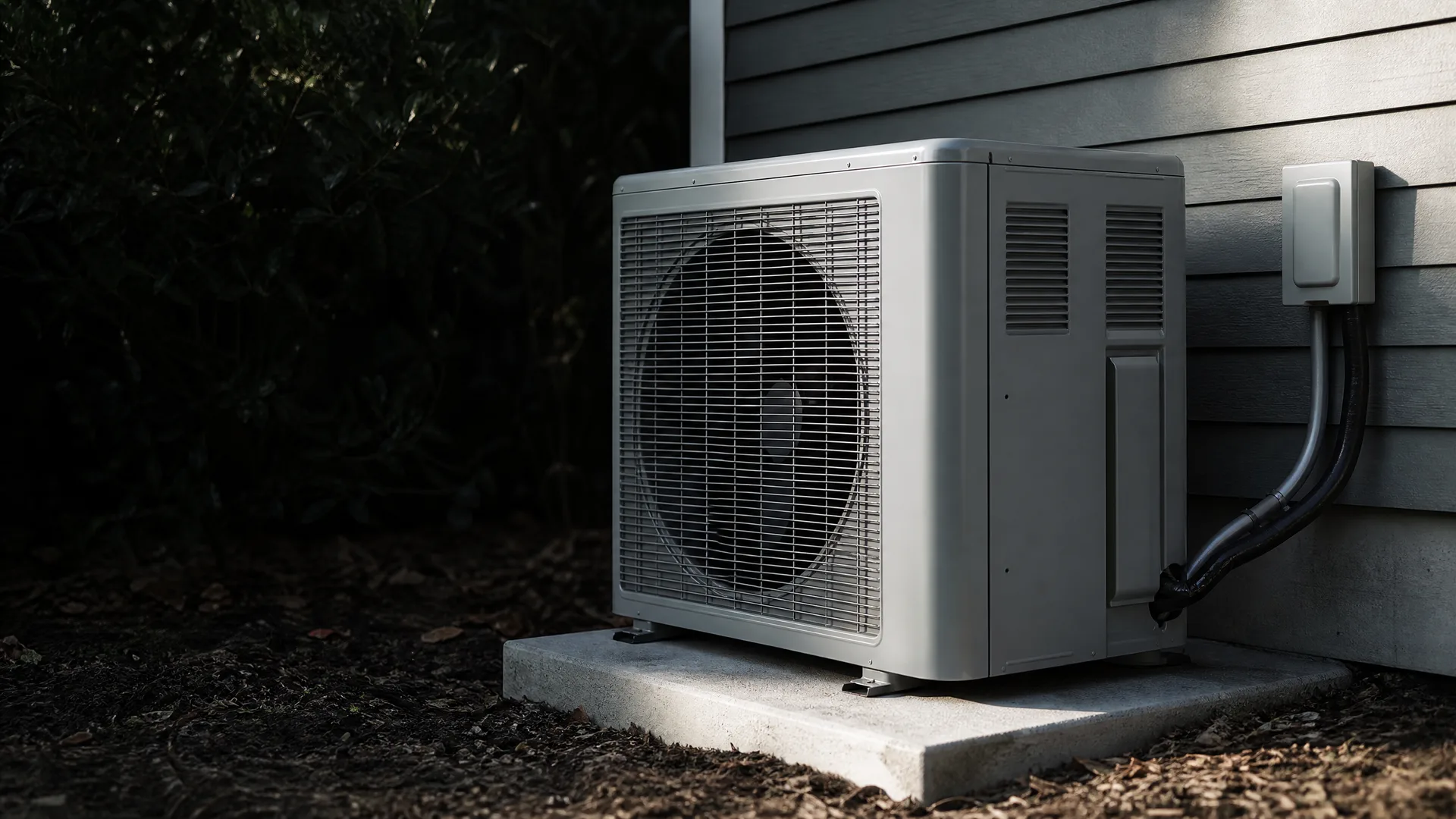
An outdoor air conditioning or heat pump condenser unit on a concrete pad beside a gray horizontal-sided house, with a disconnect box and conduit on the wall and dark shrubbery to the left.

Describe it once

Step 1 of 3: Equipment