Tell us about the job
Takes about a minute. No obligation.
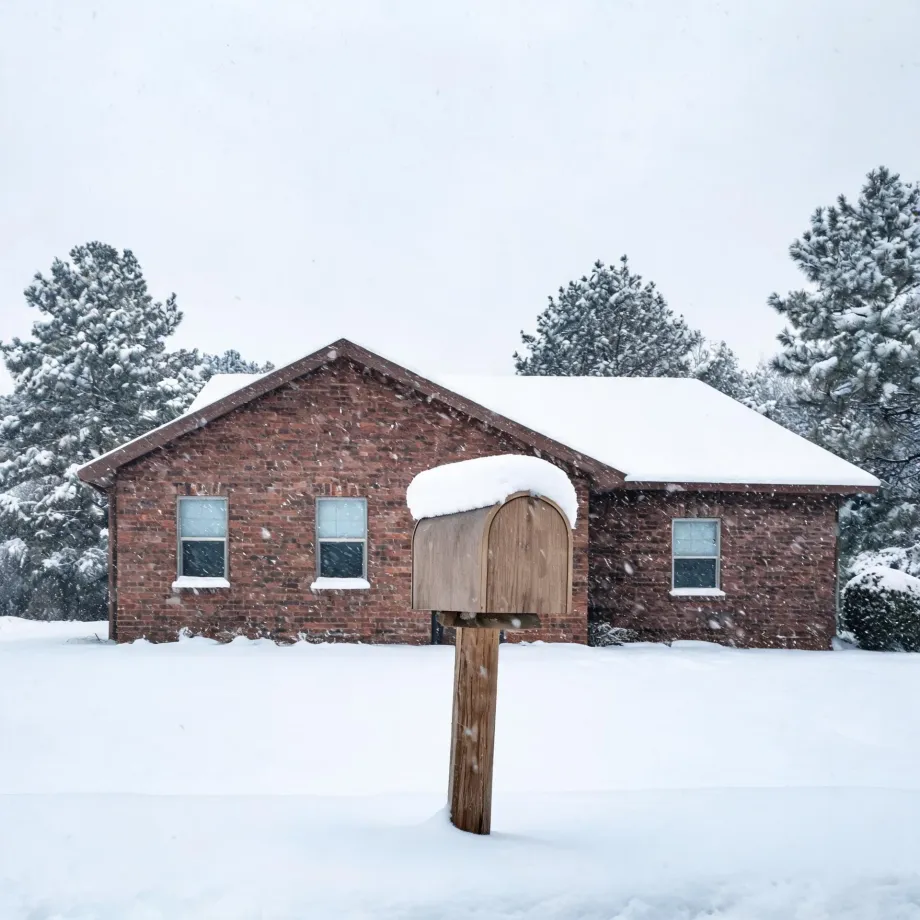
A contractor diagnosing a heat pump repair in Texas County has to account for what the machine has already been through, not just what failed today. Homes in Texas County, MO run heat about seven months a year, from October through April. The reversing valve cycles between heating and cooling modes twice a year, and the refrigerant circuit carries load through cold months when outdoor capacity is hardest to maintain. Those are the components a contractor checks first, because that is where the accumulated hours show up. A system that was undersized at install will have been running harder than its rating allowed, and the repair scope reflects that.
Houses that have run through more than one system over the decades often carry the evidence of each one: jury-rigged line sets, connections added to reach a newer unit, wiring that was adequate for something older. Half the homes in Texas County, Missouri were built in 1979 or earlier (2020-2024 ACS 5-year). A contractor opening a heat pump in stock like this finds components whose condition reflects that accumulated history, and the repair scope follows what is actually there, not what the permit or the original build would suggest. Parts that are hard to source, connections that have been extended, refrigerant lines that belong to a previous configuration, these are what the opened unit and the surrounding infrastructure reveal.
The Parts of a Heat Pump a Contractor Checks First
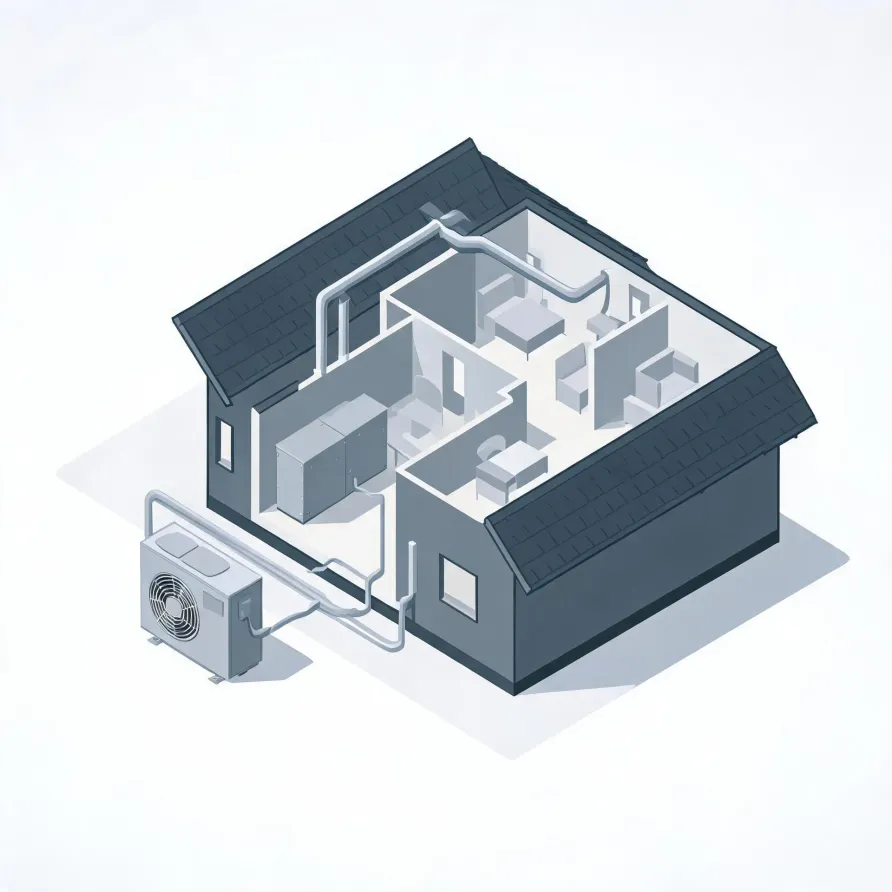
The outdoor unit is where most repairs start. It houses the compressor, which is the heart of the system, and the condenser coil, which releases or draws in heat depending on the season. When a heat pump stops keeping up, or makes noise, or trips the breaker, the compressor and that coil are where a contractor looks first.
Inside the house, the air handler holds the blower motor and the indoor coil. The blower moves air across the coil and through the home. Between the two units, refrigerant lines and a reversing valve control which direction the system is working, and a failed reversing valve is a common reason a heat pump gets stuck in one mode.
The drawing shows a typical layout, and a licensed contractor determines which parts and conditions apply to your specific home.
Find a contractor in Texas CountyTexas County, Missouri, by the numbers
116 severe weather events were recorded in Texas County, Missouri between 2015 and 2024.
NOAA National Centers for Environmental Information, Storm Events Database, bulk CSV export, events 2015-01-01 through 2024-12-31.Half the homes in Texas County, Missouri were built in 1979 or earlier (2020-2024 ACS 5-year).
U.S. Census Bureau, 2020-2024 American Community Survey 5-Year EstimatesTexas County, Missouri holds 11,006 housing units (2020-2024 ACS 5-year).
U.S. Census Bureau, 2020-2024 American Community Survey 5-Year EstimatesOwners occupy 77.2% of the occupied homes in Texas County, Missouri (2020-2024 ACS 5-year).
U.S. Census Bureau, 2020-2024 American Community Survey 5-Year EstimatesSevere Weather Events in Texas County by Year
Weather puts load on heat pump equipment. How hard a unit works, and how often it is pushed to its limits, depends on what the local climate actually does.
116 severe weather events, 2015–2024. Source: NOAA National Centers for Environmental Information, Storm Events Database.