Tell us about the job
Takes about a minute. No obligation.
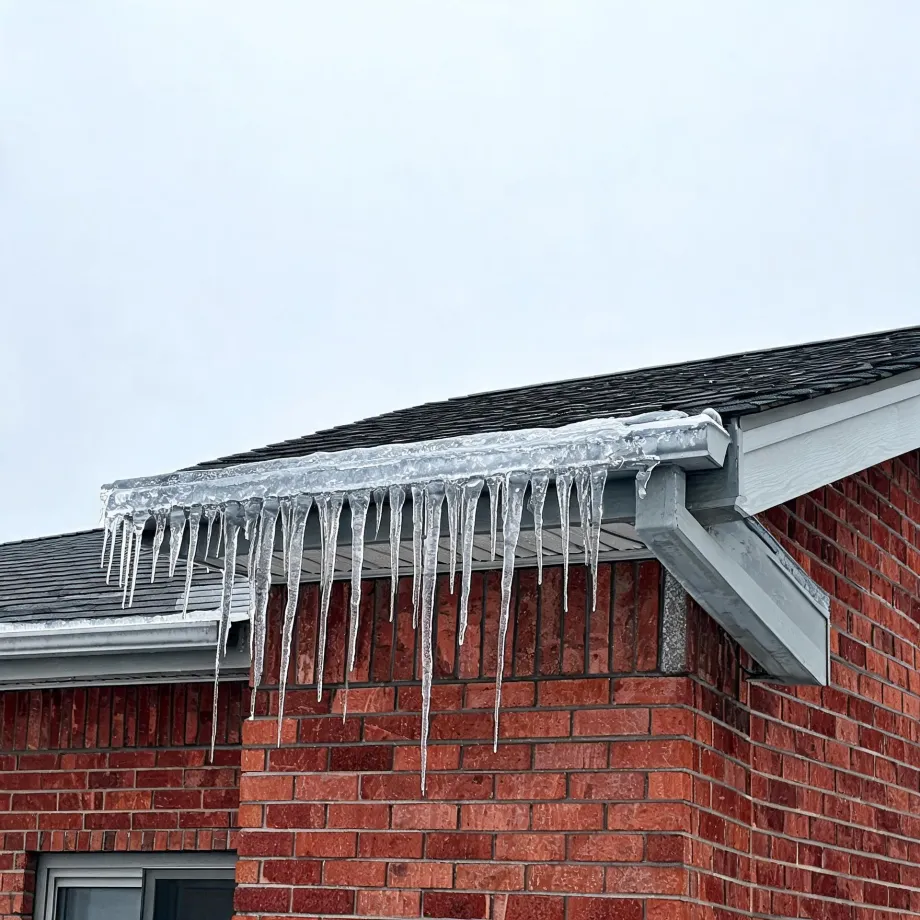
A heat pump running through a Knox County winter is working at its hardest point: outdoor temperatures pull its capacity down, and the refrigerant circuit cycles through heating mode for month after month. Homes in Knox County, MO run heat about eight months a year, from October through May. The reversing valve, the compressor, and the defrost board all carry that load, and by the time a fault surfaces, the wear is already layered in. A contractor pricing a repair here checks those components for cumulative fatigue before chasing anything else.
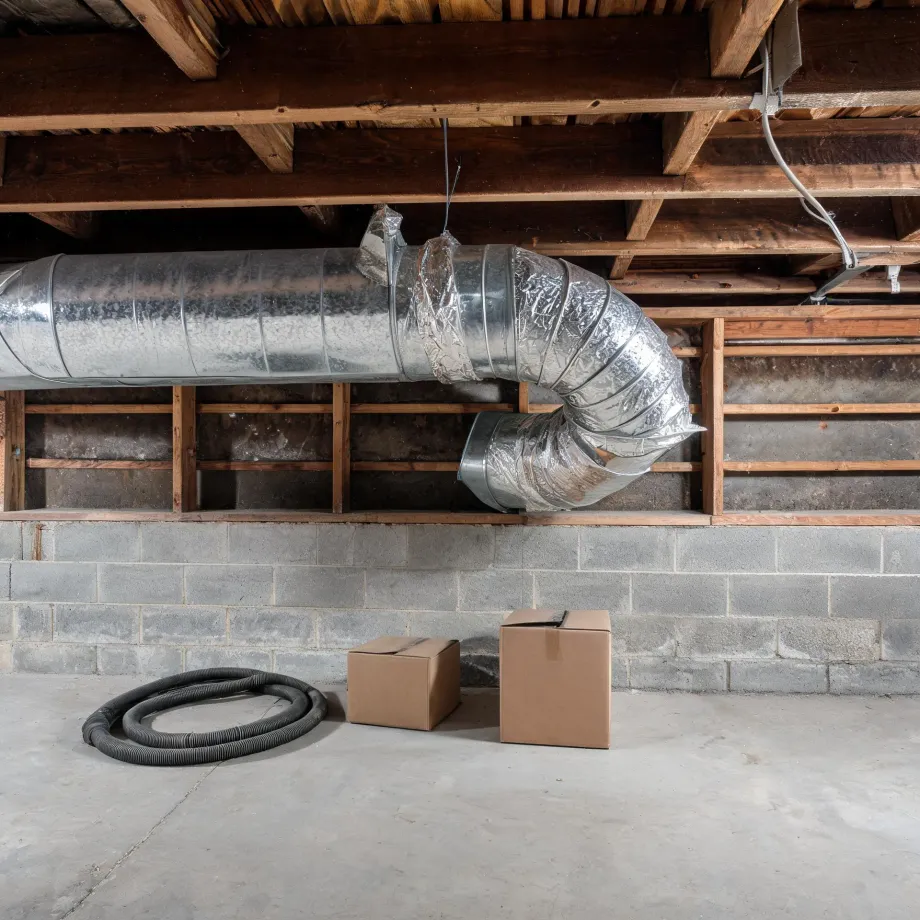
Ductwork in a house this old has its own history, and that history shows up once a contractor opens the system. Refrigerant lines may have been rerouted, return paths cut into walls that were not built for them, and sealing that worked for a previous unit long since failed. Half the homes in Knox County, Missouri were built in 1965 or earlier (2020-2024 ACS 5-year). A heat pump repair in stock like this frequently turns on what the surrounding ductwork is doing to the system's performance, not only what the unit itself has worn. The contractor has to account for both before the diagnosis is finished.
The Parts of a Heat Pump a Contractor Checks During Repair
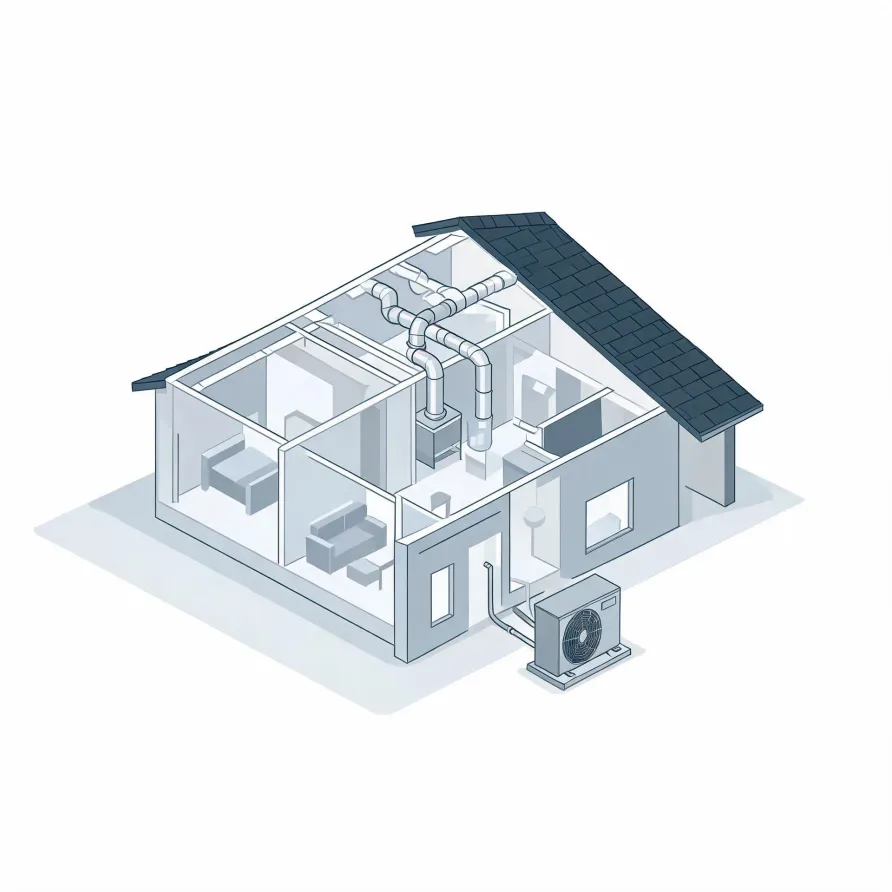
The outdoor unit is the piece most homeowners recognize first, sitting on a pad beside the house. It holds the compressor and the condenser coil, and when either one fails, the system loses its ability to move heat in either direction. The indoor air handler, mounted inside the home, contains the evaporator coil and the blower that pushes conditioned air through the house.
The reversing valve sits inside the outdoor unit and is what lets a heat pump shift between heating and cooling. The expansion valve and the refrigerant lines that connect both units are also points a contractor examines when the system is not performing as it should.
The drawing beside this text shows the general layout of these components, and a licensed contractor determines which of them apply to your specific home and situation.
Find a contractor in Knox CountyKnox County by the Numbers
30 severe weather events were recorded in Knox County, Missouri between 2015 and 2024.
NOAA National Centers for Environmental Information, Storm Events Database, bulk CSV export, events 2015-01-01 through 2024-12-31.Half the homes in Knox County, Missouri were built in 1965 or earlier (2020-2024 ACS 5-year).
U.S. Census Bureau, 2020-2024 American Community Survey 5-Year EstimatesKnox County, Missouri holds 1,937 housing units (2020-2024 ACS 5-year).
U.S. Census Bureau, 2020-2024 American Community Survey 5-Year EstimatesOwners occupy 85.1% of the occupied homes in Knox County, Missouri (2020-2024 ACS 5-year).
U.S. Census Bureau, 2020-2024 American Community Survey 5-Year EstimatesSevere Weather Events in Knox County
Weather puts real hours on a heat pump. Each cycle the system runs to recover from an extreme outdoor condition is work the equipment has to absorb, and over time that workload shows up as wear that repair technicians find on the bench.
30 severe weather events, 2015–2024. Source: NOAA National Centers for Environmental Information, Storm Events Database.