Tell us about the job
Takes about a minute. No obligation.
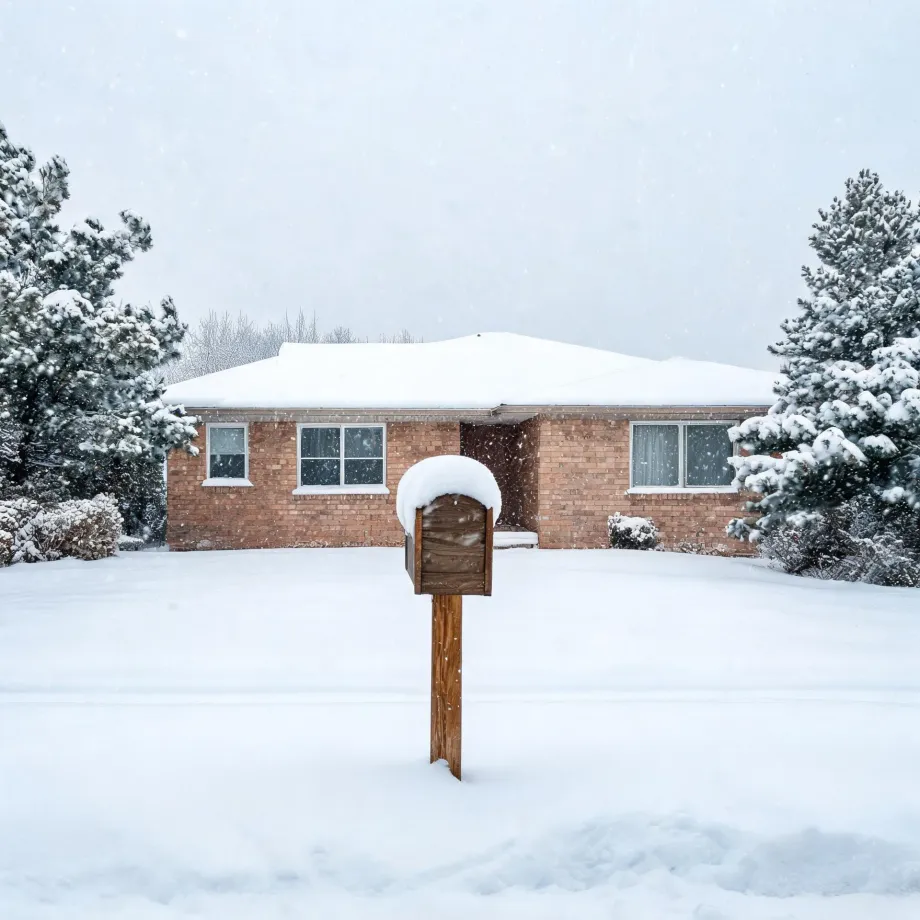
Sizing a heat pump for Clark County means accounting for what the heating side of the system is actually asked to carry. Homes in Clark County, MO run heat about eight months a year, from October through May. As outdoor temperatures drop through those months, a heat pump's capacity falls with them, and a unit that looks adequate on paper can spend the coldest weeks handing off to backup resistance heat instead of running the refrigerant cycle. A contractor has to work out where that crossover point sits for this house before the quote means anything, because a system undersized for the heating load here will not announce itself immediately.
Existing ductwork is what a heat pump installation turns on in this county. Half the homes in Clark County, Missouri were built in 1970 or earlier (2020-2024 ACS 5-year). Stock built in that era was almost always ducted around a furnace, which pushes air differently than a heat pump does, at lower velocities and across more of the year. A contractor quoting a new heat pump here has to assess whether the existing runs, their sizing, and their routing will carry the system before anything else gets priced.
What Goes Into a Heat Pump Installation
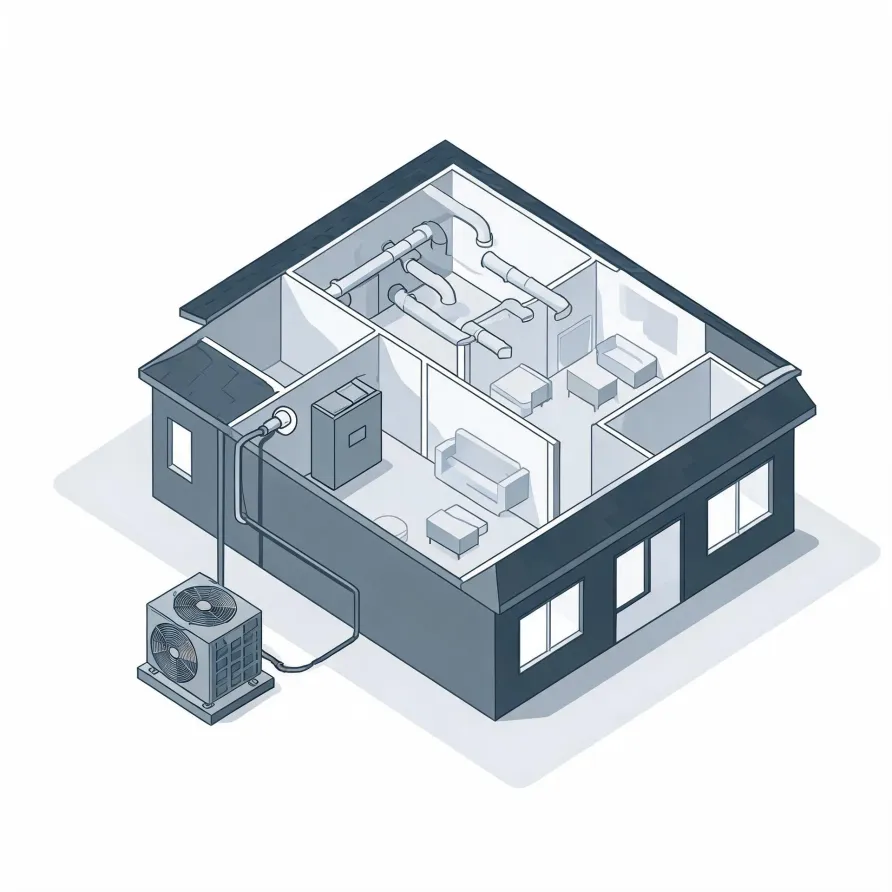
The outdoor unit is the piece a homeowner sees first, sitting on a pad beside the house, housing the compressor and the coil that exchanges heat with the outside air. Inside, an air handler mounts in a utility space, basement, or closet and moves conditioned air through the home. Together these two units carry the full load of heating and cooling.
A refrigerant line set runs between the outdoor unit and the air handler, connecting the two halves of the system through the wall or floor. A thermostat goes on an interior wall where it reads the air temperature and tells the system when to run. Some installations also include a condensate drain line routed away from the air handler to handle moisture removed from indoor air.
The drawing shows the general layout of a heat pump system, and a licensed contractor determines exactly what applies to this house.
Find a contractor in Clark CountyClark County, by the numbers
89 severe weather events were recorded in Clark County, Missouri between 2015 and 2024.
NOAA National Centers for Environmental Information, Storm Events Database, bulk CSV export, events 2015-01-01 through 2024-12-31.Half the homes in Clark County, Missouri were built in 1970 or earlier (2020-2024 ACS 5-year).
U.S. Census Bureau, 2020-2024 American Community Survey 5-Year EstimatesClark County, Missouri holds 3,233 housing units (2020-2024 ACS 5-year).
U.S. Census Bureau, 2020-2024 American Community Survey 5-Year EstimatesOwners occupy 78.3% of the occupied homes in Clark County, Missouri (2020-2024 ACS 5-year).
U.S. Census Bureau, 2020-2024 American Community Survey 5-Year EstimatesSevere Weather Events in Clark County
Heating and cooling equipment in Clark County handles whatever the local climate brings, and storm activity is part of that load calculation. A heat pump sized and installed for this area accounts for the conditions that actually occur here.
89 severe weather events, 2015–2024. Source: NOAA National Centers for Environmental Information, Storm Events Database.