Tell us about the job
Takes about a minute. No obligation.
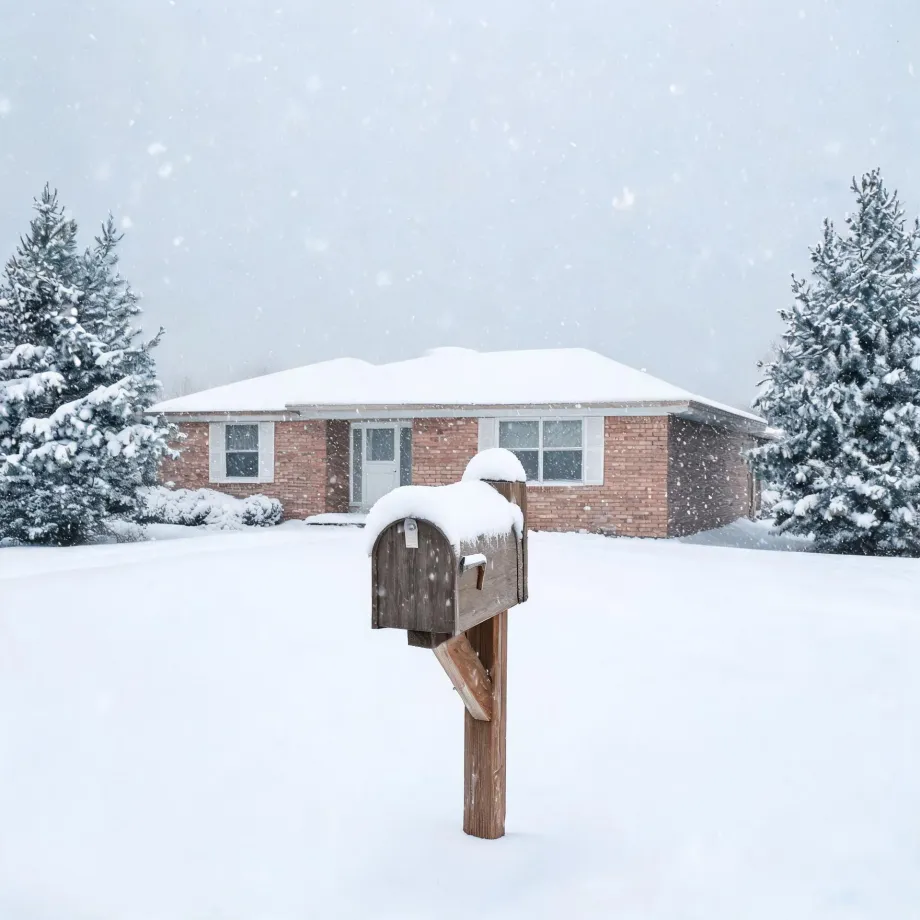
Sizing a heat pump for Lewis County starts with what the heating side demands, not the cooling side. Homes in Lewis County, MO run heat about seven months a year, from October through April. As outdoor temperatures drop through January and February, a heat pump's capacity falls with them, and the backup heat element picks up the gap. A contractor has to establish where that crossover point lands for this house before settling on equipment, because a unit sized short of it leans on resistance heat through the coldest weeks. That changes the operating cost in ways no quote prepared for mild days will capture.
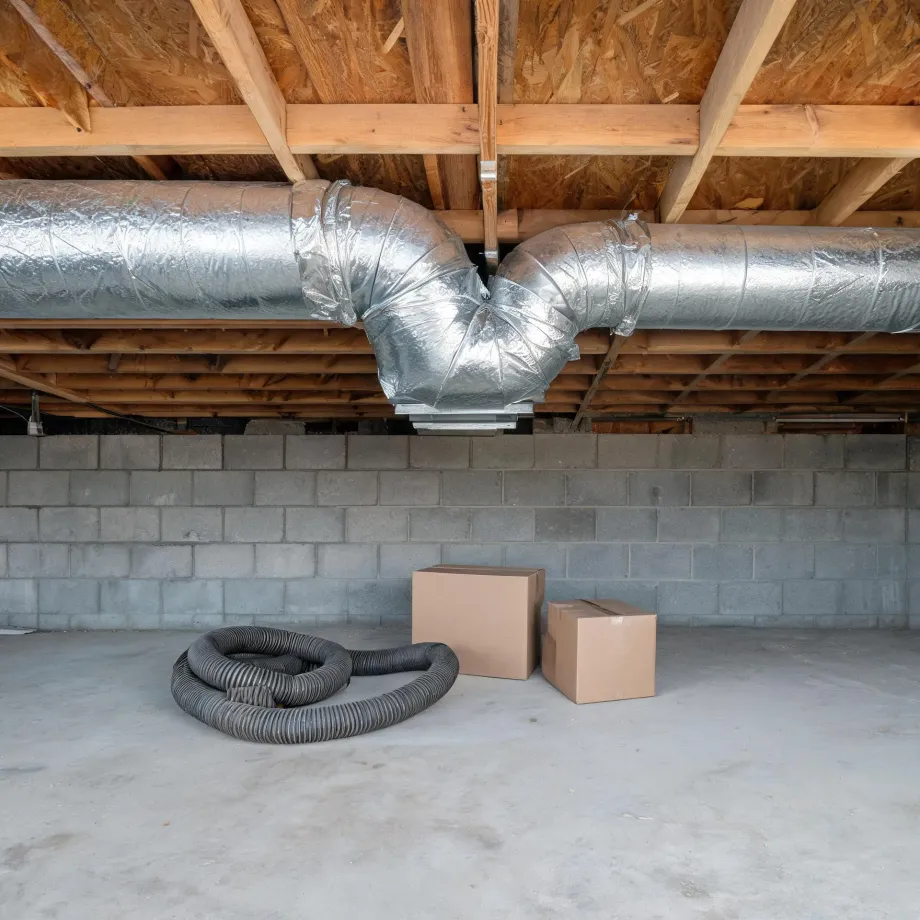
Ductwork laid into a house built for a different heating system, and a service panel sized for a different electrical load, are what a heat pump contractor has to evaluate before anything else gets priced. Half the homes in Lewis County, Missouri were built in 1969 or earlier (2020-2024 ACS 5-year). That puts the ductwork and the electrical ahead of the unit itself on the checklist. A contractor who finds the ducts undersized for the airflow a heat pump moves, or a panel that cannot carry the new draw, has to bring those into scope before the equipment question is settled.
What a Heat Pump Installation Covers
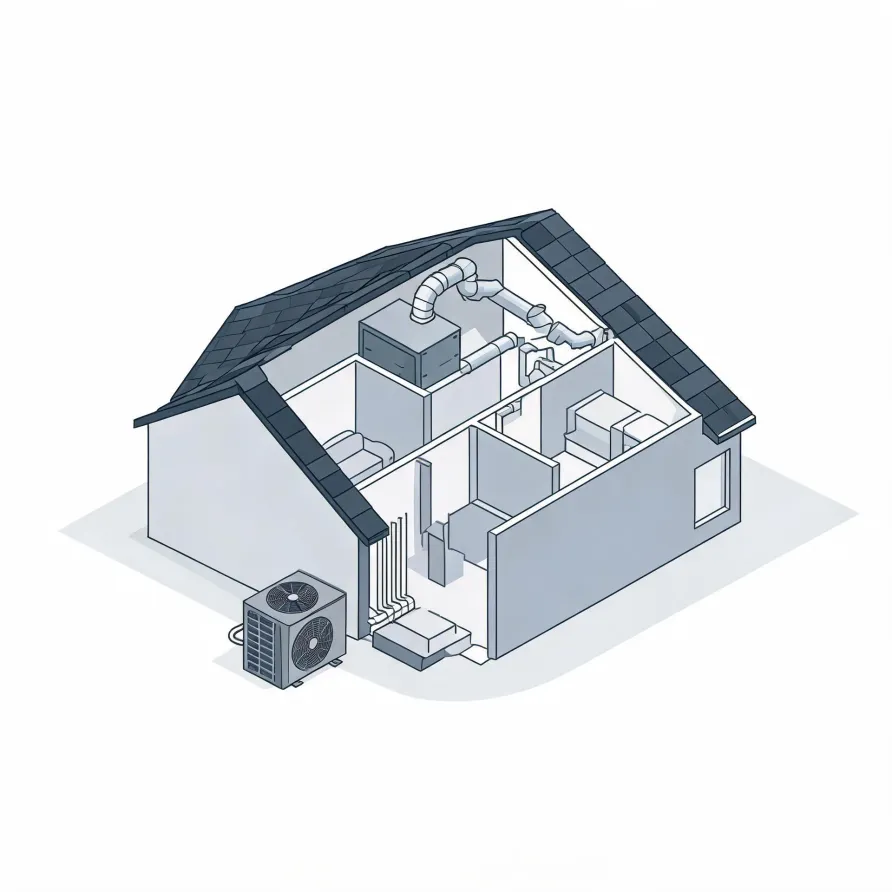
The outdoor unit sits on a pad beside the house and holds the compressor and coil that do the bulk of the work. Inside, the air handler mounts in a utility space, basement, or closet and moves conditioned air through the home. Together these two cabinets are what a new installation puts in place.
A refrigerant line set runs between the two units, connecting the outdoor pad to the indoor air handler through the wall or floor. A thermostat goes on an interior wall where it reads the living space and signals the system when to run. The condensate drain line runs from the air handler to a nearby drain.
The drawing shows the general layout of these components, and a licensed contractor determines exactly how they apply to your house.
Find a contractor in Lewis CountyLewis County, Missouri, by the numbers
65 severe weather events were recorded in Lewis County, Missouri between 2015 and 2024.
NOAA National Centers for Environmental Information, Storm Events Database, bulk CSV export, events 2015-01-01 through 2024-12-31.Half the homes in Lewis County, Missouri were built in 1969 or earlier (2020-2024 ACS 5-year).
U.S. Census Bureau, 2020-2024 American Community Survey 5-Year EstimatesLewis County, Missouri holds 4,320 housing units (2020-2024 ACS 5-year).
U.S. Census Bureau, 2020-2024 American Community Survey 5-Year EstimatesOwners occupy 76.3% of the occupied homes in Lewis County, Missouri (2020-2024 ACS 5-year).
U.S. Census Bureau, 2020-2024 American Community Survey 5-Year EstimatesSevere Weather Events in Lewis County
Weather in this part of Missouri puts real demands on heating and cooling equipment, and those demands shape what a heat pump here has to handle year after year. Knowing the local pattern is part of sizing and installing equipment that will hold up to the conditions.
65 severe weather events, 2015–2024. Source: NOAA National Centers for Environmental Information, Storm Events Database.