Tell us about the job
Takes about a minute. No obligation.
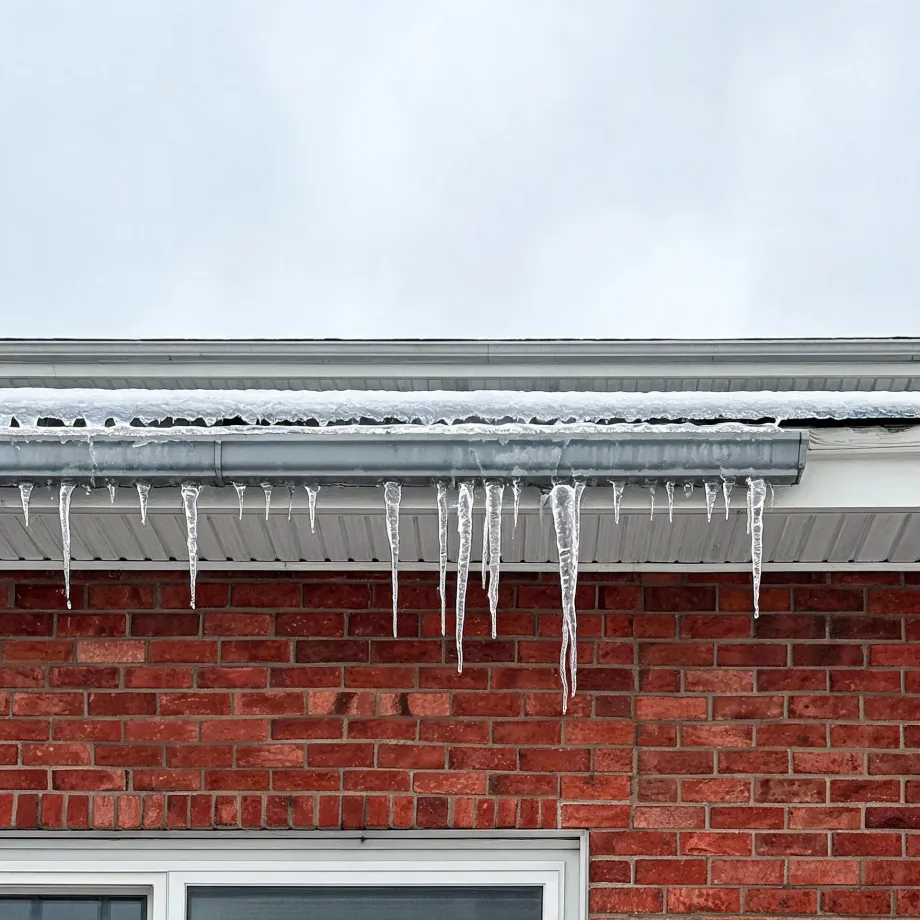
Sizing a heat pump for Lawrence County means settling a question that a generic load calculator alone cannot answer: how cold does it actually get here, and how often does it get cold enough to push the unit past its useful capacity. Homes in Lawrence County, MO run heat about seven months a year, from October through April. A heat pump loses heating capacity as the outdoor temperature falls, so the colder the deep end of that season runs, the more a contractor has to know about local low temperatures before they can size the equipment and specify whether backup heat is a safety net or a near-constant crutch. Get that sizing wrong and the backup resistance element carries the load on the hard days, which is where operating costs climb.
Ductwork sized for a furnace alone runs through a lot of Lawrence County homes, and a heat pump draws on that ductwork differently than what it was built for. Half the homes in Lawrence County, Missouri were built in 1979 or earlier (2020-2024 ACS 5-year). A contractor quoting an installation here measures the existing runs, checks for returns, and decides whether the layout moves enough air for a system that heats and cools. Where the ductwork falls short, that work gets priced before the equipment does. The electrical panel gets the same look, since the load a heat pump puts on a service panel often exceeds what was roughed in.
What a Heat Pump Installation Covers
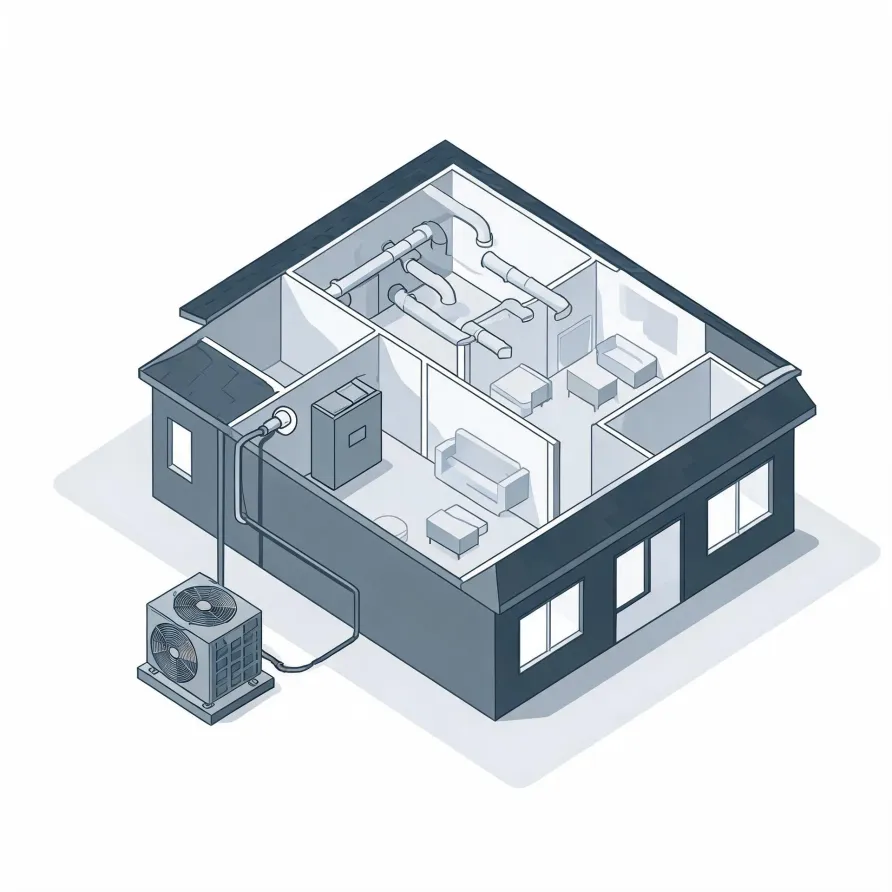
The outdoor unit sits on a pad beside the house and holds the compressor and coils that do the system's main work. Inside, the air handler mounts in a utility space, basement, or closet and moves conditioned air through the home. These two units are what a new installation puts in place.
A refrigerant line set runs between the outdoor unit and the air handler, connecting the two halves of the system. A thermostat goes on an interior wall where it reads the home's temperature and tells the system when to run. Together these pieces complete what the contractor installs.
The drawing shows a typical layout, and a licensed contractor determines exactly what applies to your house.
Find a contractor in Lawrence CountyLawrence County, Missouri, by the numbers
148 severe weather events were recorded in Lawrence County, Missouri between 2015 and 2024.
NOAA National Centers for Environmental Information, Storm Events Database, bulk CSV export, events 2015-01-01 through 2024-12-31.Half the homes in Lawrence County, Missouri were built in 1979 or earlier (2020-2024 ACS 5-year).
U.S. Census Bureau, 2020-2024 American Community Survey 5-Year EstimatesLawrence County, Missouri holds 16,303 housing units (2020-2024 ACS 5-year).
U.S. Census Bureau, 2020-2024 American Community Survey 5-Year EstimatesOwners occupy 73.9% of the occupied homes in Lawrence County, Missouri (2020-2024 ACS 5-year).
U.S. Census Bureau, 2020-2024 American Community Survey 5-Year EstimatesSevere Weather Events in Lawrence County
Heat pump performance is shaped by what the local climate demands of it year after year. How hard equipment works, how long it lasts, and what capacity it needs are all local questions, and the weather record for this area is part of that picture.
148 severe weather events, 2015–2024. Source: NOAA National Centers for Environmental Information, Storm Events Database.