Heat pump frozen over in Washington, MO

Send it once and finding someone is no longer on you.

Let a pro reach out

A frozen heat pump in winter usually isn't broken. Some frost on the outdoor unit during a cold snap here is normal, and it melts off on its own a few times a day as the system runs its defrost cycle. What's not normal is a coil coated solid in ice, or ice building up faster than it clears. That points to something keeping the unit from defrosting properly: a dirty coil, a low refrigerant charge, a fan that's not turning, or a defrost control board that's failed. Cold as winters get in Franklin County, a heat pump that can't shed ice will keep losing capacity until it can't heat the house at all, and running it iced over can damage the compressor. Don't chip at the ice or run a hose on it. Shut the system off, let it thaw, and have someone look at why it froze before you turn it back on.

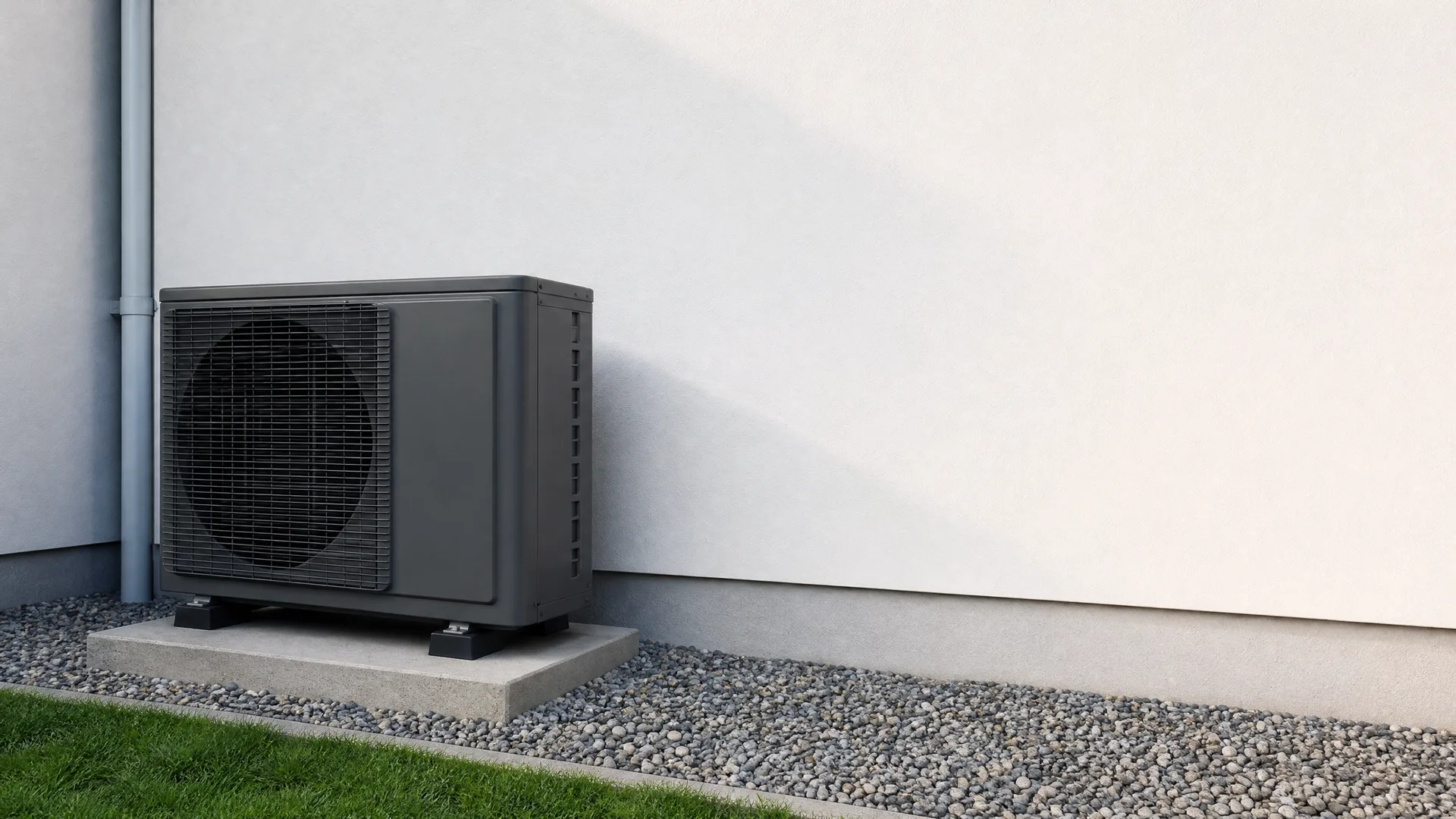
A dark grey air-source heat pump unit on a concrete pad beside a light-coloured rendered wall, surrounded by gravel with a strip of grass in the foreground and a downpipe at the left.

How the defrost cycle works

Your heat pump runs in reverse for a few minutes every so often, sending hot refrigerant through the outdoor coil to melt off frost. A fan inside shuts off during this so the heat stays on the coil instead of blowing into the yard. You might see steam rising off the unit when it switches back. That's normal. It means the system is doing its job, not failing at it.

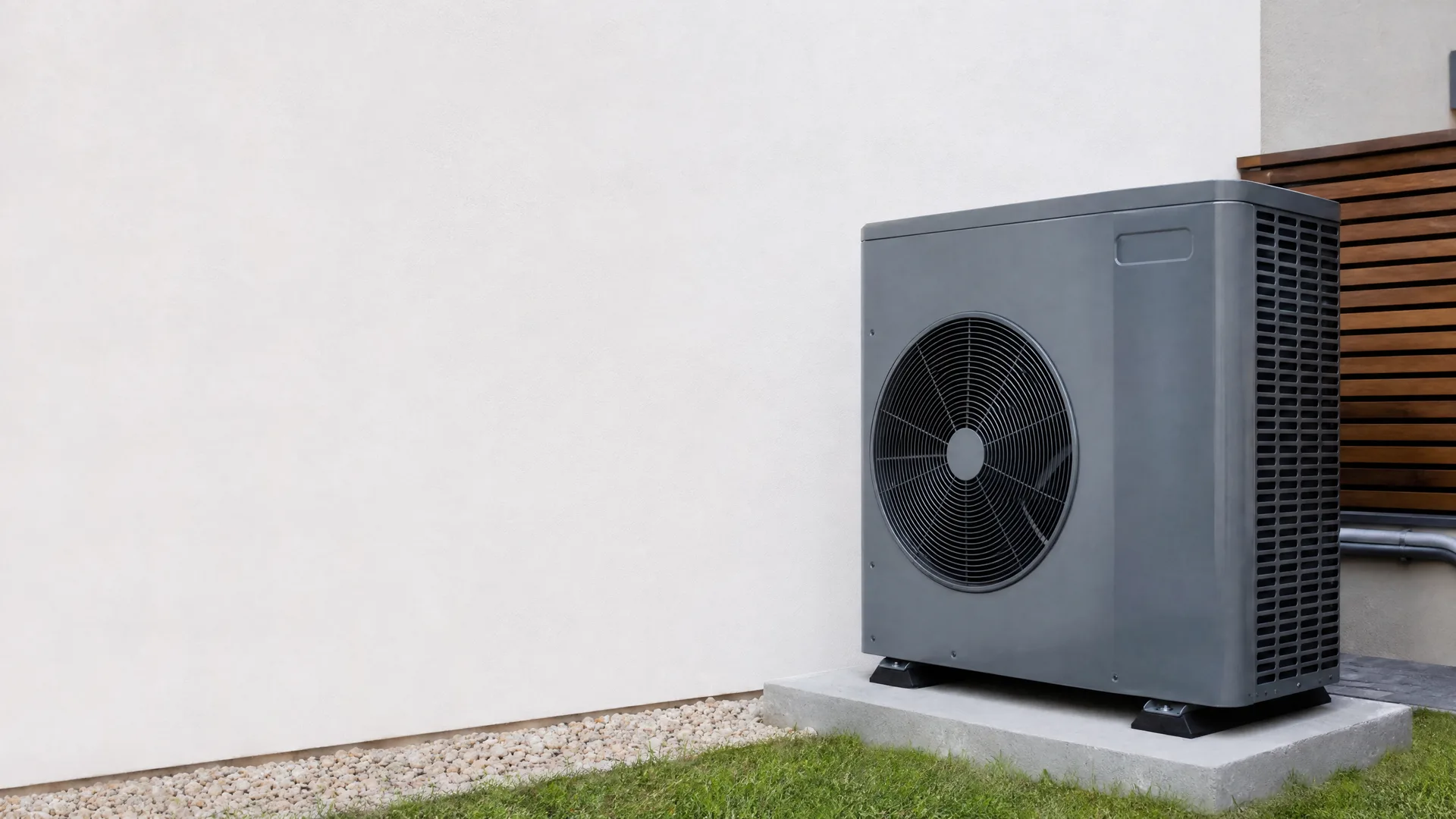
A gray outdoor heat pump unit on a concrete pad beside a white stuccoed wall, with gravel and grass in front and a wooden slat screen behind.

What keeps ice from melting

If the defrost board, the reversing valve, or the outdoor fan motor isn't working right, the cycle never kicks in or never finishes. Ice builds in layers instead of melting off a few times a day. A low refrigerant charge does the same thing, since the coil runs colder than it should and frost forms faster than the system can clear it. Either way, the unit needs a technician, not a bag of rock salt.

Why does my heat pump ice up more on really cold nights?

You've noticed it happens worse on the coldest nights, the ones where the temperature drops well below freezing and stays there. It makes sense that you'd wonder if the cold itself is damaging the unit, or if something is wrong with how often it's defrosting. You want to know if this is just how the system behaves in a hard freeze, or a sign it needs a service call.

Colder air holds less moisture, but a heat pump has to run longer to pull the same heat out of it

On a cold night, your heat pump has to run longer to move the same amount of heat into the house, and that longer runtime means more time for frost to build on the outdoor coil between defrost cycles. The coil itself also sits colder on nights like this, closer to or below freezing, so any moisture in the air sticks to it as frost instead of just condensing off. This is why a unit that looked fine on a 40 degree evening can show a heavier coat of frost after a night in the teens. The defrost cycle still runs on its normal schedule. It just has more frost to clear each time, which is normal here through a hard Franklin County winter.

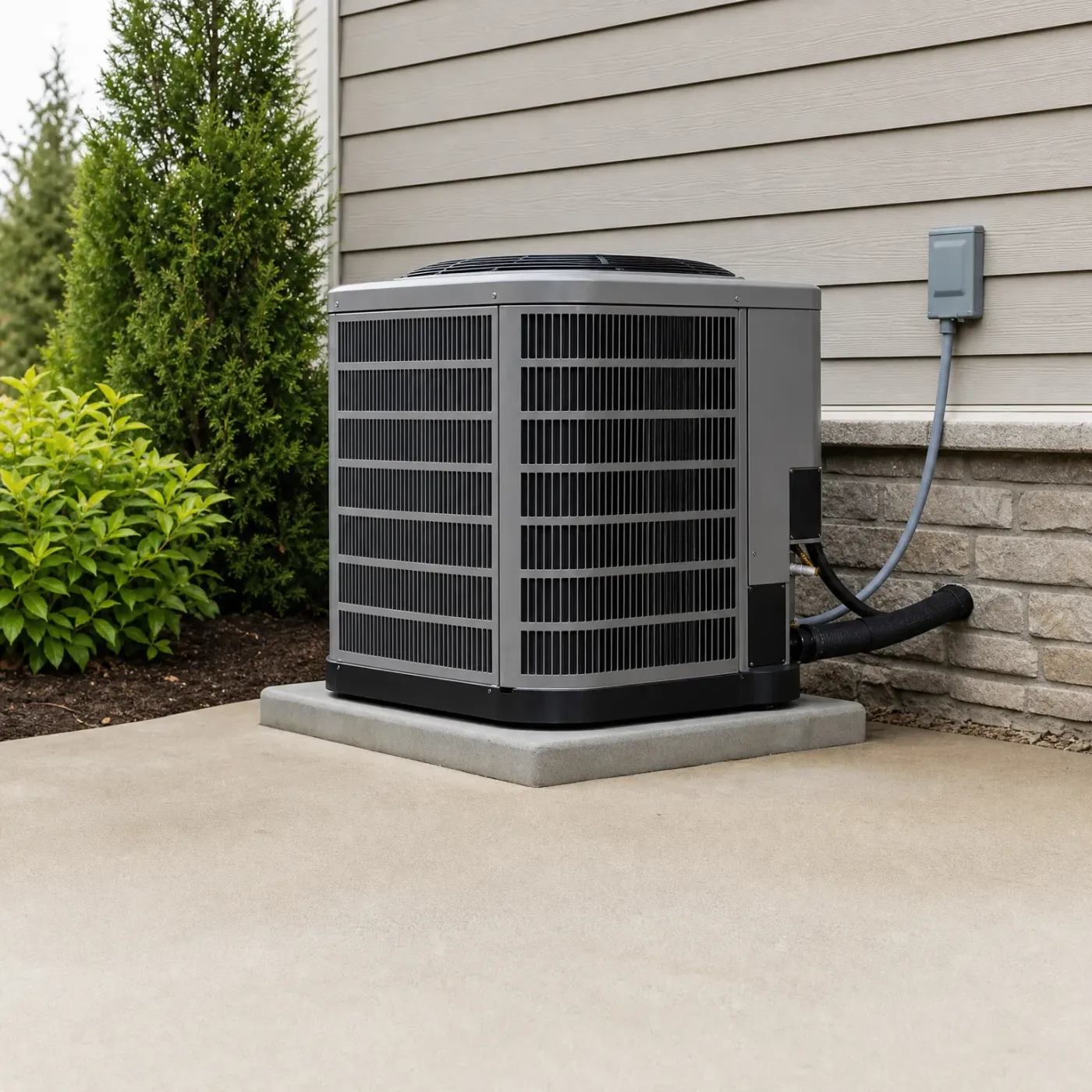
A gray outdoor air conditioner condenser unit on a concrete pad beside a house with horizontal lap siding and a stone veneer base, with a conduit running to a wall-mounted disconnect box and shrubs and evergreen trees to the left.

Normal frost, defrost working

A light coat of frost on the coil, gone within an hour or two, is the defrost cycle doing its job. The unit cycles out of heating, melts itself clear, and goes back to warming your house. The lines stay clean and the fan grille turns freely.
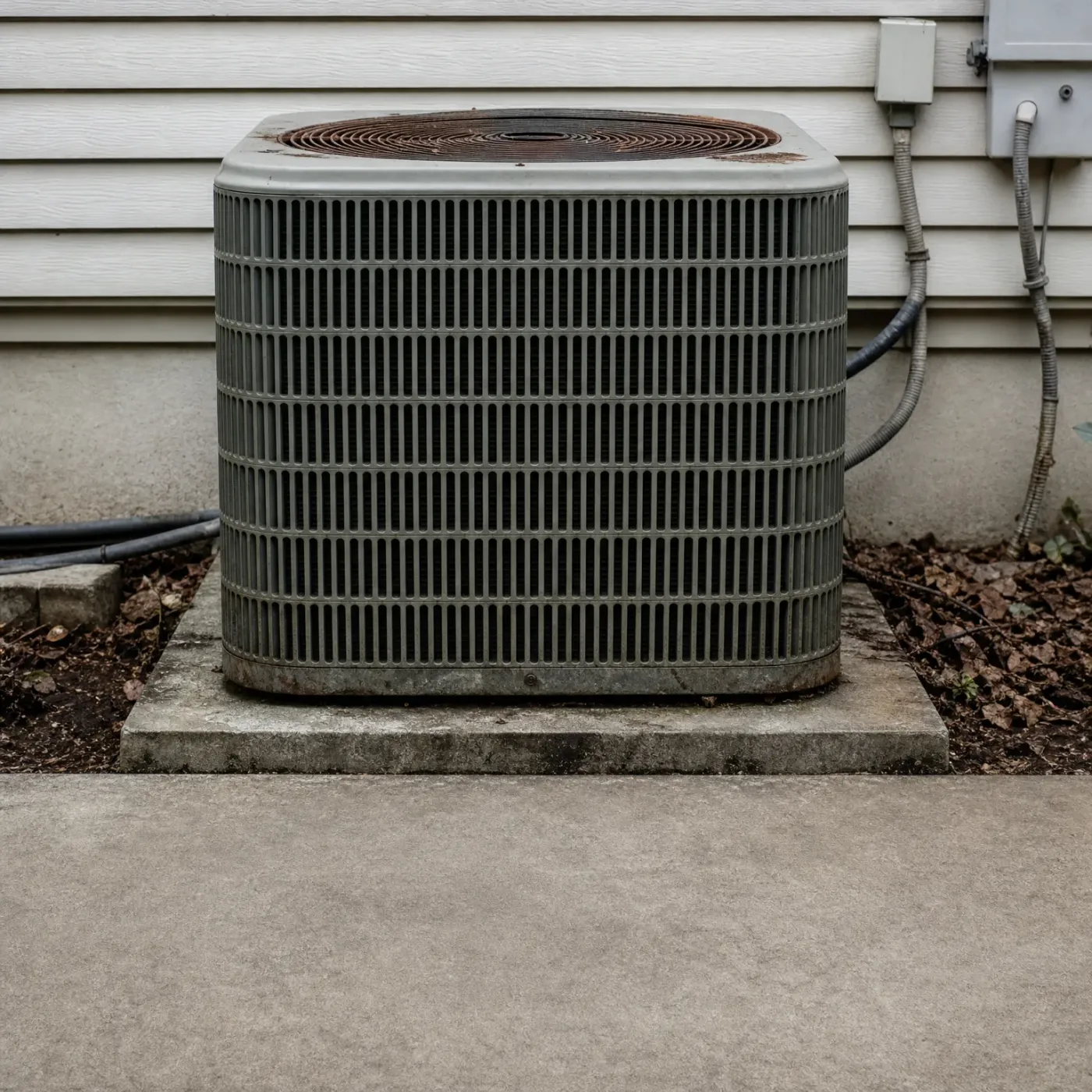

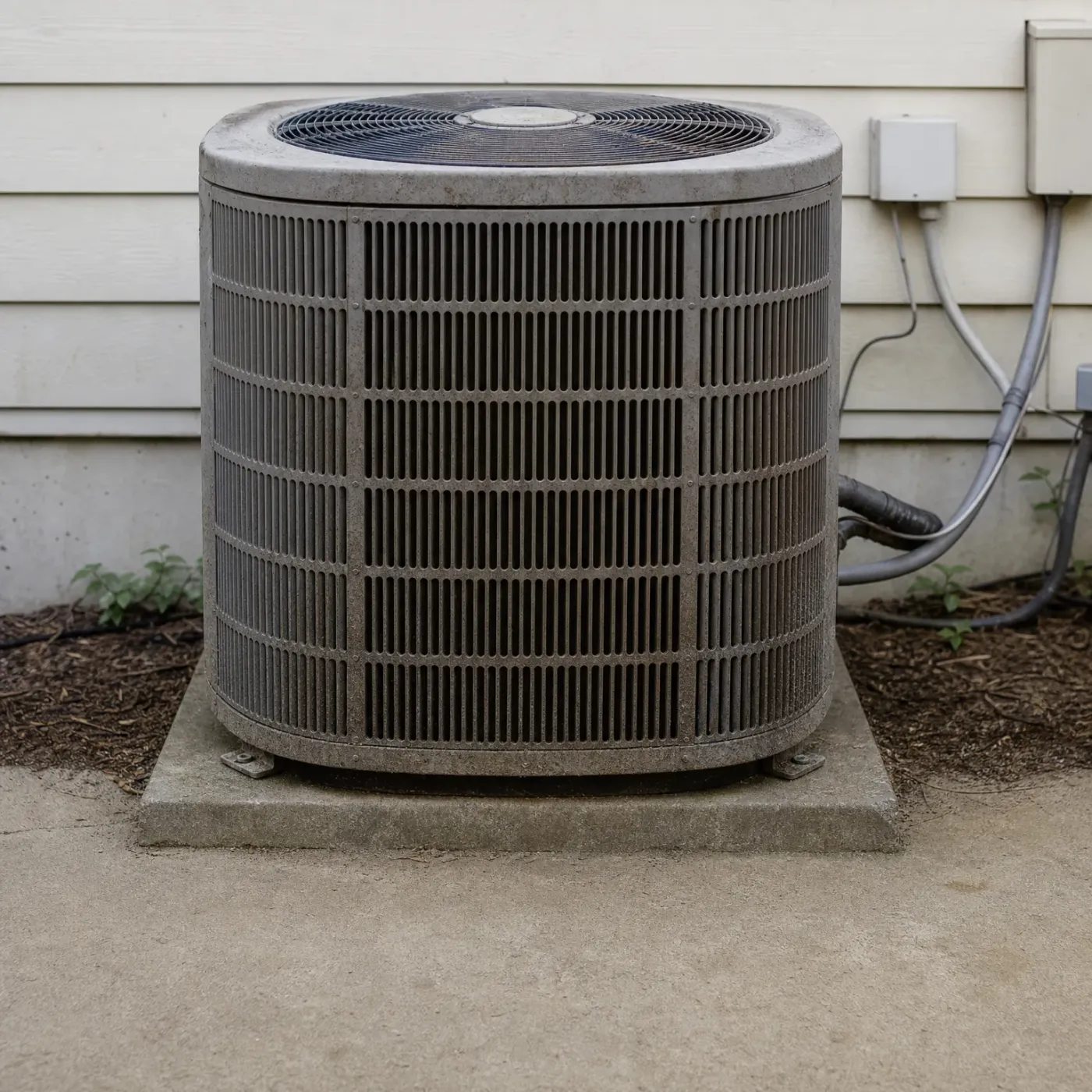
An outdoor air conditioner condenser unit with rust spots on its top grille sits on a concrete pad beside a house with light horizontal siding, with conduit lines and an electrical box on the wall and a mulch bed to the right.

Iced over, needs a look

Ice built up thick around the base or packed into the fan grille means the defrost cycle isn't keeping up, or isn't running at all. Rust and dirt like this often come with age, and an older unit can lose the fight against ice faster than one that's been maintained.

Why does Washington's cold hit your heat pump so hard?

  • Winter nights average 24°F

    Overnight lows averaging 24°F in December, January and February mean your heat pump spends real time in its defrost cycle, not just an occasional dip below freezing.

  • Heat runs October through April

    Seven months of heat a year, October through April, is seven months where ice on the coil has a chance to build up if the defrost cycle isn't working right.

  • Cooling runs May through September

    Five months of cooling means the other half of the year, that outdoor unit sits idle through the cold stretch, so problems can go unnoticed until you need heat again.

NOAA nClimDiv 1991-2020

A gray-haired bearded man in a dark knit sweater sits on a light gray sofa in a sunlit living room, looking to his left, with a framed artwork, a potted palm, and a curtained glass door behind him.
A middle-aged man in a dark green sweater sits on a light grey sofa looking toward a sunlit window, with a wooden shelving unit, lamp and potted plants in the background.
A man in a dark green sweater sits on a light grey sofa in a sunlit living room, looking to his left, with a shelving unit, houseplants, framed art and a large window behind him.
A gray-haired bearded man in a dark green sweater sits on a light gray sofa in a sunlit living room with a potted plant, framed picture, and dark shelving in the background.

Hand off the search today

The pro who reaches out is licensed in Missouri.

It costs nothing to send, and you don't have to hire anyone.

What a stuck defrost cycle does to your heat

Once the coil ices over solid, the outdoor unit can't pull heat from the air anymore, and the system leans harder on the backup heat strip to keep your house warm. You'll notice the air from your vents feels different, warmer at the register but running longer to get the house to temperature. Your electric bill reflects that strip heat working overtime. Left alone through a cold snap, the indoor temperature may drift down a degree or two even with the thermostat set where it always is, because the outdoor unit isn't contributing much of anything anymore.

What keeps running while ice sits there

The outdoor fan and compressor don't know to stop just because the coil is blocked, so they keep trying to do their job against a wall of ice. That strain is where real damage starts, a compressor working against restricted airflow wears in ways a few hours of frost never would. If you've turned the system off and the ice still hasn't cleared after it sits for several hours, that block isn't melting on its own, and running it again before it clears risks turning a frozen coil into a bigger repair.

An outdoor air conditioner condenser unit on a concrete pad beside a house with horizontal siding, with conduit, cables and an electrical box on the wall and mulch beds at either side.
Before you get your heat pump repair
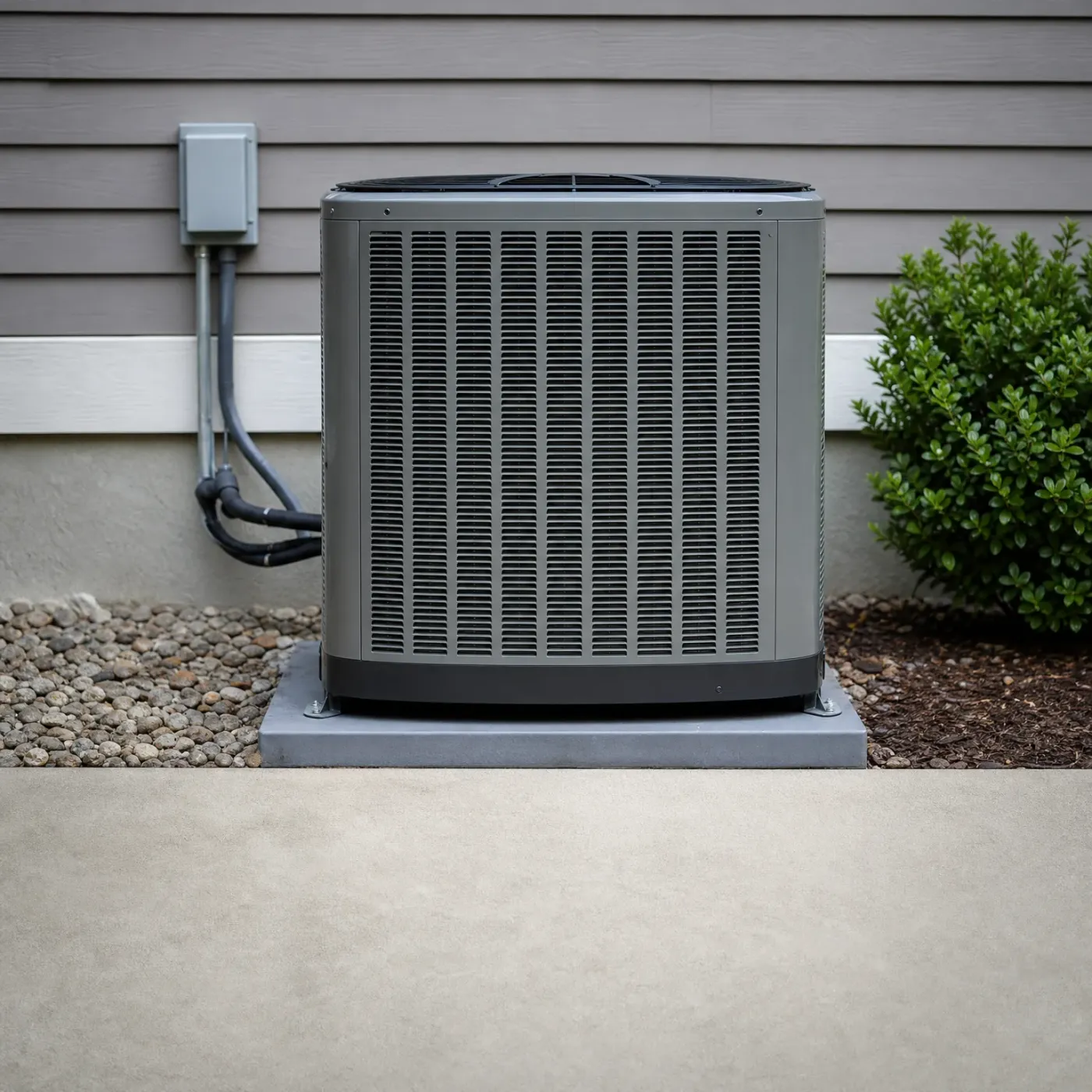
A gray outdoor condenser unit on a concrete pad beside a house with horizontal lap siding, with a metal disconnect box and refrigerant lines on the wall, river rock and mulch to the sides, and a green shrub at right.
After you get your heat pump repair
  1. The defrost control board senses the coil temperature dropping.

  2. A reversing valve switches the system into cooling mode briefly.

  3. Hot refrigerant flows through the outdoor coil to melt the frost.

  4. The outdoor fan shuts off so heat stays on the coil.

Power here costs 12.85 cents per kilowatt-hour

At 12.85 cents per kilowatt-hour, running the backup heat strips during a stuck defrost cycle costs more than your heat pump should. A frozen coil that won't clear on its own means your system is leaning on that backup heat to keep the house warm, and that shows up on your next bill.

EIA-861 2025

Frozen Heat Pump: Where You Stand

  • A thin coat of frost that melts off within an hour or two is the defrost cycle working as it should.
  • A solid sheet of ice on the coil, or ice that builds back fast after melting, means the cycle is stuck.
  • Franklin County winters average 24°F overnight in December, January and February, so defrost runs often here.
  • A frozen coil forces the system to lean on backup heat strips, which cost more to run than the heat pump itself.
  • Letting a stuck defrost cycle run too long puts strain on the compressor and the reversing valve.
  • A licensed local contractor can tell you in minutes whether what you're seeing is normal frost or a failed part.

Frost that comes and goes within an hour or two is the defrost cycle doing exactly what it's built to do, and you don't need to do anything about it. Ice that stays put, builds back fast, or coats the coil solid is a different story. That's the cycle stuck, not working, and it won't clear itself no matter how many hours you give it. With Franklin County winters averaging 24°F overnight through December, January and February, your heat pump runs this cycle often, so a stuck one shows up fast and keeps showing up until something gets fixed. While the coil stays frozen, the system can't pull heat from the outside air, so it shifts the load onto the backup heat strips, and those cost more to run than the heat pump does on its own. Left alone, a stuck defrost cycle doesn't just raise your bill. It keeps the compressor and reversing valve working against conditions they're not meant to run in for long, and that's how a frost problem turns into a repair bill for something bigger. The difference between the two, a clean melt versus a solid sheet of ice, is usually easy to see once you know what you're looking at. A licensed contractor who works on this equipment every winter can look at your outdoor unit and tell you in minutes which one you've got and what, if anything, needs fixing.

A woman with shoulder-length graying brown hair in a cream knit cardigan sits in a dark armchair indoors, looking off to the side with a slight smile, with a shelf, window and houseplant blurred behind her.
A woman with her hair in a bun sits wrapped in a beige knitted blanket on a couch, holding a sleeping child against her chest in a warmly lit room with a lamp and houseplant in the background.

Heat Pump Repair

Stop chasing a heat pump pro

Only one pro gets your request, so you hear from one company.

A black-framed smartphone standing upright against a plain light gray background, its screen filled with solid green.
Step 1 of 3: Equipment