Why your heat pump smells like burning in Missouri

Step 1 of 3: Equipment

A burning smell from your heat pump usually means dust burning off a heat strip the first time it kicks on, or it means something is actually overheating inside the unit. If the smell is faint and fades after a few minutes, that's likely just dust on the electric heating elements that help your heat pump through the coldest stretches of a Missouri winter, and it clears on its own. If the smell is sharper, like hot plastic or electrical burning, and it doesn't go away, that points to a motor bearing, a frayed wire, or a failing capacitor working harder than it should. A smell like that is worth shutting the system off for until someone looks at it, since a motor or wiring problem left running can damage the unit further or trip a breaker.

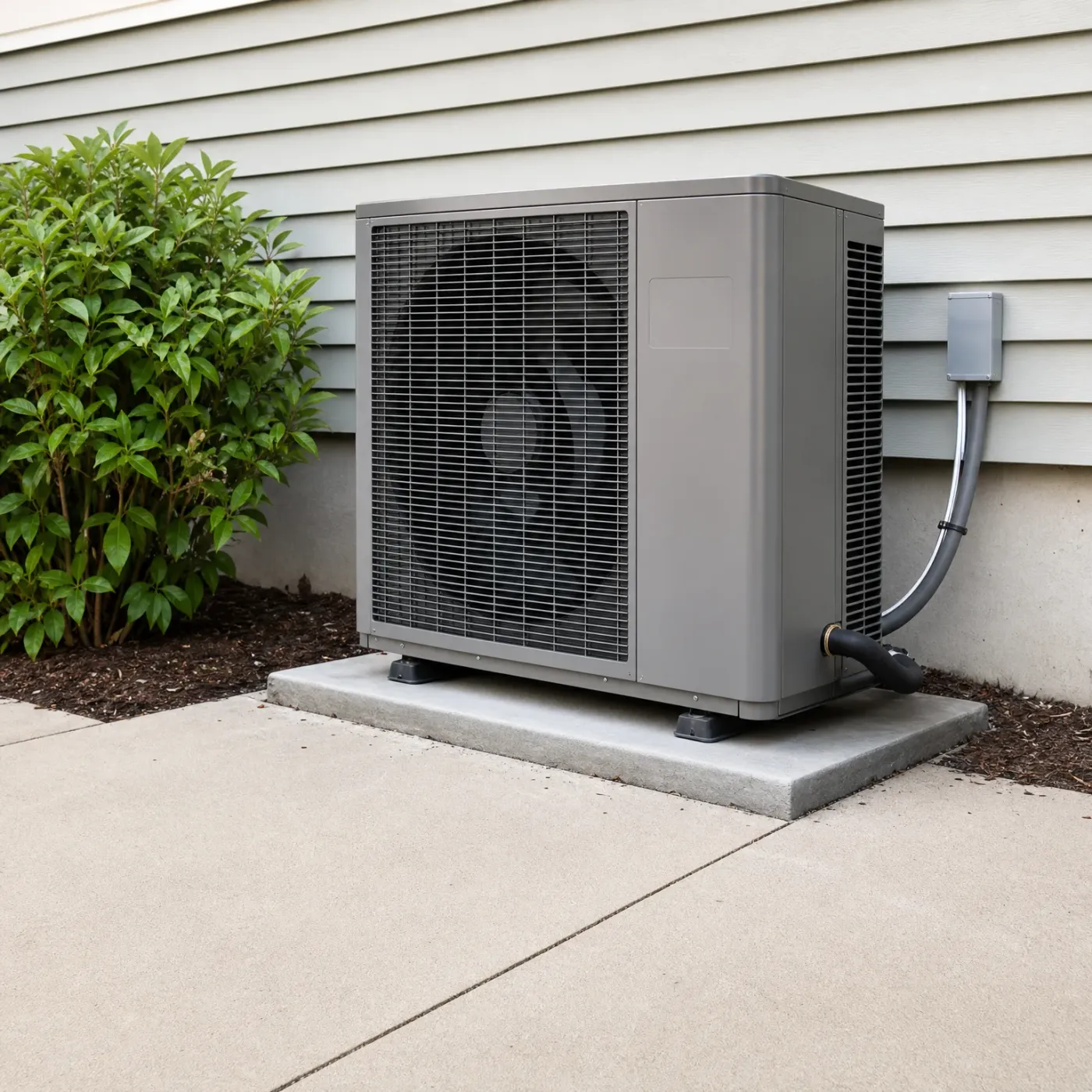
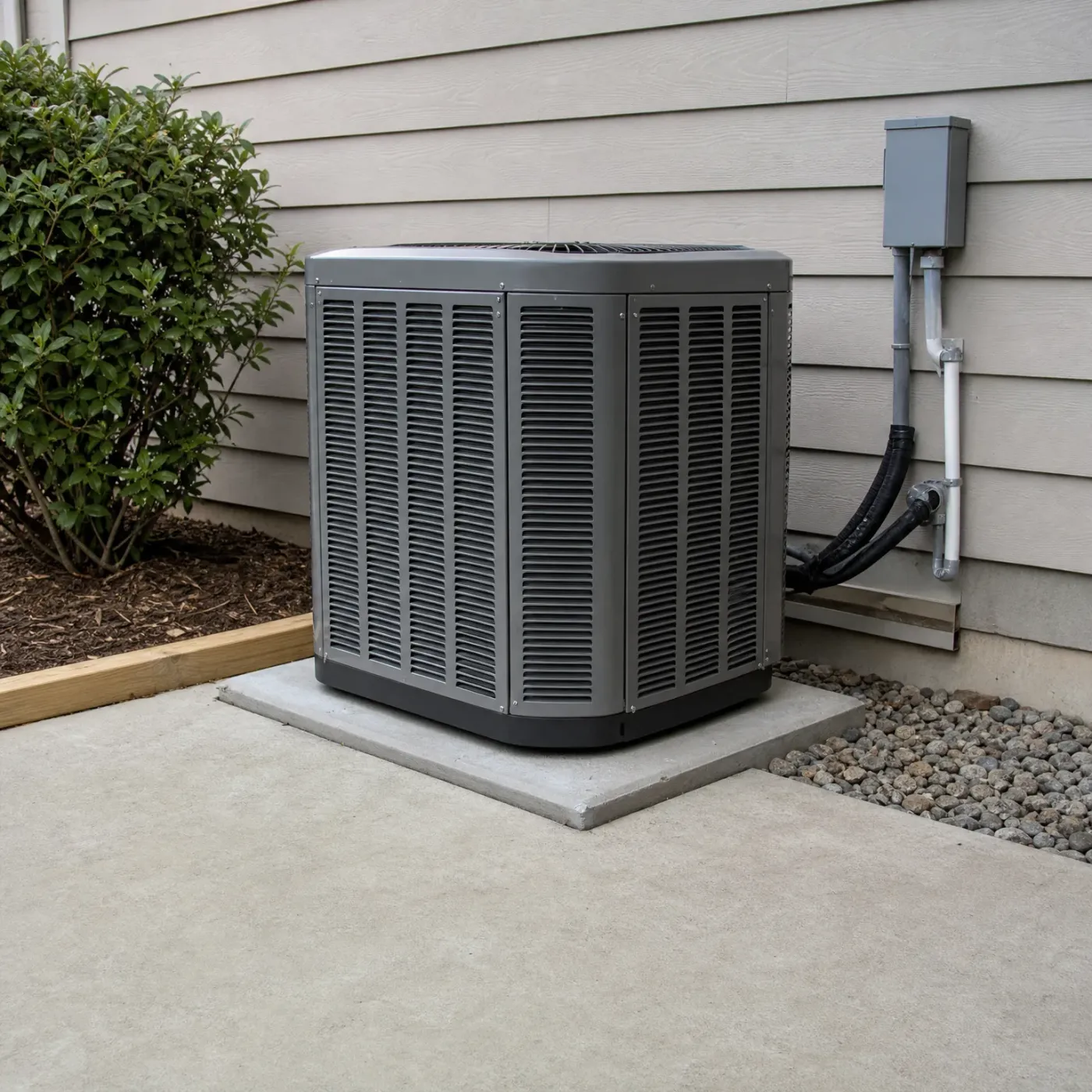
A gray outdoor heat pump unit on a concrete pad beside a house with horizontal lap siding, connected by conduit and a flexible line to a wall-mounted disconnect box, with low shrubs and mulch nearby.

A quick smell, then nothing

The unit kicks on, you catch a faint burning smell near the vents or the outdoor pad, and within a few minutes it's gone. That's usually dust burning off the heat strip, the same thing that happens when a furnace fires up after sitting idle. No further smell, no new noises, nothing to chase.
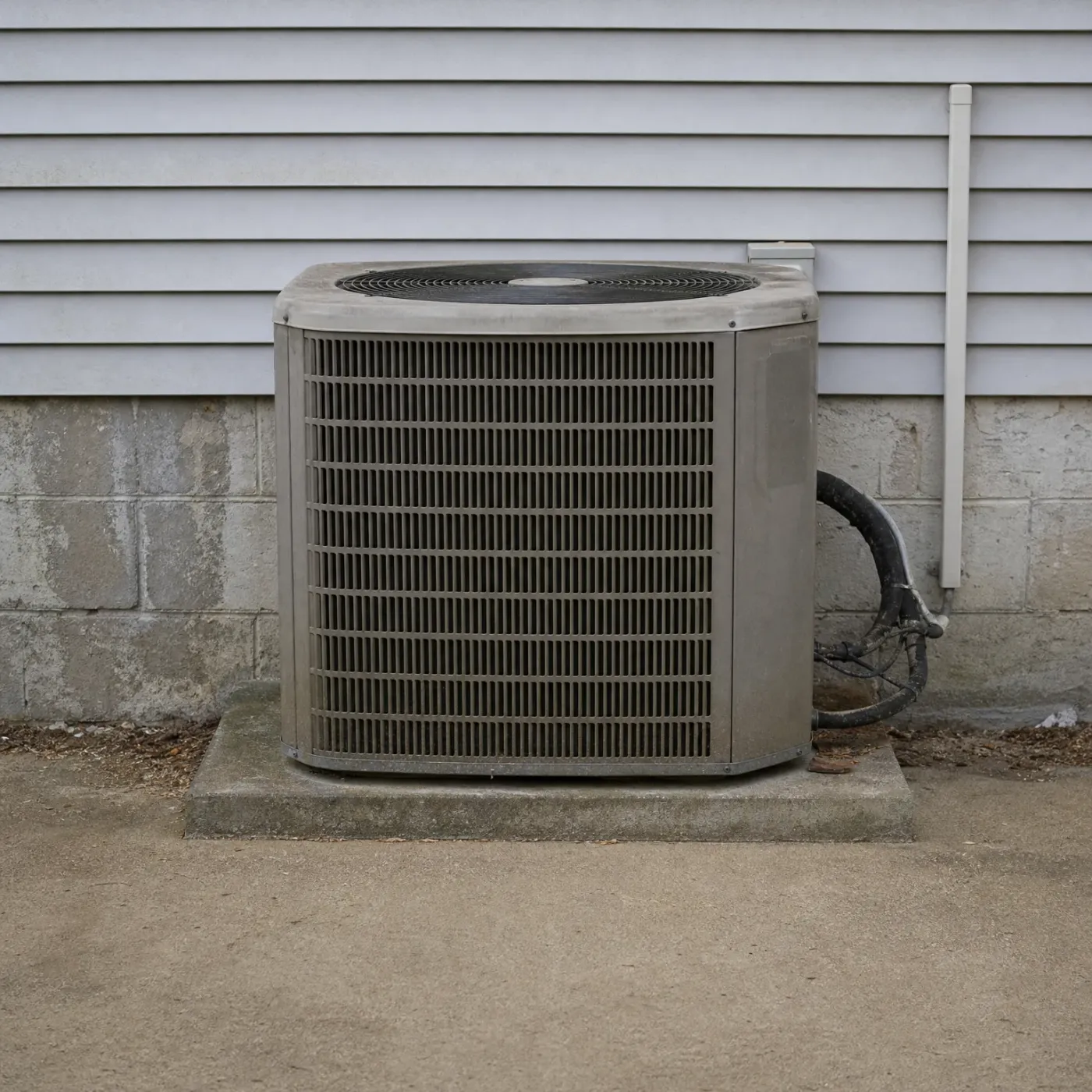

An outdoor air conditioner condenser unit on a concrete pad beside a house with horizontal siding above a concrete block foundation, with insulated refrigerant lines and a vertical white pipe on the wall.

The smell keeps coming back

If it shows up every time the unit runs, or it's sharper, like burning plastic or hot metal, something inside is overheating. A failing motor, a bad capacitor, or wiring under strain won't fix itself, and running it that way risks the compressor outside.

Worth a Call or Not

Smell keeps coming back

  • The burning smell shows up every time the heat pump cycles on, not just the first run of the season.
  • It doesn't fade after a few minutes, or it fades and then comes back stronger the next cycle.
  • The smell has a sharp or electrical edge to it, more like hot plastic or scorched metal than dust.
  • You notice the unit tripping the breaker, shutting off on its own, or blowing air that isn't as warm as it should be.
  • There's a smell near the indoor air handler or the outdoor unit even when the heat strip hasn't been used in days.

One-time smell on startup

  • It's the first cold snap of the year, or the first time the heat strip has kicked in after months of mild weather in Missouri.
  • The smell is faint, more like dust warming up than anything sharp or chemical.
  • It clears up within a few minutes and doesn't return on the next cycle.
  • The unit runs normally otherwise, producing warm air and cycling on and off the way it always has.
  • No breaker trips, no burning smell near the outdoor pad, and nothing smells different at the vents themselves.
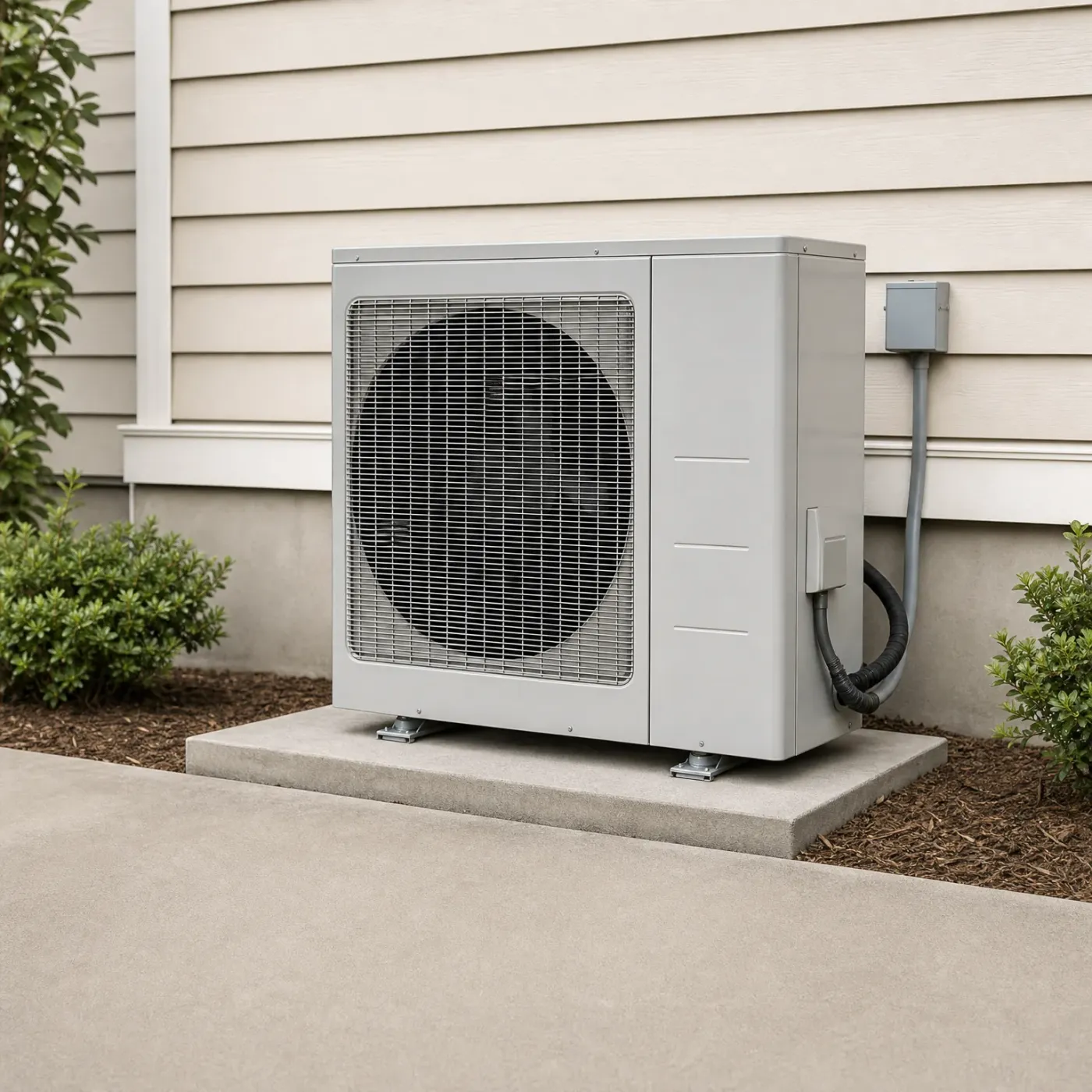
An outdoor heat pump unit on a concrete pad beside a house corner, with a small electrical box and conduit on the wall, gravel border, grass, and a plain light-colored wall filling the right side.

How the heat strip works

Most heat pumps in Missouri have electric heat strips built in as backup, for when the outdoor temperature drops too low for the heat pump to keep up on its own. Those strips sit right in the airflow. Over the summer, with the heat pump running on cooling, dust settles on them and stays there until the first cold snap calls for backup heat. That first burn-off is the strip doing exactly what it's built to do.

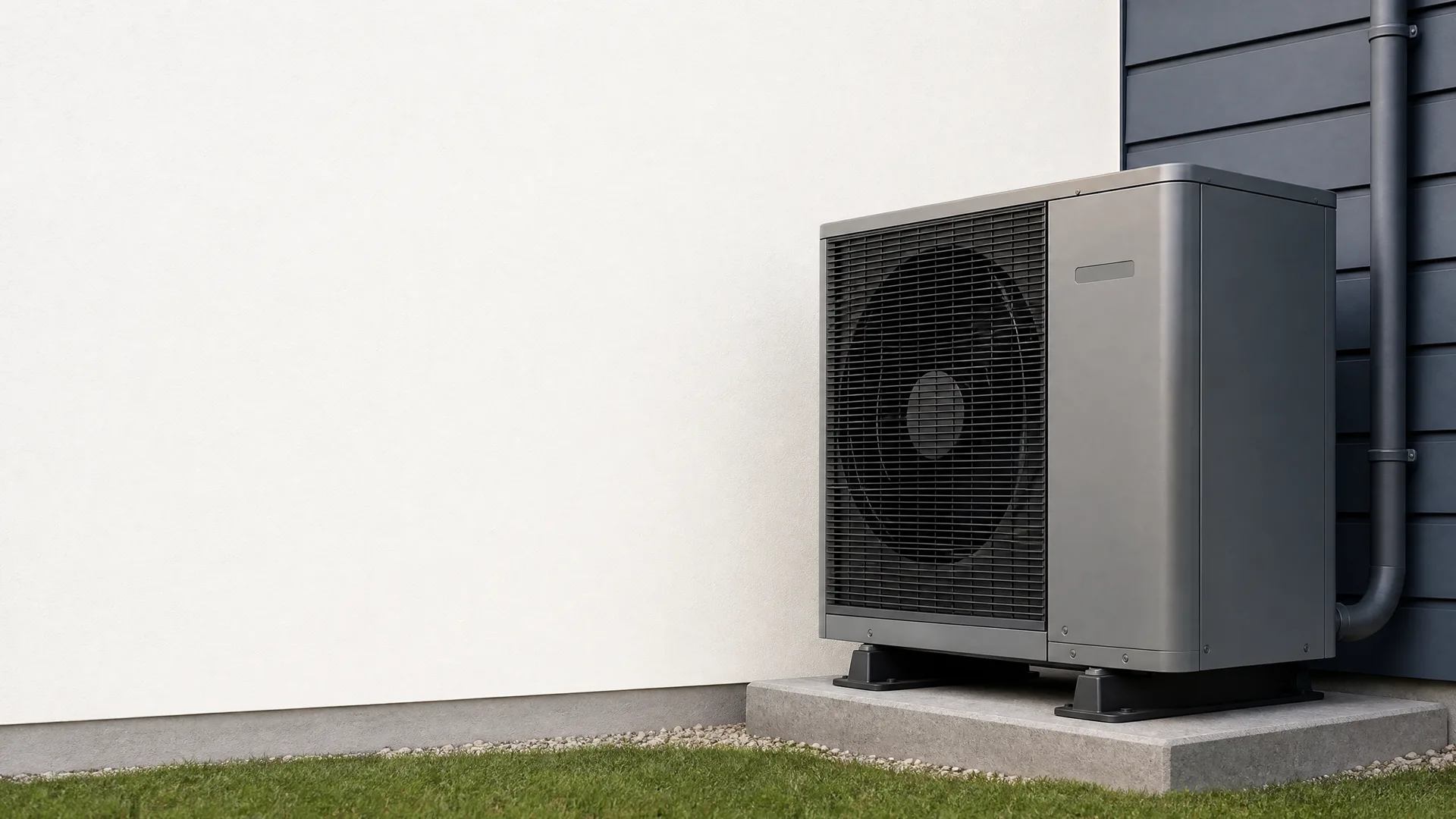
A grey outdoor heat pump unit on a concrete pad beside a white stucco wall and dark siding with a downpipe, with gravel and grass in the foreground.

What's different about an overheat

A failing part doesn't smell like dust. Loose wiring, a motor bearing going bad, or a component drawing more current than it should will give off a hot, sharp smell, more like melting plastic or scorched metal than dust burning off. That smell doesn't fade in a few minutes the way the dust smell does. It tends to show up at the same point in the cycle, every cycle, because the part causing it is in the same spot every time.

What are you noticing right now in your house

You're probably standing near a vent or out by the outdoor unit, trying to decide if what you smelled was nothing or something. Maybe it's a burnt dust smell that showed up when the system kicked on and faded a few minutes later. Maybe it's sharper than that, more like hot wiring or melting plastic, and it's not going away. You might notice it's stronger in one room than others, or that it only happens on the heat setting, not when the system is cooling. If it keeps showing up cycle after cycle, that's not dust working itself out anymore. Left alone, a real electrical fault inside the unit can damage the heat strip or blower motor, and in rare cases it's a fire risk.

A woman in a gray turtleneck sweater stands by a window looking outside at snowy ground, with a dimly lit living room containing a sofa, shelves, lamp and a lit candle behind her.
A woman in a cream cable-knit turtleneck sweater stands in a warmly lit living room with a fireplace and shelves behind her, looking out a window toward snow-covered trees and a railed deck.
A woman in a cream knit turtleneck sweater stands by a window looking out at snow, with a lit fireplace, sofa and lamp in the room behind her.
A woman in a gray knit sweater sits by a window looking out at falling snow, with a dimly lit living room containing a sectional sofa, pillows, a lamp and houseplants behind her.

Matched to your heat pump job

The pro who reaches out is licensed in Missouri.

No charge to send it. You decide if you hire them.

A two-story gray horizontal-siding house with multiple gables, a covered front porch with white columns and railing, and a dark front door, fronted by a patchy green and brown lawn under a clear blue sky.

Summer air in Missouri holds a lot of moisture. Averaged across June, July and August, the dew point here runs 66°F, the kind of muggy that leaves a film on everything. Your heat pump works through that by pulling moisture out of the air as it cools, which means the indoor coil stays wet for long stretches during the day. Wet dust on a coil doesn't burn and smell the way dry dust on a heat strip does, so a damp, musty smell near the vents in July is a different thing than the dry burning smell you get when the strips fire up. National Weather Service dew point climate data for Missouri.

NASA POWER T2MDEW county cells weighted by homes

A gray outdoor heat pump unit on a concrete pad beside a house with horizontal lap siding, with a conduit running to a wall-mounted disconnect box and a green shrub to the left.
A clean condenser pad, a clear path for airflow, and a wall disconnect that's doing its job.
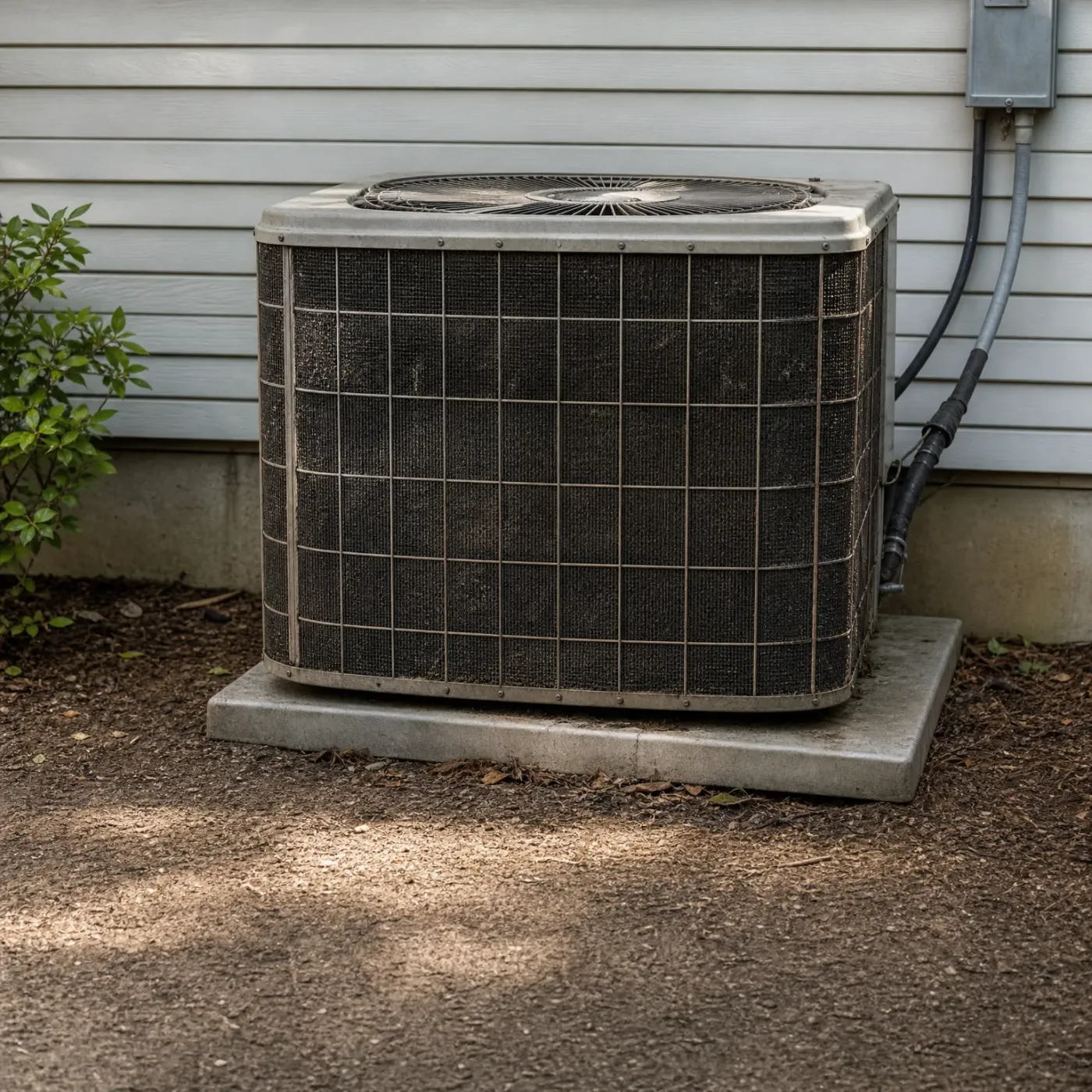
An outdoor air conditioning condenser unit with dusty coils sits on a concrete pad against light horizontal siding, with an electrical disconnect box and refrigerant lines on the wall and a shrub and mulch at left.
Grime caked over the coil fins, bare soil kicked up around the unit, and lines running into a wall that hasn't been checked in a while.

The heat strip only works because current runs through thin resistance coils until they glow. That takes real amperage, more than most other parts in the system pull. The blower is running at the same moment, which is why a smell starting at the strip shows up at a vent across the house within a minute or two. In cold weather, the system leans on that strip during defrost, switching over for a few minutes while the outdoor coil thaws, then switching back. That's the moment dust most often burns off, and it's also the moment a wiring problem or a stuck contactor shows itself, because the strip is drawing power it wouldn't otherwise draw this time of year. A filter clogged with dust makes it worse. Airflow across the strip drops, the coils can't shed heat the way they're built to, and anything nearby, wiring, insulation, a plastic housing, takes the heat instead. None of this needs cold weather to go wrong. It needs the strip to fire, which it can do any month a thermostat calls for it.

Inside the heat strip cycle

  • A heat strip is a row of resistance coils that glow hot to add warmth when the outdoor unit can't keep up alone.
  • The blower runs at the same time, pulling air across the strip and pushing it down your ducts, so the smell travels to every room fast.
  • A defrost cycle in cold weather switches the system to heat strips for a few minutes while the outdoor coil thaws, which is when dust burns off most often.
  • A failing contactor can let the strip stay energized longer than it should, past the point where dust is the only thing burning.
  • Wiring behind the strip carries enough current that loose or corroded connections can scorch the insulation around them, which smells sharper and plastic-like.
  • A dirty filter restricts airflow across the strip, so the coils run hotter than they're built for and can scorch nearby components.
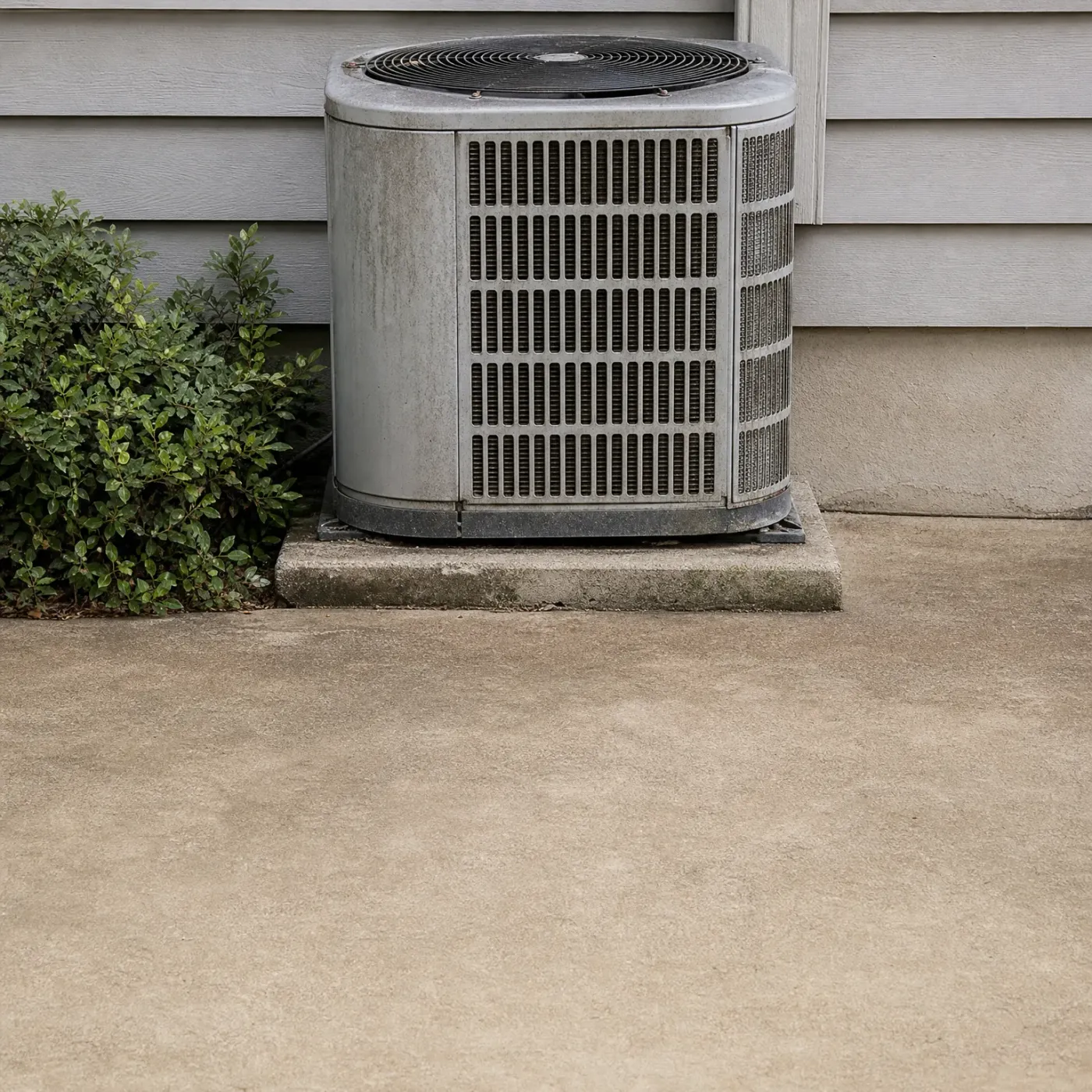
An outdoor air conditioning condenser unit on a concrete pad beside a house with horizontal lap siding, with a green shrub to the left and a wide concrete slab in the foreground.
Before you get your heat pump repair
A gray outdoor condenser unit on a concrete pad beside a house with horizontal lap siding, with a wall-mounted disconnect box, conduit and insulated refrigerant lines, a shrub at left and gravel at right.
After you get your heat pump repair

You keep an eye on it yourself

You watch the next few cycles, note when the smell shows up and whether it fades. If it stays faint and only happens once, you may be done.

Get my match

A local contractor takes a look

One licensed contractor who works on heat pumps all year gets matched to you and reaches out, so you're not fielding calls from several companies.

Get my match
A smiling man in a denim shirt and white t-shirt stands in an open dark doorway of a stucco house, facing a woman with long brown hair and a green jacket seen from behind in the foreground.

What this means for your house

A heat pump that keeps smelling like burning is running with something wrong inside it every time it cycles, not just once. That's a system working while a part inside it overheats, on a unit that's probably also carrying your summer cooling load once the weather turns. If a component is breaking down, it doesn't fix itself by October.

You don't need to know whether it's the heat strip, a relay, or a short in the wiring to decide what to do next. That's the part a local contractor sorts out by looking at your unit, not by you guessing from the vents. A contractor who works on heat pumps all over Missouri every summer has seen this same smell come from a dozen different causes and knows which ones show up first. Getting matched with one means one licensed contractor looking at your specific unit, not a handful of trucks calling you back.

Interior corner of a room with a window and sheer curtain at left, a gray upholstered sofa with a cushion at right, and a round wooden table holding stacked books and a round vase with an olive branch.

Power costs 13.30 cents per kilowatt-hour statewide

At 13.30 cents per kilowatt-hour, running the heat strips on your heat pump costs more than the compressor ever does. If that burning smell keeps coming back, something is likely making the system lean on those strips more than it should, and you're paying for every extra minute they run.

EIA-861 2025 statewide residential average

A bearded man in a plaid flannel shirt stands in a kitchen looking out a window toward snow-covered shrubs, with a steaming mug on the windowsill and potted plants on a shelf behind him.
A smiling man with dark curly hair in a navy t-shirt sits on a gray couch indoors, with a large-leafed plant and a window in the background.

Where That Leaves You

  • A burning smell that fades after one cycle is almost always dust and needs no repair.
  • A smell that repeats every cycle, sharpens, or smells electrical points to a part failing inside the unit.
  • Letting a repeating smell go means the heat strips keep covering for whatever's actually wrong, at 13.30 cents per kilowatt-hour.
  • A local contractor who services heat pumps all summer knows which part on your model tends to go first.
  • You get matched with one licensed contractor, not a string of calls from companies that don't know your system.
  • Watching the next few cycles tells you which kind of smell you're dealing with before anyone sets foot on your property.

One cycle with a faint smell that fades is dust burning off the heat strip, and it usually sorts itself out. A smell that keeps showing up, or turns sharp, or starts smelling electrical, means a part inside the unit is failing while the heat strips quietly pick up the slack. That's not a reason to panic. It's a reason to get someone to look before the part that's struggling actually fails.

Missouri summers put a heat pump through a lot of hours pulling moisture out of thick, muggy air, and a unit already working that hard doesn't have much room to also be covering for a bad part. The contractor you get matched with isn't someone guessing at your system from a truck across town. They service heat pumps through every one of these summers, on the same models sitting on pads around your area, and they've seen which part tends to go first often enough to know what to check before they even open the panel.

You only get matched with one contractor, local and licensed, so you're not fielding calls from three companies that have never seen your unit. In the meantime, the next cycle or two will tell you most of what you need to know. If the smell fades and stays faint, you're likely fine. If it comes back, or it changes character, that's the system telling you something is wrong, and it's worth having someone who knows this equipment take a look before the strips run up your bill covering for it.

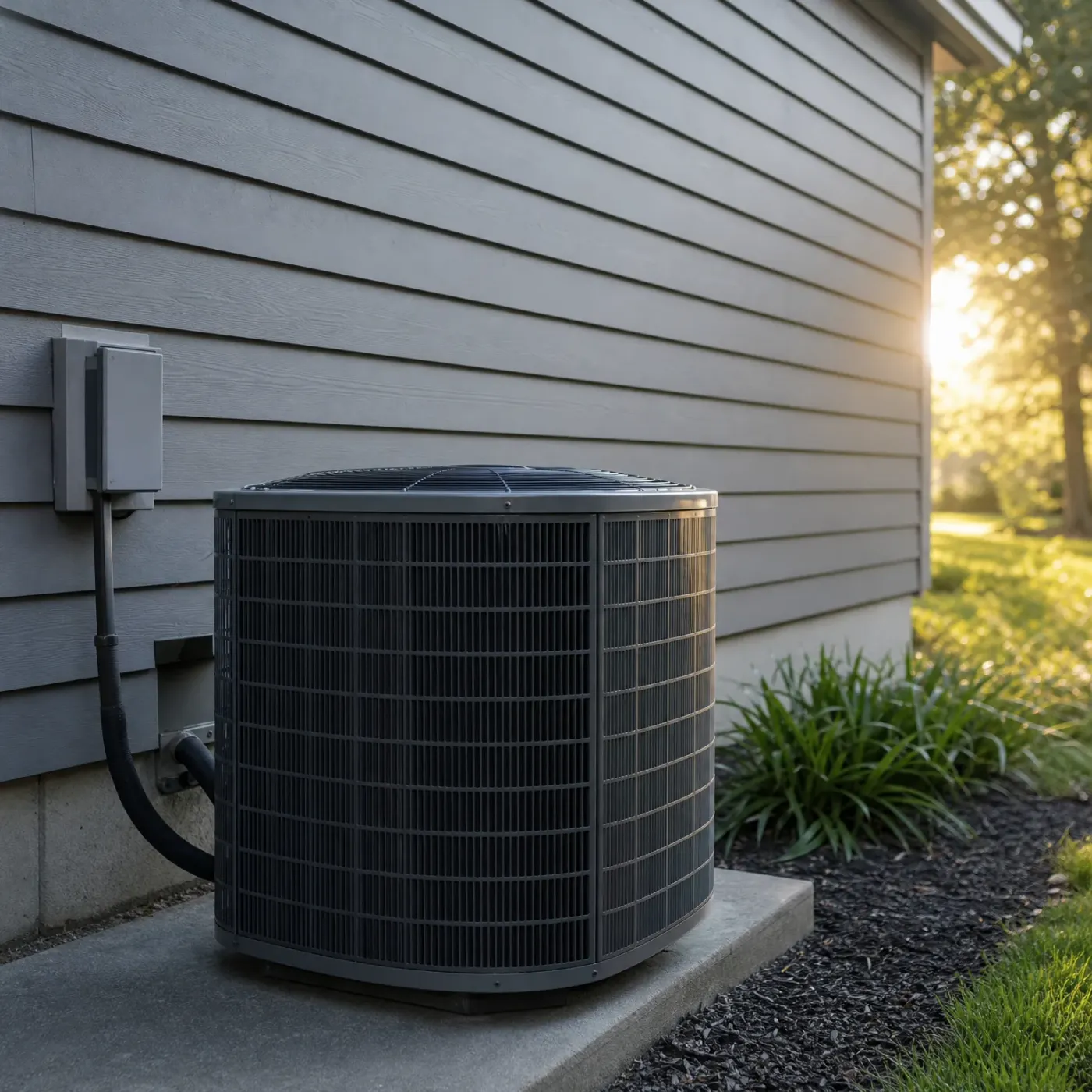
An outdoor air conditioner condenser unit on a concrete pad beside a gray horizontal-lap-sided house, with an electrical disconnect box and refrigerant line on the wall, grass, shrubs and a tree with low sun behind.

A local pro for your heat pump repair

Request a pro

Your request stays with one local pro.

You only hire the pro if you want to.