Heat Pump Missouri
Profile view of a bearded man wearing a black baseball cap and a dark gray T-shirt against a plain light background.

Why your heat pump runs on emergency heat in Missouri

Step 1 of 3: Equipment

Why is my heat pump stuck on emergency heat?

You walk by the thermostat and it says emergency heat, not auxiliary, not on its own for a few minutes while the outdoor unit defrosts. It stays there. The heat pump isn't doing the work anymore, and you don't know if that switch happened on its own or if someone in the house flipped it and forgot. Either way you want to know what it means for the system before the next cold snap.

Your heat pump has stopped and the furnace is doing all the heating

Emergency heat means the outdoor unit has shut off and your backup heat source is carrying the whole load. On a heat pump that's paired with a gas furnace, which is most homes in Missouri, that furnace is now doing the work the heat pump used to split with it. It switches on its own when the system senses the outdoor unit isn't working right, low refrigerant, a failed compressor, a frozen coil that won't defrost. It can also be switched on by hand, by you or anyone else in the house, and left there without anyone meaning to. Either way, the heat pump isn't contributing, and a repair is what gets it back to sharing the load instead of leaving the furnace to carry winter on its own.

A dimly lit bedroom at dusk with a made bed, a table lamp on a nightstand, and a condensation-covered sash window with a dark curtain.

Two in the morning and you're still awake. The sheets are damp under you, and the window over the bed has fogged up at the edges, that thick August air pressing against the glass from outside. You kicked the blanket off an hour ago. The vent above the dresser is blowing, you can feel it when you hold your hand up, but the air coming out isn't cold. It's lukewarm at best, and the thermostat on the wall down the hall reads emergency heat. In Missouri, in the middle of summer, that strip heat is running somewhere in the house while the AC side sits idle. You get up and check the thermostat again, like it might have changed. It hasn't.

Is this costing you more than it should

Emergency heat runs on electric resistance strips, and those pull a lot more power than the heat pump does on its own. If it's been stuck there a few days, you'll see it on the bill before you see it anywhere else. The air coming out of the vents feels different too, hotter and drier than the steady warmth the heat pump puts out, and it may cycle on and off more than you're used to. Some rooms might lag behind others. None of this fixes itself. The outdoor unit still isn't doing its job, and the strips are carrying a load they were only built to handle for a short while, not all winter.

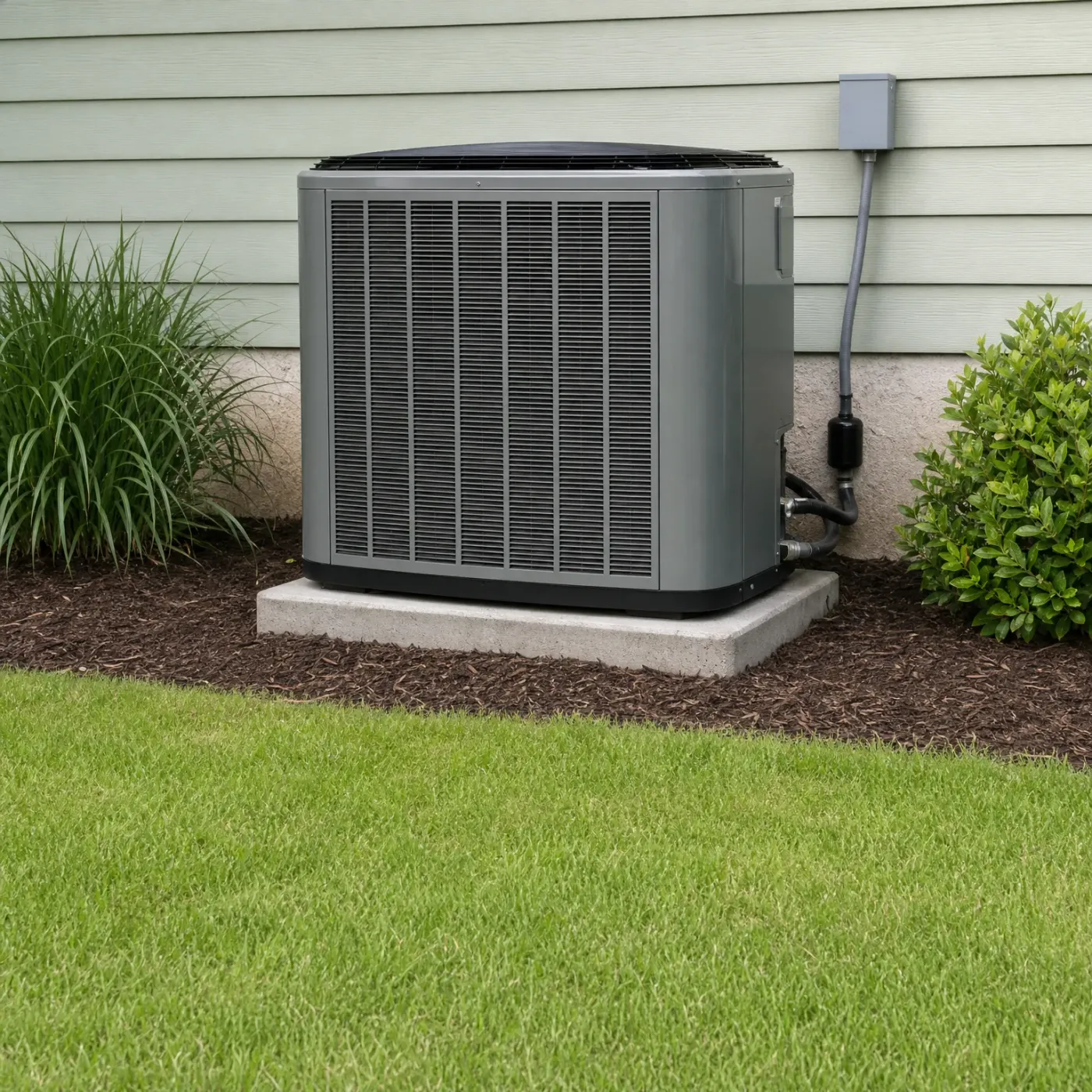
A gray outdoor condenser unit on a concrete pad beside a light-green sided house, surrounded by mulch, ornamental grasses and a shrub, with mowed lawn in the foreground.

Heat Pump Working Right

The outdoor unit sits quiet most of the time, switching on in short cycles to move heat instead of making it. No strip heat running underneath, no spike on the power bill. Air coming from the vents feels warm, not hot, because that's how a heat pump is supposed to work.

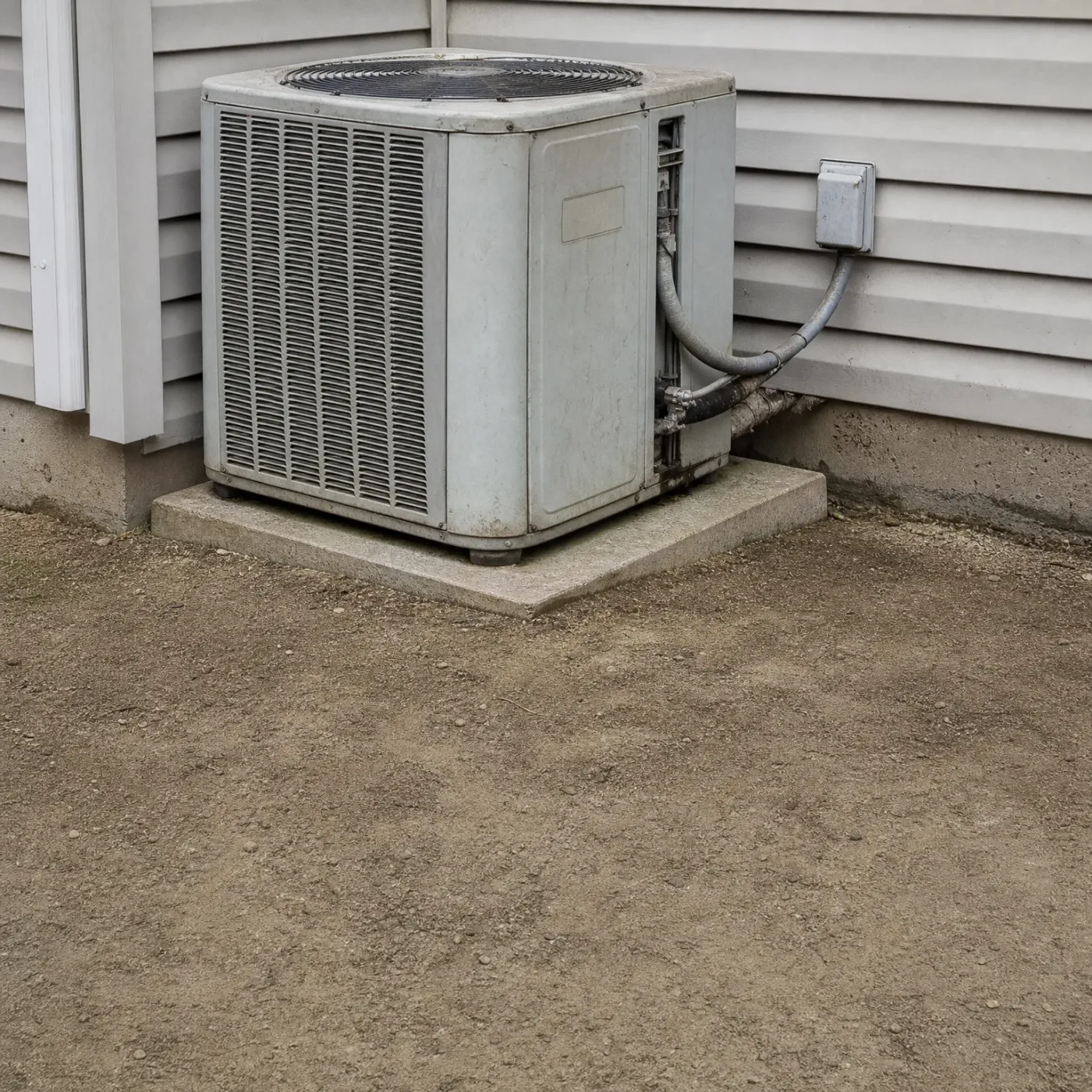
An outdoor condenser unit on a concrete pad beside a horizontal-sided house, with insulated refrigerant lines running to a wall-mounted box, surrounded by bare dirt.

Heat Pump Stuck on Emergency Heat

An older unit like this one is more likely to trip into emergency heat, especially once a sensor drifts or the defrost board starts failing. The electric strips take over and stay on, pulling power the compressor was built to save. It needs a technician to find out why the heat pump stopped doing its job.

A man with grey hair and stubble in a dark sweater sits on a grey sofa indoors, looking off to the side, with a potted plant and a sunlit window behind him.
A man with gray hair, a beard and glasses, wearing a dark green sweater, sits on a gray sofa in a sunlit living room with a potted plant, table lamp and wooden sideboard behind him.
A middle-aged man with graying hair and a short beard sits on a blue sofa in a living room, looking toward a window, with a bookshelf, lamp and framed picture in the background.
A man with graying curly hair and a dark green sweater sits on a gray sofa in a sunlit living room, looking off to the side, with a framed picture, shelving, an armchair and a window with sheer curtains behind him.

Finding a pro stops being your job

A heat pump stuck on emergency heat usually means a sensor, a defrost board, or a failed outdoor unit is telling the system to quit trying. That's not something to leave alone through a Missouri winter, not with electric strips running the bill up every day it sits like that. Most homes around here heat with gas and keep power cheap, so a stretch like this stands out fast once it hits the bill. Finding someone who works on heat pumps specifically isn't always simple here, since most contractors are set up for furnaces. The request below goes to one licensed contractor local to you, someone who sees this exact fault on heat pumps every winter and knows what tends to fail first. Send it and the search is done. You stop checking the thermostat and start waiting for the fix instead of hunting for who can even do it.

A heat pump switches to emergency heat on its own when the outdoor unit can't run, usually a locked compressor, a tripped breaker, or a defrost control that isn't telling it to cycle back.

Flip the switch yourself and nothing's actually fixed. The strips keep the house warm, but the part that stopped working is still stopped, and it stays that way until someone looks at it.

A woman with shoulder-length brown hair wearing a beige knit cardigan sits in a gray upholstered armchair near a window, looking off to the side with a slight smile, with bookshelves blurred in the background.
A woman with her hair in a bun holds a sleeping young child against her chest, both wrapped in a textured beige knit blanket on a sofa in a dimly lit room with a lamp, framed picture, and bookshelf behind them.

You switched it to emergency heat yourself

Maybe you flipped the switch during a cold snap, or someone else in the house did, and it never got set back. That's an easy fix. Check the thermostat for a switch or setting labeled emergency heat or emergency, and move it back to heat or auto. Give the system a few minutes to respond. If the outdoor unit kicks on and the house starts warming up the normal way, that was the whole problem, and you can stop here.

It switched there on its own

If nobody touched the thermostat and it's showing emergency heat anyway, the system put itself there because the outdoor unit stopped responding. That's usually a locked compressor, a tripped breaker it can't recover from, or a defrost control stuck mid-cycle. Switching it back to heat or auto won't hold. It'll either refuse the change or drop back to emergency heat within a cycle or two, because the part that failed is still failed. That one needs a contractor to look at the outdoor unit directly.

Power costs 13.30 cents per kilowatt-hour statewide

At 13.30 cents a kilowatt-hour, those strip heaters are the most expensive way to heat a house in the state. Your heat pump was supposed to be the cheaper option. Stuck on emergency heat, it's running like the most expensive one instead, every hour it stays that way.

EIA-861 2025 statewide residential average

A heat pump on emergency heat is telling you something specific: the outdoor unit has stopped and the house is running on strip heat until someone fixes what stalled it. That's a locked compressor, a bad sensor, a defrost board not doing its job, something along those lines, and it won't sort itself out by morning. What it takes is someone who works on heat pumps all winter in Missouri and knows which of those parts usually gives out first, and knows it fast, because on gas heat this call doesn't come up, but with a heat pump stuck like this, time on strip heat is money. You'll be matched with one contractor, licensed, working near you, not a list of five companies competing for your call. Once that request is in, the search is done. Finding someone stops being something you have to manage, and the system gets back to heating the way it's supposed to.

Kitchen corner with cream upper cabinets, oak lower cabinets, white marble-look countertop, beige tile backsplash, a ceramic vase of greenery, a wooden cutting board and bowl, and a black-framed window at right.
Interior corner of a room with a white-framed window and wide sill, beige walls with panel molding, a wooden cabinet holding a ceramic vase with a green leafy plant, and blurred shrubs and trees outside.
A wood-framed armchair with beige cushions and a woven lumbar pillow sits in a corner beside a large window overlooking green trees, with a tall ceramic vase holding leafy branches on the left and plaster walls and wood flooring.
Interior corner with a white-framed window above a sill, beige walls with baseboard molding, a greige shaker-style cabinet with brass knobs and a potted plant on top, light wood flooring and a woven jute rug.
A dark-framed six-pane window with white trim and sill set in gray horizontal lap siding, with hydrangea shrubs below and a white column and shingled roof section at left.

Let someone else find the pro

Your request goes to one pro, not a list of companies.

Get a licensed local pro

It costs nothing to send, and you don't have to hire anyone.