Why your heat pump is blowing lukewarm air in Missouri
Tell a local repair pro what your heat pump is doing.
Lukewarm air from a heat pump in Missouri means something is off, even when the system still runs. Most homes here heat with gas, so the heat pump is usually handling the cooling side when this shows up, and with how sticky summers get, a system that only half works is one you notice fast.
There are a handful of reasons a heat pump puts out air that is neither warm nor cold. A low refrigerant charge, a reversing valve stuck between modes, a frozen coil still thawing, a failing compressor that cannot build pressure anymore. Some of these are quick fixes. Some mean the system is near the end of its life. You cannot tell which from the vents alone.
That is the real cost of lukewarm air, not just the comfort but the not knowing. Power here is cheap, so most people are not watching the bill climb and panicking over that. What they want is for someone to look at the unit, say what is wrong, and tell them what it takes to fix it.
That is the part that does not happen by reading about reversing valves and refrigerant levels. Somebody has to get a gauge on the line set and a meter on the compressor to know for sure. Once that happens, the guessing is over, whatever the answer turns out to be.
Send in what is going on with your system and get matched with a contractor who works on heat pumps in your area. They will reach out to look at what is actually happening with your unit. From there, finding the problem and fixing it is not something you have to figure out on your own anymore.
Why is my heat pump blowing lukewarm air?
You've checked the vents and the air is moving, but it's just not cold, or in winter it's not warm. The thermostat says it's running. You're not sure if this is something small or if the system is on its way out, and with Missouri weather not waiting around, you want to know what's actually going on before you decide what to do next.
A low refrigerant charge or a dirty outdoor coil is the usual cause
When a heat pump blows lukewarm air, the compressor is running but it isn't moving enough heat. A refrigerant leak means less heat gets carried in or out with each cycle, so the air at the vent is closer to room temperature than it should be. A coil caked with dirt, grass clippings, or cottonwood does the same thing by blocking the airflow the system needs to transfer heat. In Missouri, the outdoor unit sits outside all summer collecting whatever's blowing around the yard, and a dirty coil in July shows up fast as weak cooling. A failing reversing valve can also cause this, stuck between heating and cooling modes instead of switching fully. None of these clear up on their own, and running the system low on charge can damage the compressor over time.
What the reversing valve does
A heat pump cools and heats using the same loop of refrigerant, and a reversing valve decides which direction it flows. When that valve sticks partway, the system keeps running but can't fully switch modes, and the air coming out lands somewhere between warm and cold. A contractor can test the valve directly rather than guessing from the vents.
Refrigerant doesn't get used up
A heat pump ships with a fixed charge of refrigerant that's supposed to last the life of the unit. If the level is low, it's because it's leaking out somewhere in the lines or coil, not because it wore down over time. Low charge shows up as weak heating or cooling, higher bills, and sometimes ice on the outdoor unit even when it's hot outside in Missouri.
What lukewarm air costs you at home
A heat pump that won't cool past lukewarm means the bedrooms stay warm at night and whoever's home during the day is stuck with it all afternoon. In Missouri, that's not a one-day problem. Summers stay sticky for weeks at a time, and a system limping along on partial cooling runs longer to do less, which shows up on a power bill even where power is cheap. If anyone in the house is older, very young, or sensitive to heat, those are the rooms that matter most, and they're usually the last to cool when airflow is weak.
You don't have to figure out whether it's the reversing valve, the charge, or something electrical before you do anything about it. Once you send in a request, the work of finding the right contractor for your system is off your plate. You'll be matched with someone who services heat pumps in your area, and they'll follow up with you directly to sort out what's actually going on.
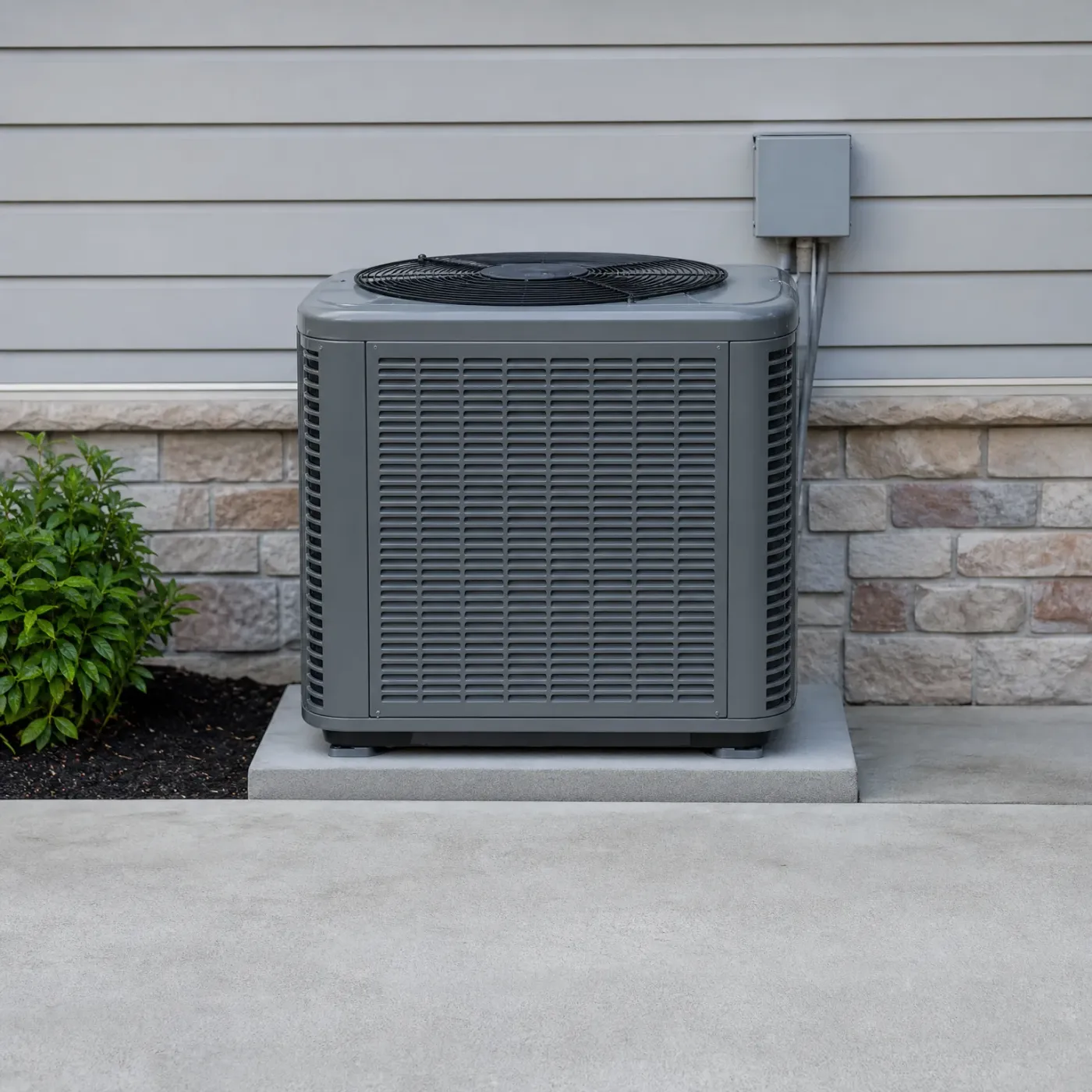
Running clean
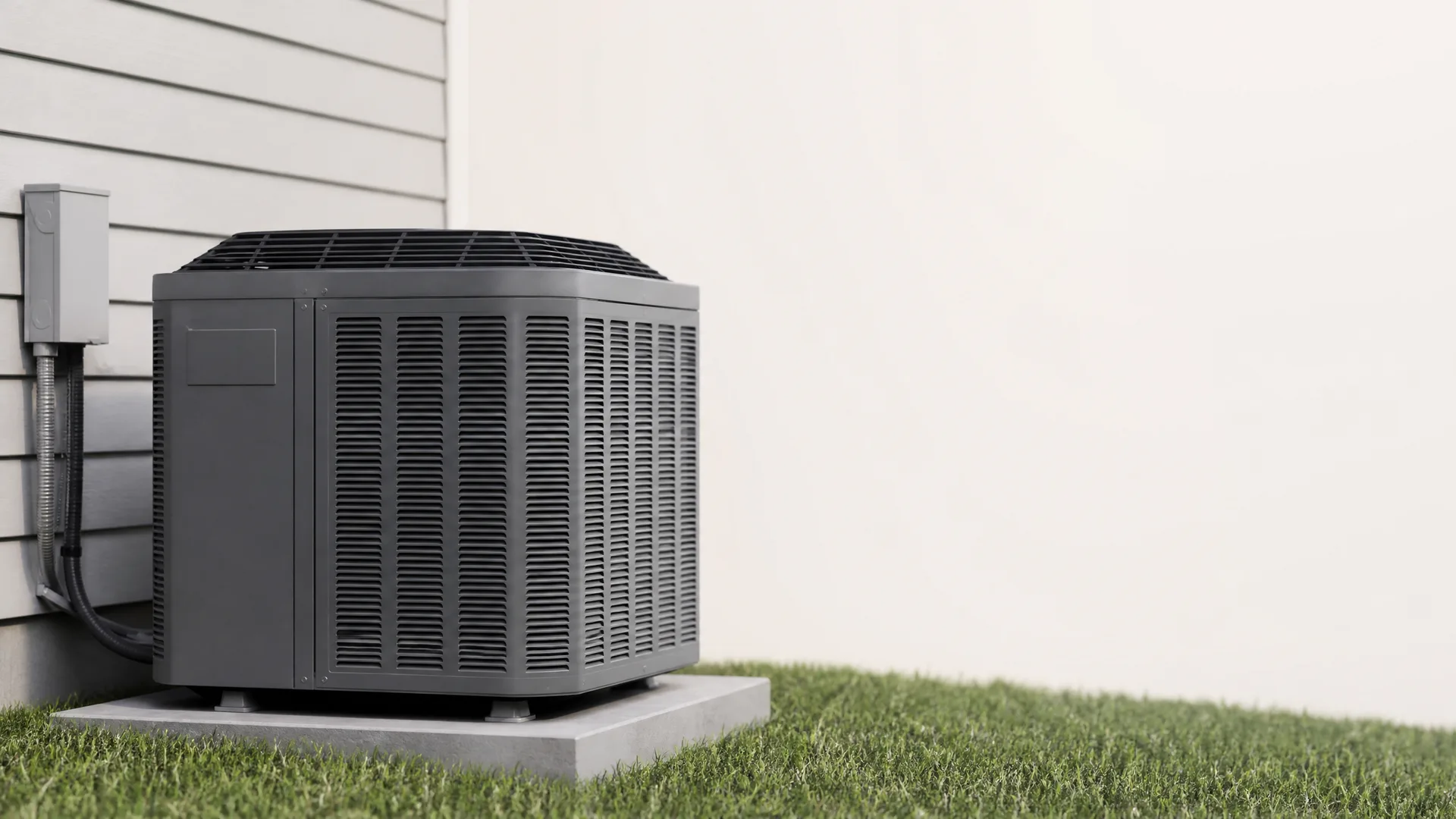
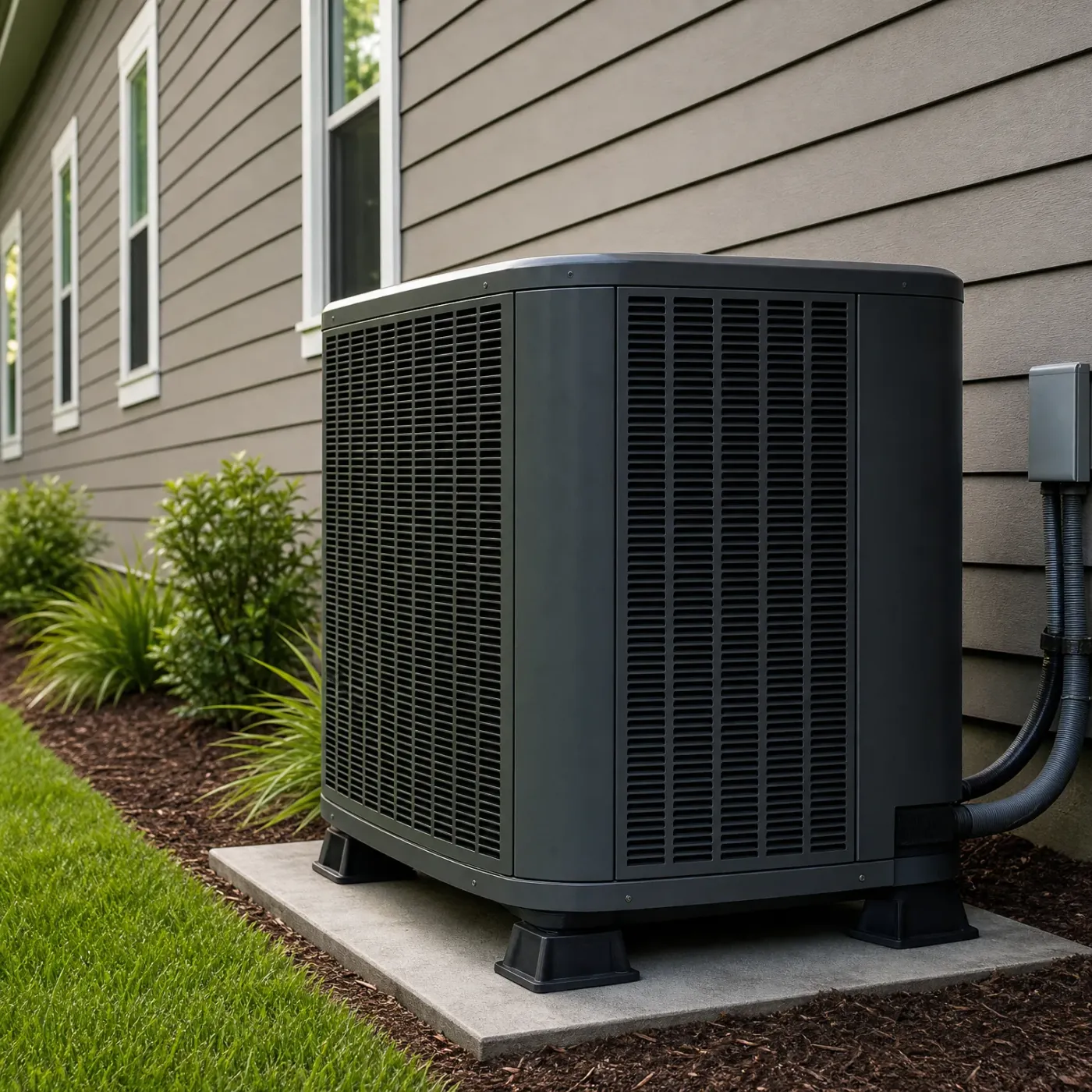
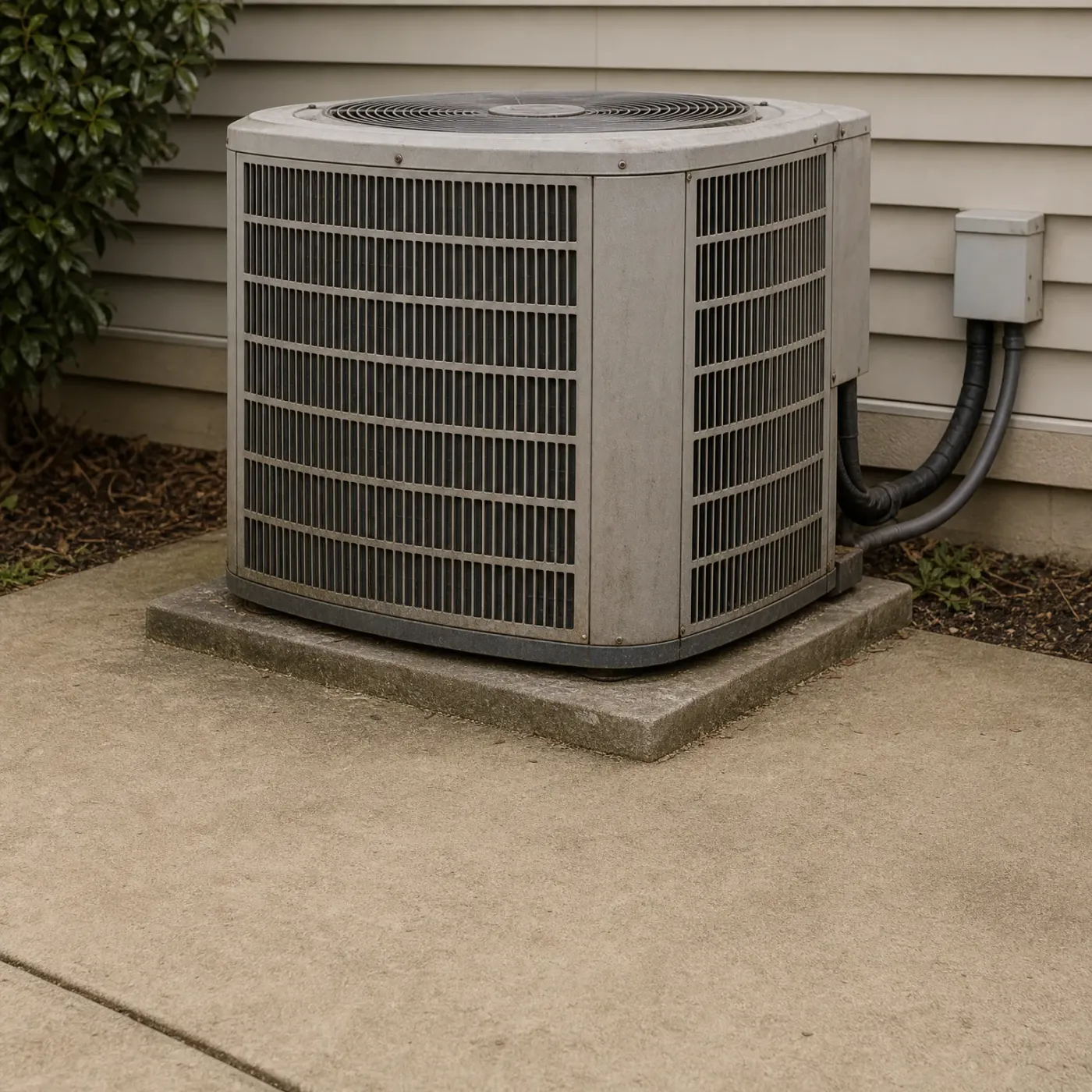
A heat pump that's keeping up looks like this: a clear condenser cabinet, fins you can see straight through, and a steady hum when it kicks on. Air moves freely across the coil and out through the top. Cold air inside follows from that.
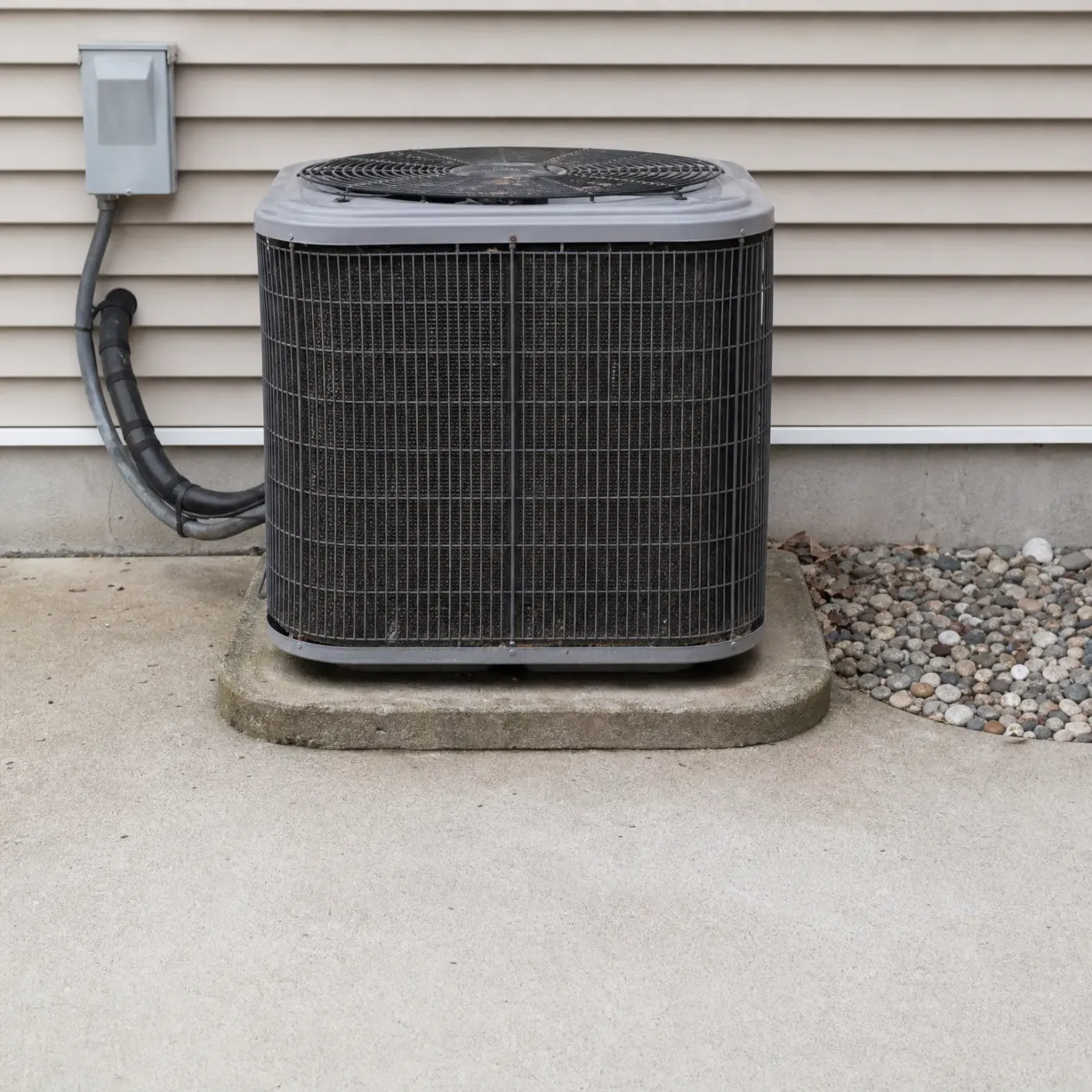
Clogged coil
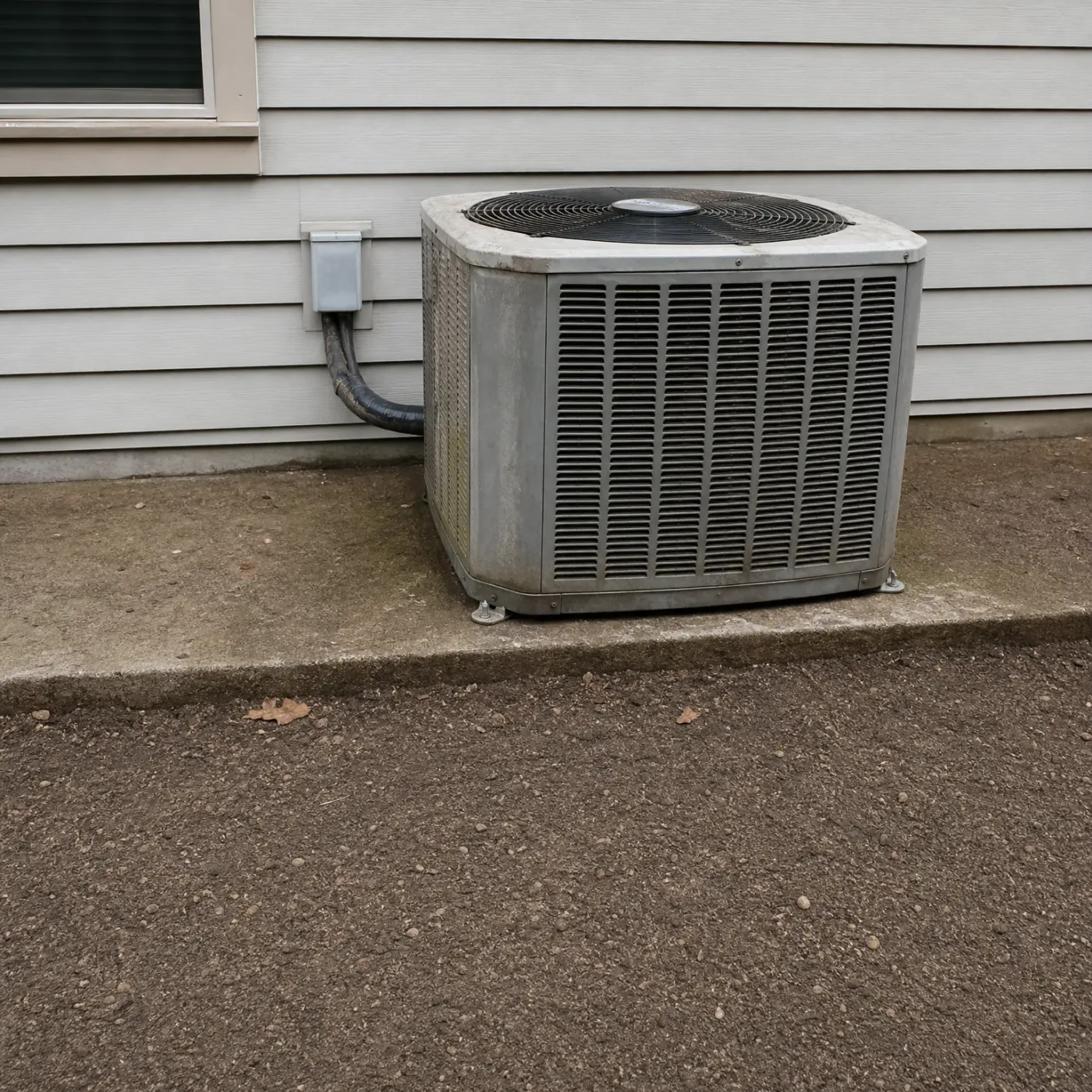
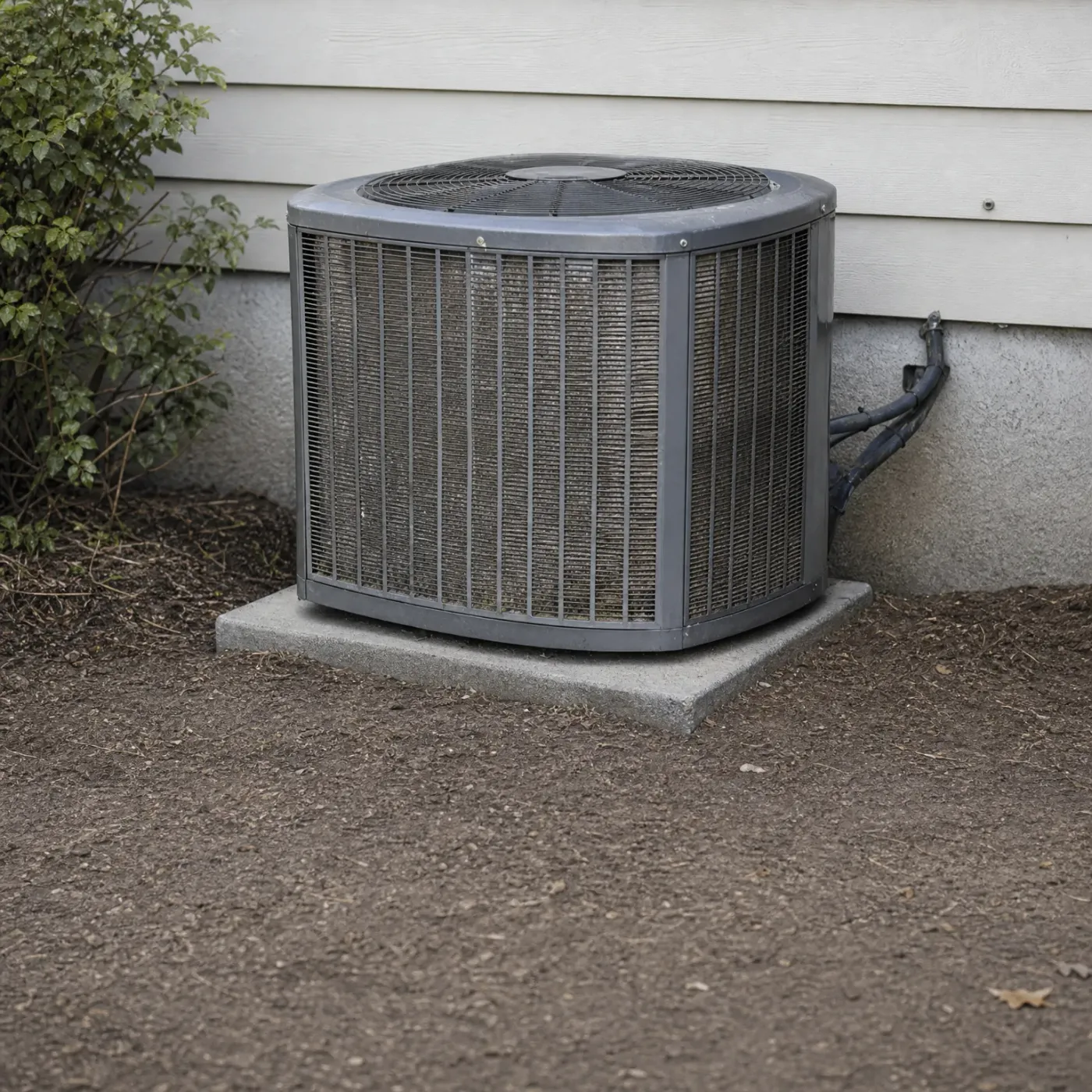
Dirt and grass clippings packed into the fins block the airflow the coil needs to pull heat out of your house. The unit still runs, the fan still spins, but it can't move enough heat to get the air cold. This is one of the fixable reasons behind lukewarm air.
Is this just an off day, or is it getting worse
You might notice the air feels cold enough for an hour and then slides back to lukewarm. Or the outdoor unit runs longer than it used to, cycling on and off more through the afternoon. Some houses get a faint musty smell from the vents, a sign moisture is sitting on a coil that isn't pulling heat out of the air the way it should. The thermostat might read a few degrees off from what the house actually feels like. None of this means the system is finished. But a heat pump working this hard to get partway there is using more power to do less, and if the same part is struggling now, it tends to get worse before it gets better on its own.
Get the right pro for your heat pump
Get the heat pump repair search off your mind today.
Describe your heat pump job, and a local pro who handles it gets in touch.
Asking costs nothing, and the choice to hire stays yours.
A clean unit with clear airflow around it still has to answer for the air coming out of the vents, not just how it looks sitting there.
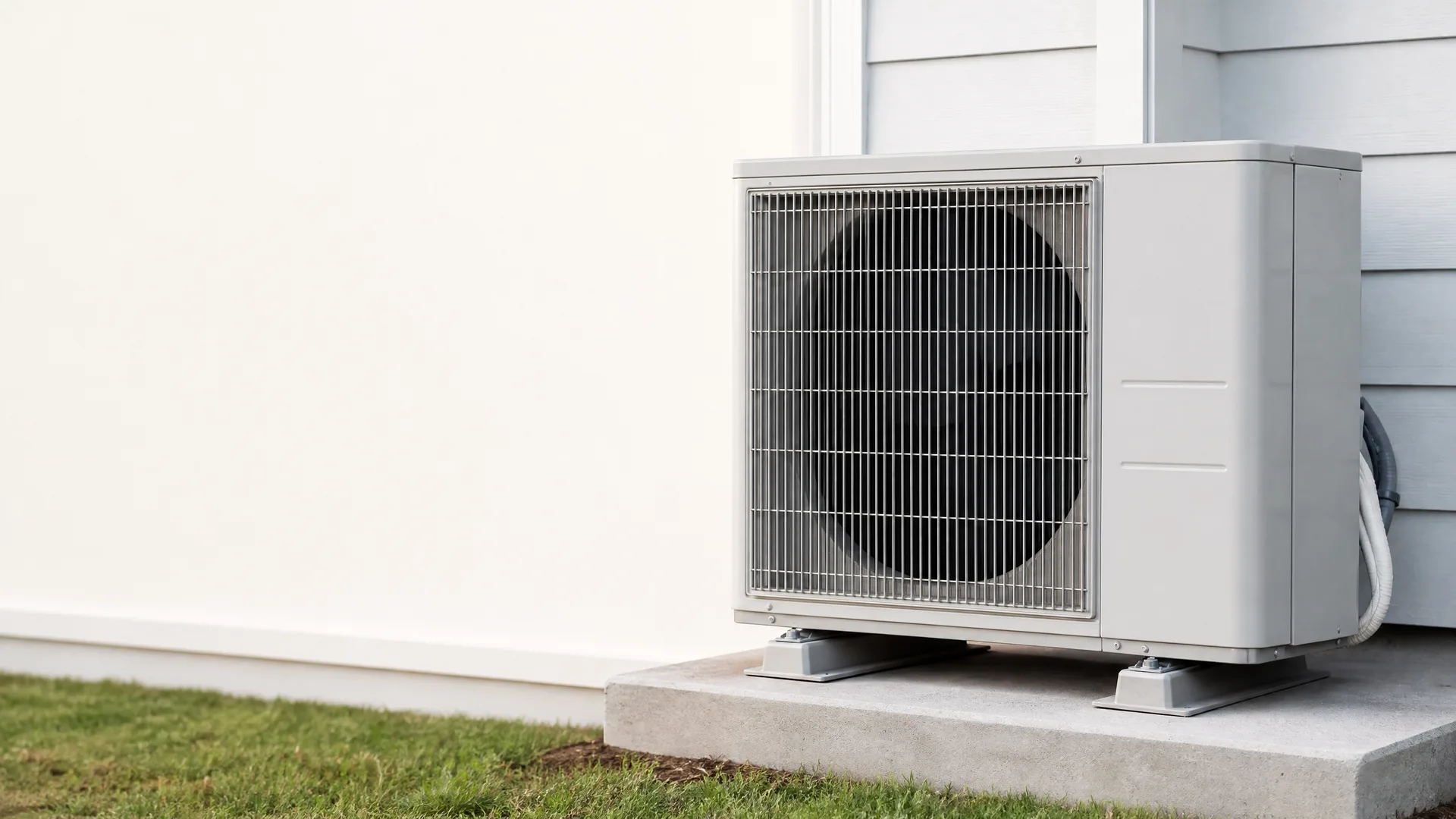
Refrigerant lines running tight to the disconnect are normal, but if the air stays lukewarm, something between that unit and your vents isn't finishing the job.
It's past eleven and the house is finally quiet. The sheets are damp where your back's been against them, and you've kicked the blanket to the floor an hour ago. The window's fogged along the edges, the only place it shows what the air's doing. Down the hall you can hear the unit outside still running, that low hum through the wall, but the air over the bed hasn't changed. You get up and stand in front of the vent for a second, hand up, waiting to feel something closer to cold. It's cooler than the room, barely. You lie back down on the dry side of the pillow and watch the ceiling fan turn, doing the only part of the job that's actually working tonight.
Call Now or Let It Ride
Call now
A system blowing lukewarm air in July can still mean a cracked or dirty coil, a failing capacitor, or a refrigerant leak that gets worse the longer it runs.
Running a heat pump low on refrigerant can damage the compressor, which costs far more to replace than the part causing the leak.
A contractor can check the reversing valve and refrigerant charge in one visit and tell you which one is behind the lukewarm air.
If the outdoor unit is cycling more than it used to, that pattern usually points to one specific part, not a system-wide failure.
Getting it looked at this week means the bedrooms are cold again before another stretch of sticky nights passes.
Wait it out
If the air is just a little cool rather than fully lukewarm, the system may still be keeping up enough for now.
A refrigerant leak that's small today gets larger over time, and waiting usually means a bigger repair later, not a cheaper one.
Every week the compressor runs on a weak charge is a week it's working harder than it's built to.
Afternoons stuck in a warm house add up fast once Missouri summer settles in for weeks at a time.
Putting it off doesn't fix the reversing valve or the coil, it just delays finding out which one needs attention.
What normal looks like outside
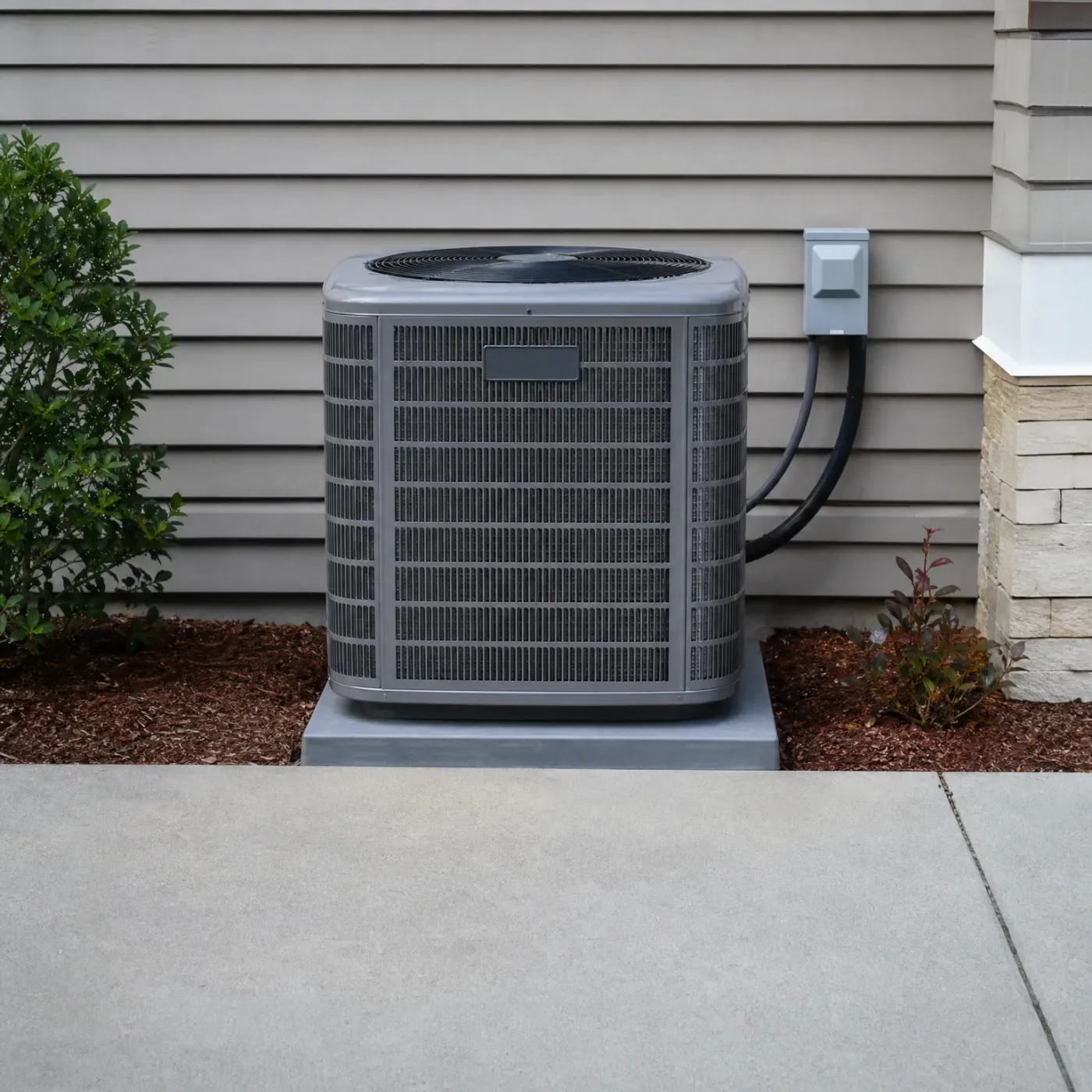
The condenser sits on its pad, lines running clean to the disconnect box, fins open to the air around it. Nothing about the cabinet looks stressed. When a unit like this is working right, the air inside the house matches what the thermostat says, not close to it.
Same spot, different outcome
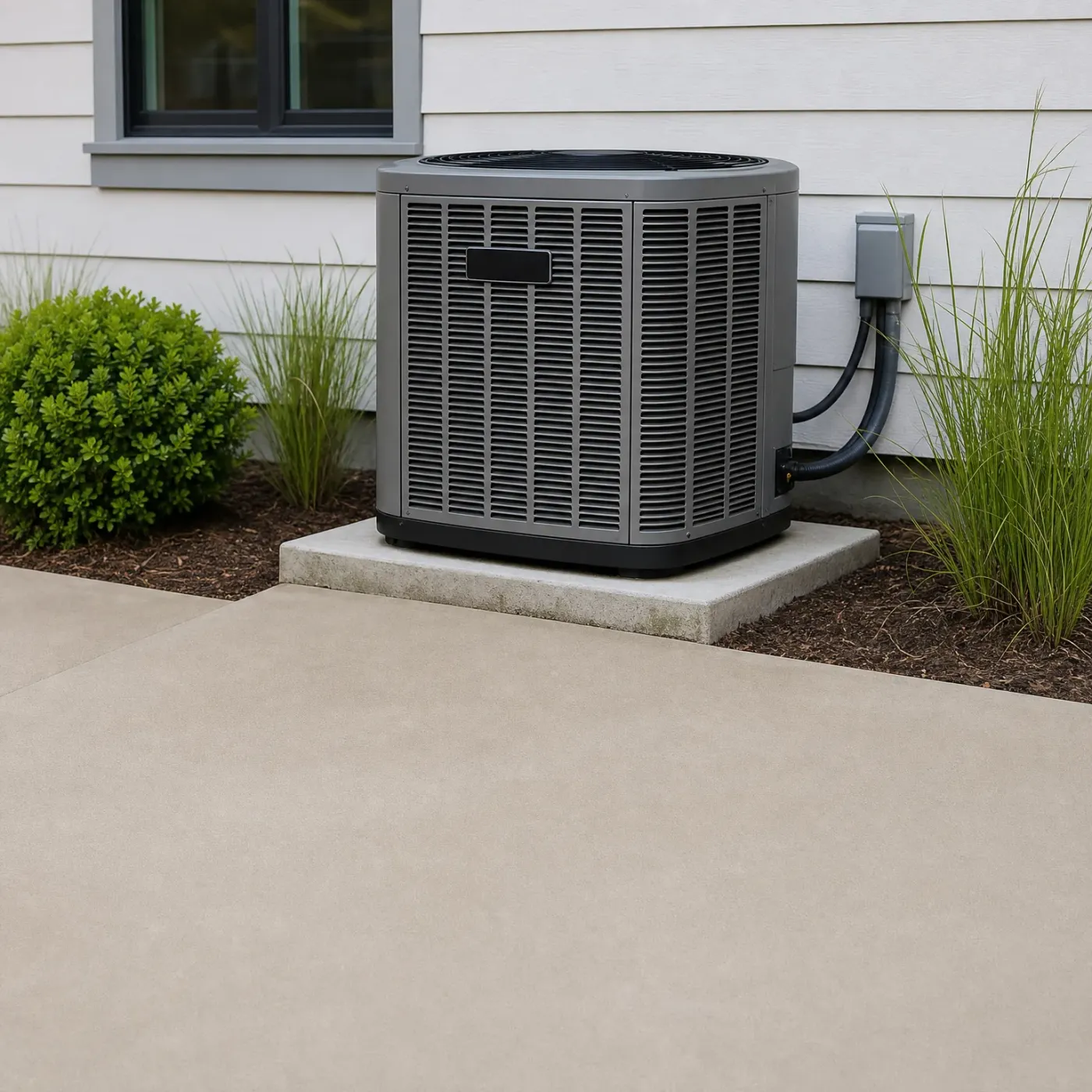
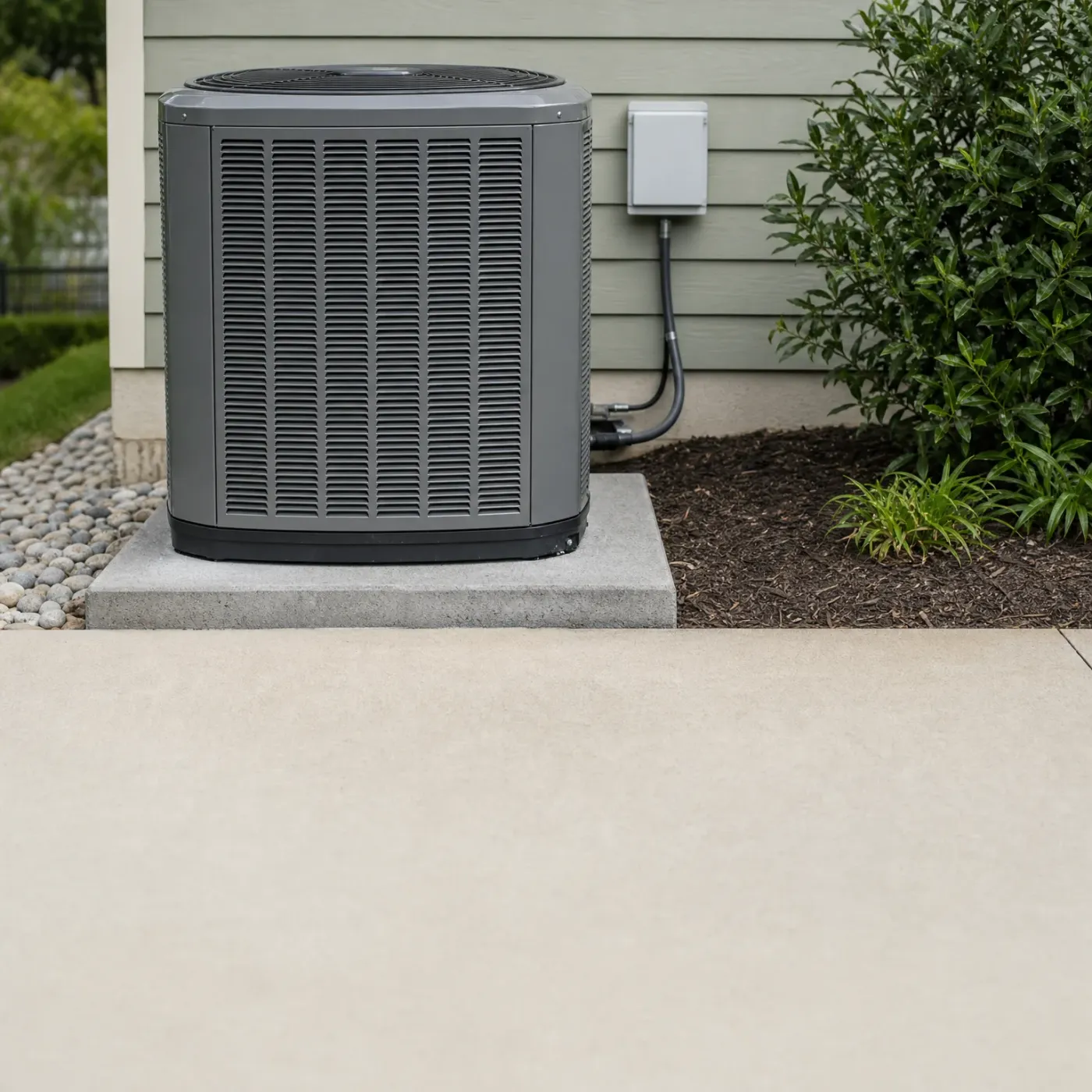
This unit looks just as tidy from the outside, lines intact, pad level, nothing visibly wrong. But a heat pump can look fine sitting on its pad and still be the reason the air inside stays lukewarm. Whatever's wrong is happening inside the cabinet or in the line, not on the surface.
Power costs 13.30 cents per kilowatt-hour statewide
At 13.30 cents per kilowatt-hour, a heat pump struggling to cool runs longer to chase a temperature it can't reach, and that extra runtime shows up on your bill before anyone figures out why the air isn't cold.
EIA-861 2025 statewide residential average
Before you get your heat pump repairAfter you get your heat pump repair
Summer air here carries a dew point around 66°F, the number that measures how heavy it feels on your skin, not just how hot. A heat pump cooling that kind of air has to pull out a lot of moisture before the house feels right, and if it's already struggling to switch modes or losing refrigerant, that extra moisture load is what tips cool into lukewarm. You'll notice it first as a clammy feeling indoors even when the thermostat shows the temperature you set, because the air moving past you hasn't been wrung out the way it should be. Source: regional climate averages for Missouri.
NASA POWER T2MDEW county cells weighted by homes
Lukewarm air from a heat pump almost always traces back to one thing: a stuck reversing valve, a dirty coil, a weak capacitor, or refrigerant that's gotten low. None of those fix themselves, and running the system while you wait only asks more of a compressor that's already struggling. A contractor can check the valve, the coil, and the charge, and tell you which one it is. Once you send the form, you're done hunting for someone to call. A contractor who takes on heat pump repair in your area gets matched to you, and from there it's on them to reach out. You've got enough going on keeping the house comfortable through a Missouri summer without also tracking down who's available and whether they know this equipment. That part stops being yours the moment you submit. Whatever's wrong with your system, it's not getting better on its own, and the air in your house will tell you when it's fixed. It'll feel cold again, the way it used to.
A pro who works on heat pumps
Once you send the form, finding a pro is off your list.