
Why your heat pump fan won't spin in Missouri
A heat pump fan that won't spin outside usually means the capacitor has failed, the fan motor has burned out, or a tripped breaker or blown control board fuse has cut power to the outdoor unit. In Missouri winters, ice buildup on the coil can also jam the fan blades or trigger the defrost control to shut the motor down, especially after a stretch of freezing rain or heavy frost. If the indoor side still blows air but feels cool rather than warm, the outdoor fan not spinning is likely why the system can't move heat properly. Left alone, a dead fan motor forces the compressor to run without the airflow it needs to cool itself, which can shorten its life or stop the system from heating at all. Your house still has gas heat as backup, so you may not notice the failure right away beyond a higher bill, but the heat pump side needs a technician to check the capacitor, motor and defrost board before it's run harder than it should.

Thermostat calls for heat or cooling and sends power out
Control board sends voltage to the outdoor fan motor
Capacitor gives the motor the jolt it needs to start
Motor spins the blades and pulls air through the coil
What are you noticing at your outdoor unit right now
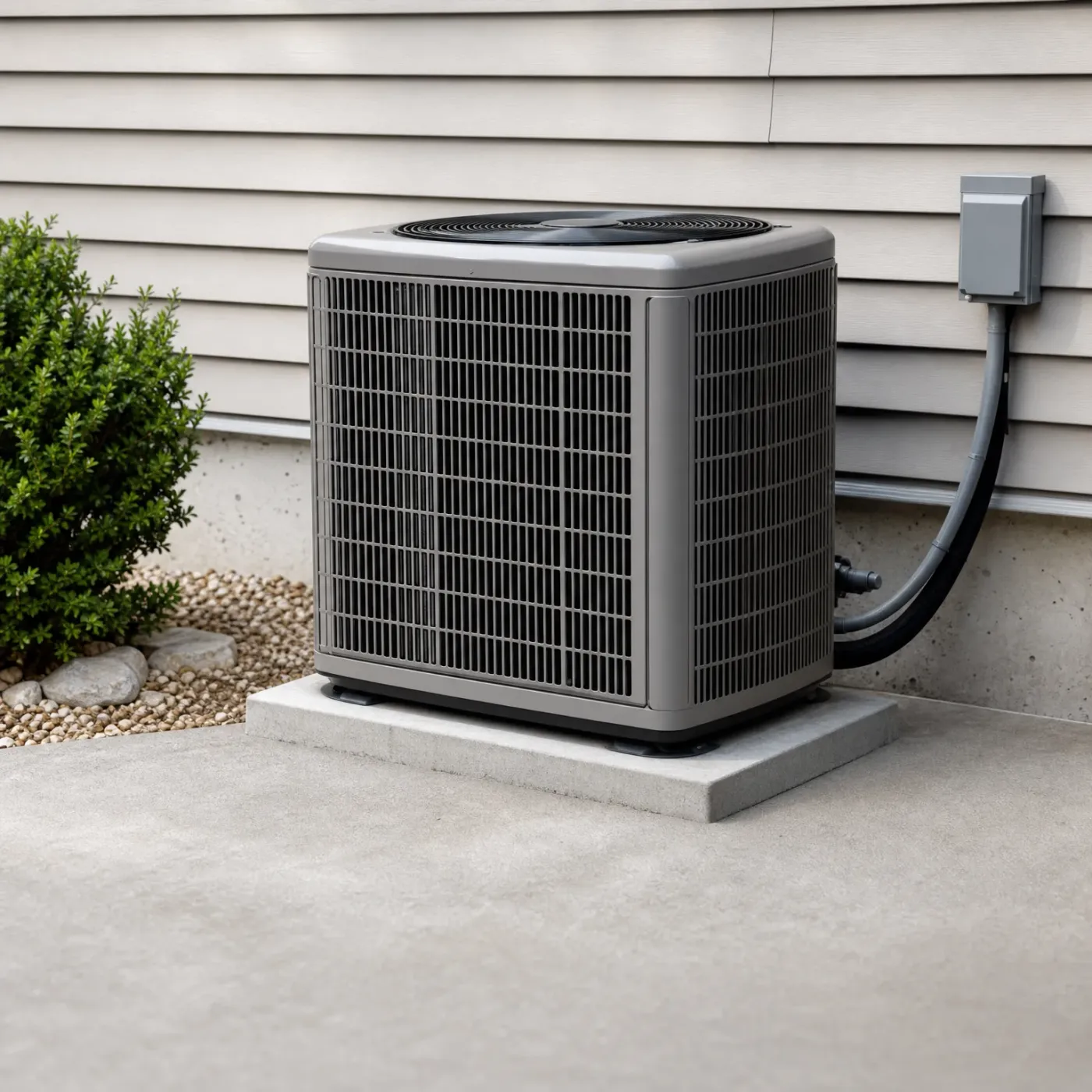
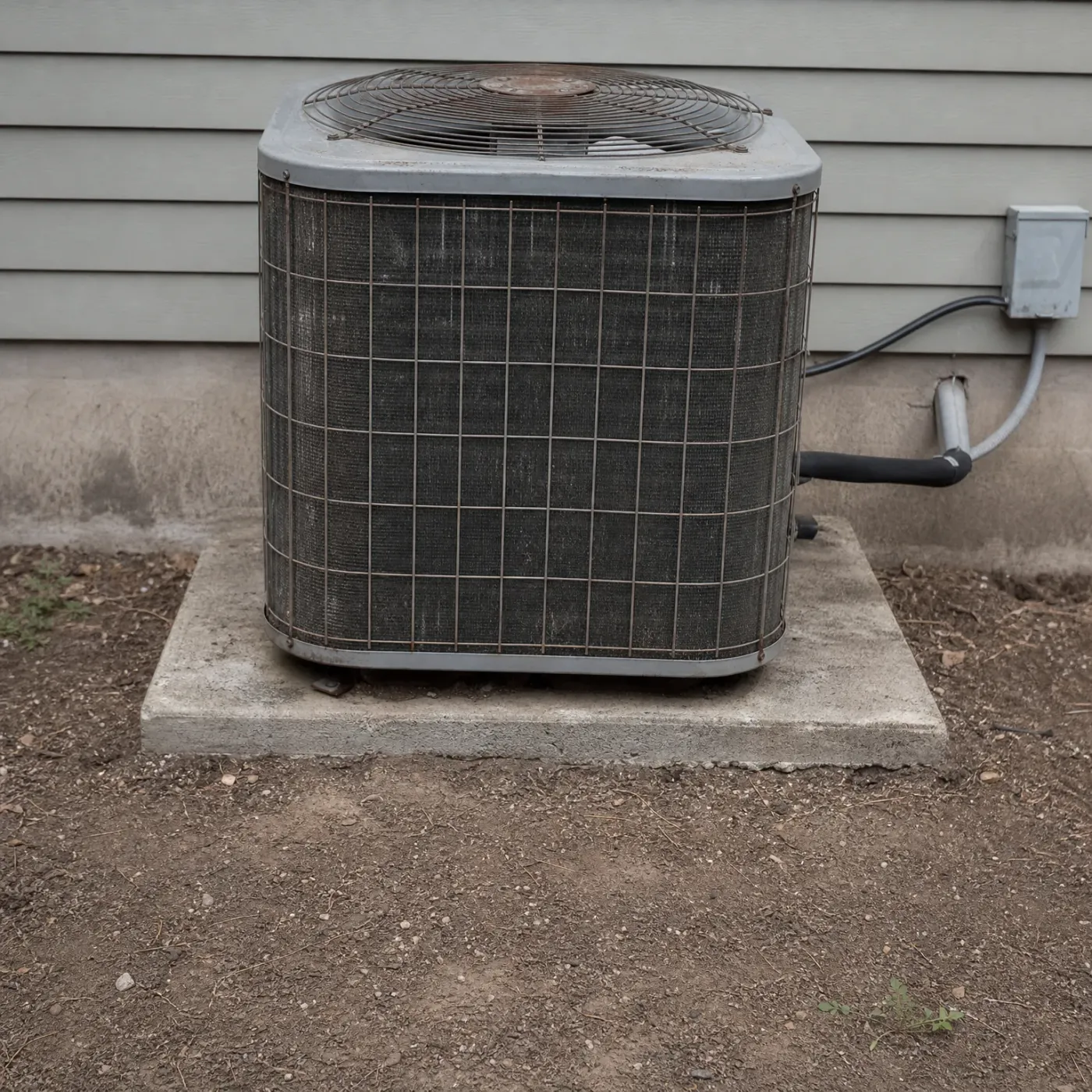
Go out and look at the unit. You might hear the compressor running but no air moving past the fan grille, or a steady hum with the blades sitting still. Some homeowners catch a burning smell near the panel, or notice the breaker for the outdoor unit has tripped more than once. In winter, check for ice built up over the coil and fan opening, thick enough that the blades can't turn even if the motor is trying. Left alone, a heat pump that can't move air outside will keep drawing power without heating or cooling your house, and in Missouri's winter that can mean backup heat carrying the load on its own.
Why the motor burns out here
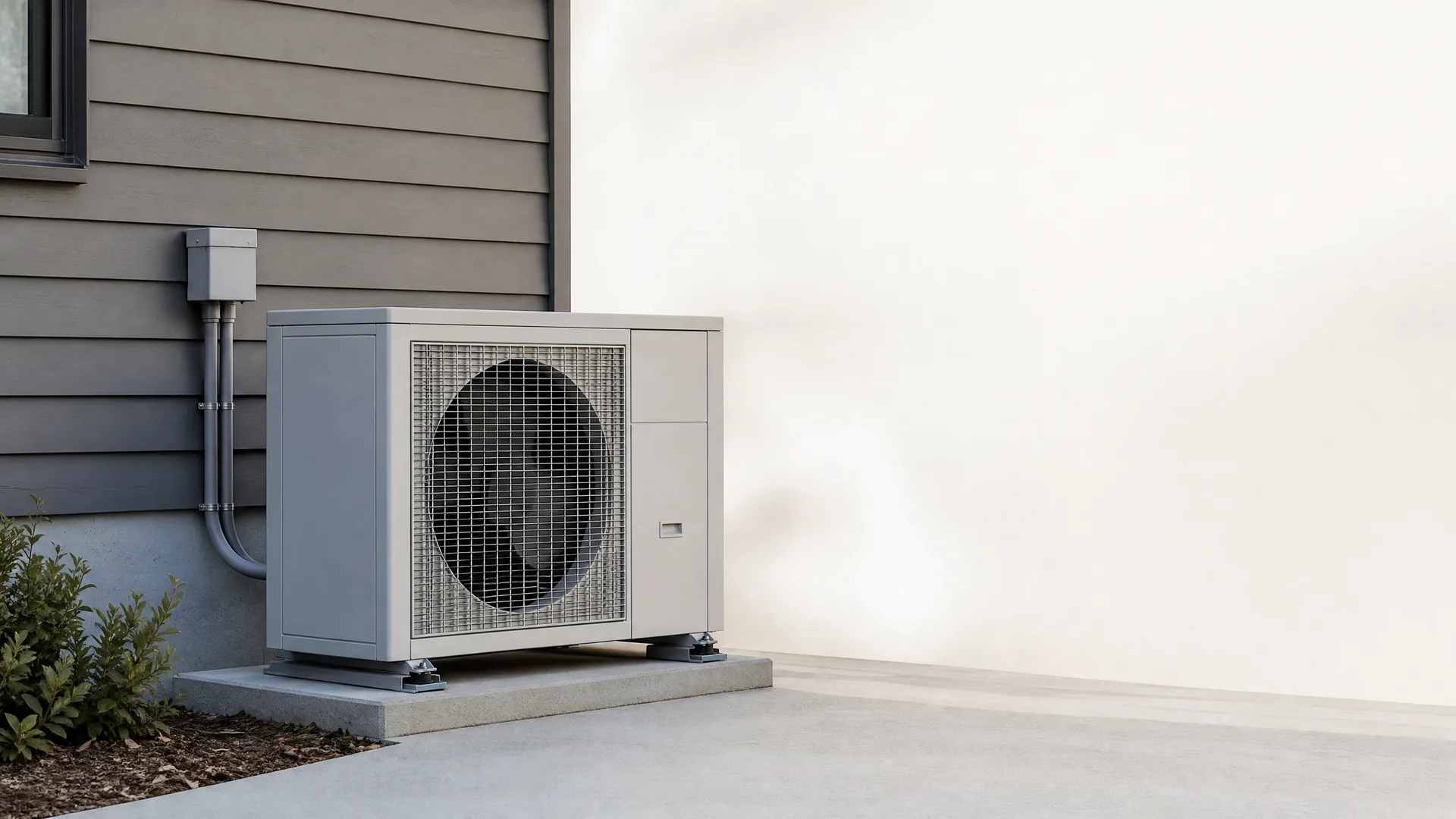
The outdoor fan motor runs every time the unit cycles, and in Missouri that means long stretches through the summer humidity and plenty of short winter cycles too. Bearings wear, windings break down from the heat, and the motor eventually seizes or stops turning. A motor that hums but won't spin is usually past the point of restarting on its own.
Why the capacitor fails first
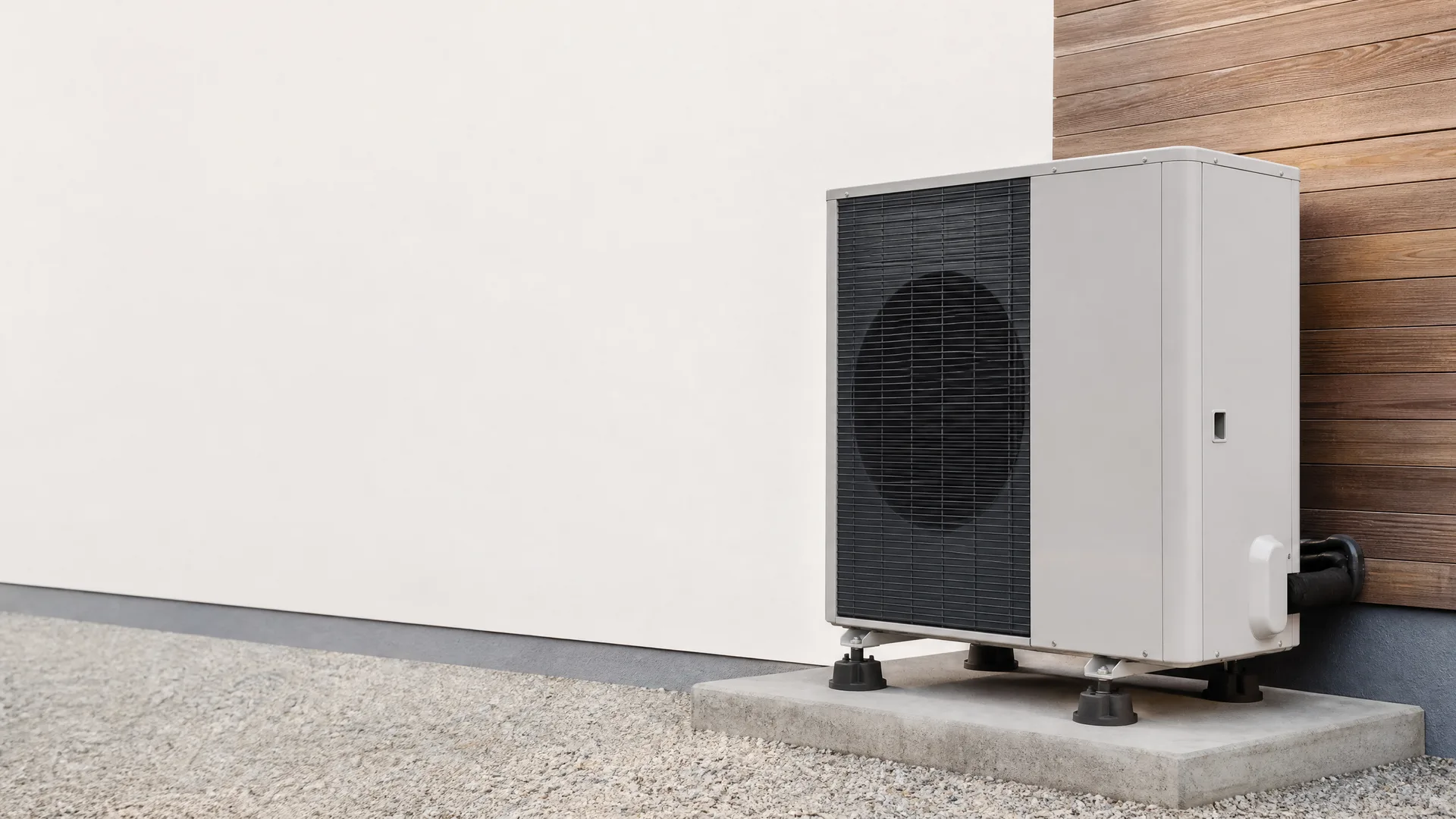
The capacitor stores the charge that kicks the fan motor into motion. It sits right next to the compressor in the outdoor unit, and it takes heat from the Missouri summer along with every start cycle the system runs. Heat wears down the capacitor's ability to hold a charge. Once it can't deliver that jolt, the motor gets power but never turns, which is why the unit hums instead of running.
Can a tripped breaker alone stop my heat pump fan from spinning?
You flipped the breaker back on and the fan still isn't moving, or you're wondering if that's even worth checking before calling anyone. It's a fair question since a tripped breaker is the simplest thing to fix yourself, and you'd rather rule that out than pay for a service call over a switch.
Yes, but it usually doesn't stay tripped without a reason
A tripped breaker cuts all power to the outdoor unit, so the fan, the compressor, everything sits dead. If you reset it and it holds, and the fan spins up fine, that was likely it. But if it trips again within a few minutes, something downstream is pulling too much current, usually a failing capacitor or a motor with worn bearings dragging hard enough to overheat the winding. Breakers protect the wiring, not the equipment, so a breaker that keeps tripping is doing its job and telling you a part inside the unit is already failing. Resetting it again won't fix that.




Get your heat pump to the right pro

Describe what your heat pump is doing once, in one form.
Sending the form costs nothing.
Call it in now or wait it out
A seized motor or failed capacitor won't fix itself, and running the compressor without the fan moving air across the coil for long stretches can damage the compressor too. If you shut the unit off at the thermostat once you notice the blades aren't turning, nothing gets worse while you sort out who's coming to look at it. That's the safer path if you're mid-summer and the house is still holding its temperature for now. Waiting makes sense if the unit is already off and you're just deciding when to get someone out. It doesn't make sense if you can hear the compressor still running with no air moving. That combination is the one that turns a capacitor swap into a compressor replacement.
Finding someone who works on heat pumps
Not every HVAC contractor is equally comfortable with heat pump outdoor units, and the usual routine of searching, calling a few numbers, and explaining the same symptoms three times over costs you an evening you'd rather spend on something else. Answer a few questions about what you're seeing at the unit and you get matched with a contractor who services heat pumps in your area, and they'll reach out to you directly. No comparing quotes cold or guessing which company actually stocks the part your model needs. You still need to be home when they come look at it, but the legwork of finding someone qualified is done.
Power costs 13.30 cents per kilowatt-hour statewide
At 13.30 cents a kilowatt-hour, running the compressor without the fan moving air doesn't just risk the coil, it keeps pulling power for a job that isn't getting done. A seized motor or bad capacitor that sits for weeks adds up on your bill before it ever gets fixed.
EIA-861 2025 statewide residential average

Midnight and the sheets are stuck to your back. You kicked the top one off an hour ago and it's still too much. The window's fogged along the edges, that thick August haze that never really breaks overnight in Missouri. You've been lying there listening for the outdoor unit to kick the air moving, and it's not coming. Somewhere out back the compressor is running, you can hear that low steady drone through the wall, but no air is pushing through the vent over the bed. Just warm, wet stillness. You get up and stand in front of it anyway, like that'll help, then go check the thermostat for the third time, like the number's going to change.

A fan that won't spin has a cause, and it's fixable
Whether it's a failed capacitor, a burned-out motor, a tripped breaker, or ice packed around the coil, the outdoor unit needs someone to open it up and look. Nothing about a stuck fan blade corrects itself, and the longer the compressor runs without air moving across that coil, the more it costs you on top of the repair itself.
You don't have to figure out which of those it is before you call, and you don't have to be the one who finds a contractor, checks what they cover, and explains the hum and the smell and the ice all over again on a second and third call. Once you're matched with one who handles heat pumps like yours, they'll reach out to you directly. You'll know where things stand instead of waiting on a fan that was never going to start on its own.






The right pro for this job
Answer a few questions instead of calling shop after shop.
You're not committing to anything by asking.