Your request goes to a Clay County pro who takes heat pump jobs.
A heat pump in Liberty works harder than it would in most places. It's cooling your house through long, sticky summers and then switching over to carry the heat load on the cold nights Clay County gets every winter. That double duty is what decides how many years you get out of it, more than the number stamped on the nameplate.
Most homes around here heat with gas, so a lot of heat pumps in Liberty are set up to share the load with a furnace rather than run as the only source of heat. That changes the wear pattern. A unit that gets backup help on the coldest nights isn't straining the same way one would if it had to do it all alone.
How long yours lasts from here depends on things specific to your system: how it's been maintained, whether the refrigerant charge has stayed right, whether it's been sized correctly for your house. Those are questions worth getting a straight answer on, especially if you're trying to decide whether to repair what you have or start planning for a replacement.
That's where talking to someone who works on these year-round in this area helps. A local contractor who services heat pumps through both Liberty summers and Liberty winters has seen how they actually hold up here, not in a lab or in a different climate. They know what tends to go first on units running the kind of hours yours does.
If you want that kind of read on your situation, you can get matched with a licensed local contractor who takes on jobs like yours. It's one contractor reaching out to you, not a handful of companies competing for the call.
A heat pump in Liberty lasts about 12 to 15 years. The number runs lower here than in milder climates because the unit never really gets a break. It's pulling moisture out of the air all summer, then flipping into heating mode to cover the cold nights Clay County gets from December through February. Each switch over puts wear on the reversing valve, and the compressor behind it logs more hours per year than it would carrying only one season. Winters cold enough to push the system into defrost cycles add to that load too, since the unit has to melt ice off its outdoor coil before it can keep heating. If your heat pump came with the house, its age is worth checking against that range. One past 12 years that's starting to run longer, cycle more, or struggle to keep up on the coldest nights is near the point where replacement starts to make more sense than another repair.
What does Clay County weather ask of your heat pump each year?
Winter nights average 22°F
Nights this cold mean the heat pump is pulling heat from outside air when there's little warmth left to pull, which is the hardest work it does all year.
Heat runs October through April
Seven months of heating is a long stretch for one system to carry, and it's the main reason a Liberty heat pump wears faster than one in a milder state.
Cooling runs May through September
Five more months of cooling on top of that winter stretch leaves the unit running most of the year with only a short break each fall and spring.
NOAA nClimDiv 1991-2020
Keep it running past 15 years
Some heat pumps in Liberty keep going past 15 years. It usually comes down to a system that was sized right for the house from the start, and to a homeowner who had it looked at every year rather than only when something quit. Smaller things get caught before they take the compressor down with them. A unit that isn't struggling to keep up on the coldest nights or the muggiest afternoons isn't wearing itself out trying. The ones that last are rarely the ones left alone.
Lose it closer to year 10
Other units in Clay County are done by 10. A system that was undersized for the house ends up running flat out through most of a Missouri summer and winter both, and that kind of strain adds up fast. Skipped maintenance lets small problems sit until they take out something expensive, often the compressor. A heat pump that's been struggling for a season or two before anyone noticed usually doesn't make it to the average, let alone past it.
The compressor is the part that wears down first here, since it runs in both modes instead of just one. In most places it rests half the year.
That's why a heat pump pulling double duty in Liberty tends to fall toward the lower end of its 12 to 15 years, while a furnace paired with straight AC splits the work and often lasts longer doing it.
Power here costs 13.35 cents per kilowatt-hour
At 13.35 cents per kilowatt-hour, running a heat pump here costs less than it does in a lot of places. That lower rate doesn't ease the wear from all those months of cooling and heating, but it does mean you aren't paying a premium on top of the extra work the unit already puts in.
EIA-861 2025
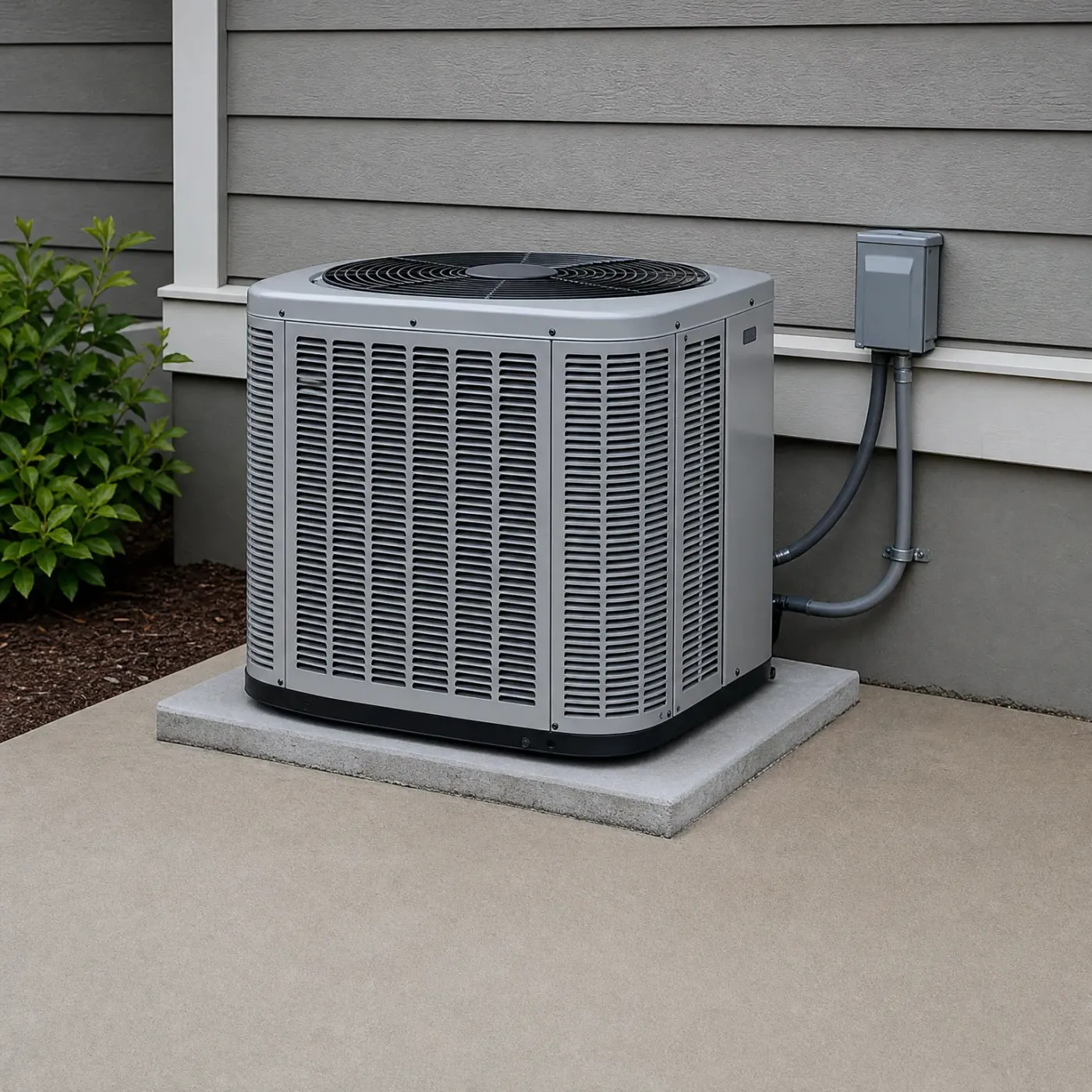
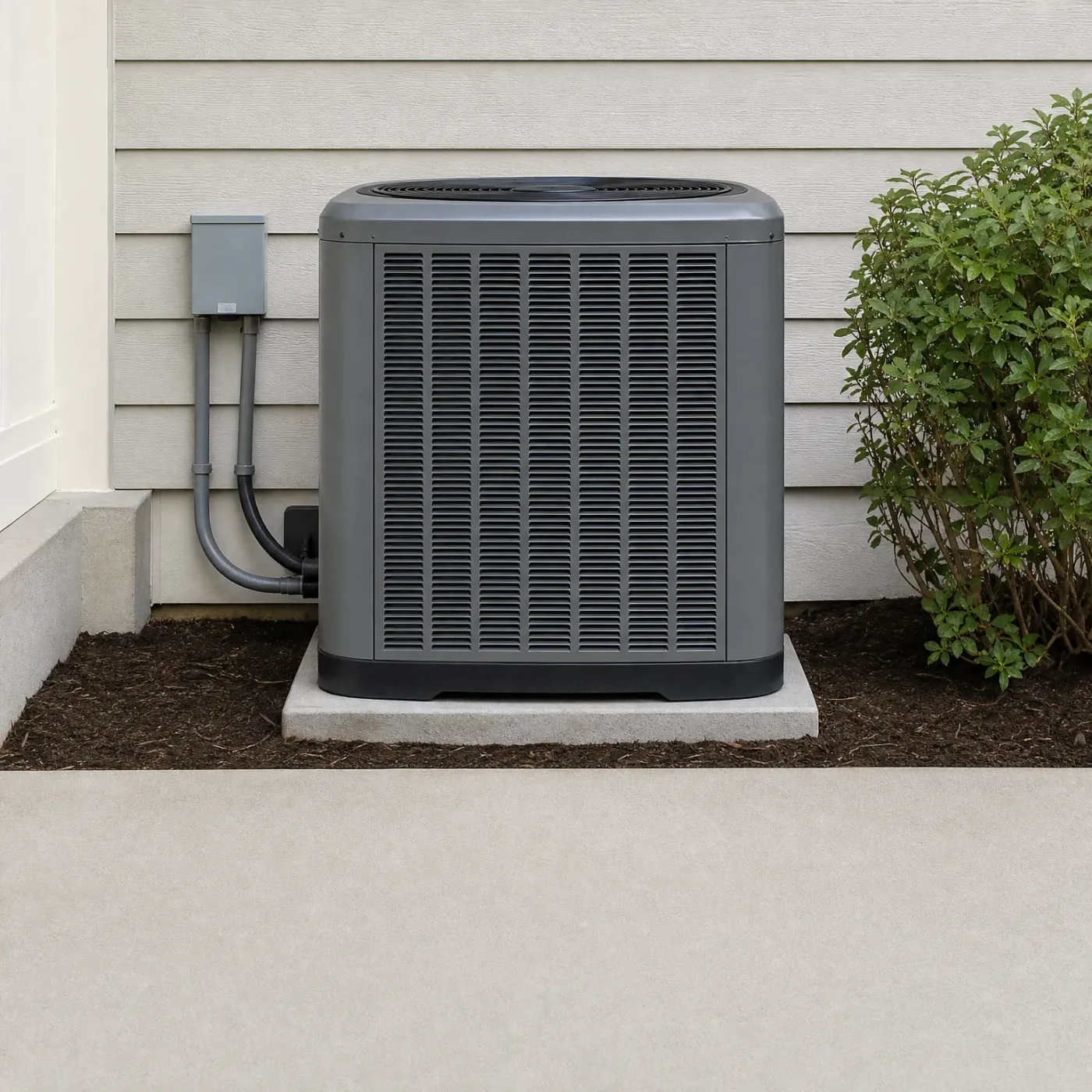
A unit like this, kept clear and serviced each year, is doing what it should at year ten or twelve.
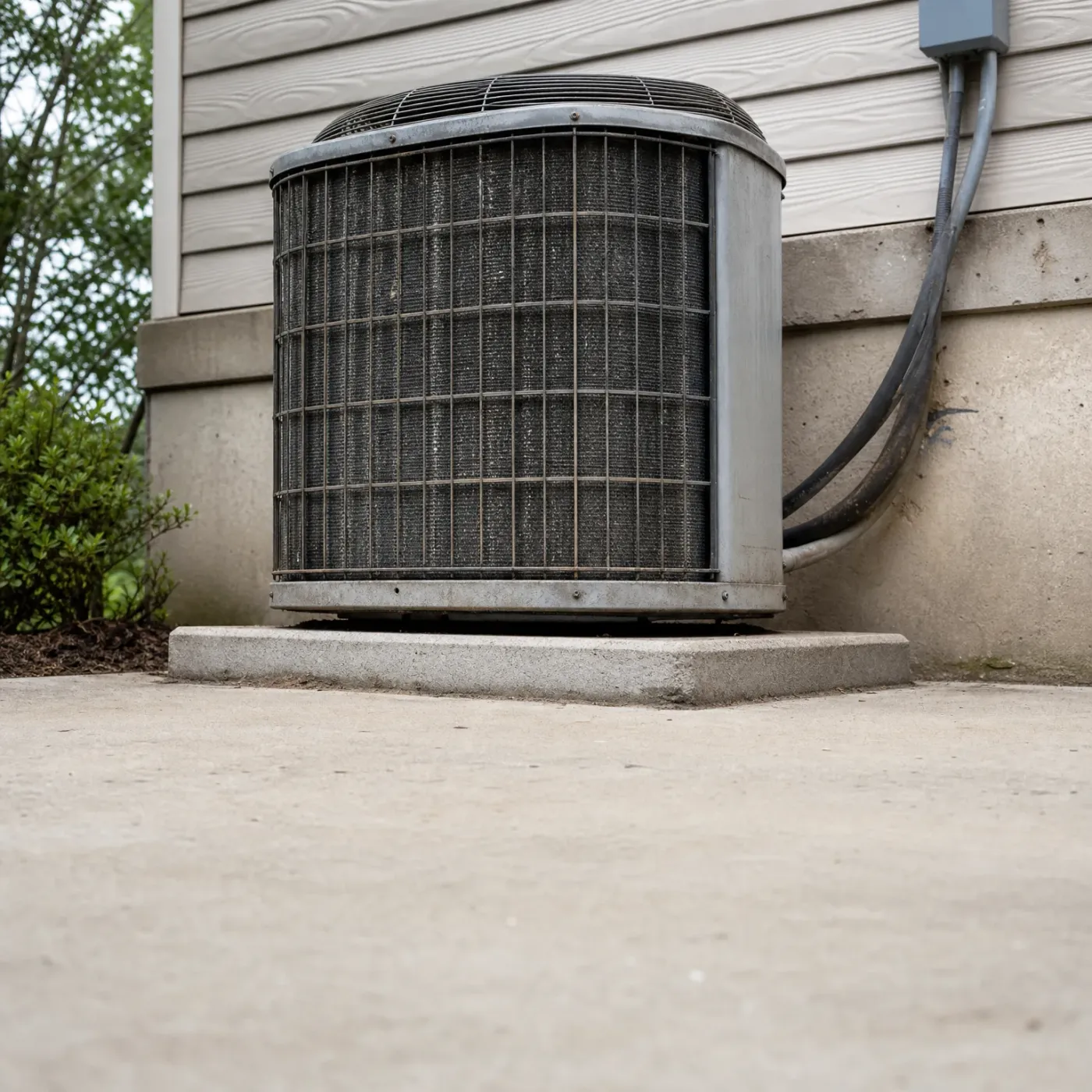
Dirt on the coil and a cabinet left to sit make the compressor work harder than it needs to, and that catches up with it early.
Why is your heat pump struggling this year?
You might notice it running longer than it used to, or the air coming out not quite as warm on the coldest nights. Maybe it cycles on and off more often, or you catch a musty smell when it kicks on. A unit working past its years will often make a louder sound at startup, or the outdoor fan will hum but take a moment to get going. None of that means it's finished. But a compressor under strain for too long can fail outright, usually when you need it most, in the middle of a cold snap or a stretch of July heat, leaving you without heat or cooling until it's replaced.
1
Outdoor air moves across the coil, giving up what heat it still holds.
2
Refrigerant absorbs that heat and turns to a low-pressure gas.
3
The compressor squeezes the gas, raising its pressure and temperature.
4
Hot refrigerant flows to the indoor coil and heats the air passing over it.
By the time a heat pump in Liberty is past the ten or twelve year mark, the question isn't whether it's working hard, it's whether it's still keeping up. A compressor that's logged seven winters of pulling heat from cold air and seven summers of pulling moisture out of thick, humid air doesn't fail all at once. It falls behind a little at a time, and most homeowners don't catch that until a bill jumps or a room stays warm when it shouldn't. Figuring out whether yours still has a few good years left, or whether it's the kind of unit that's better replaced before it quits on a January night, isn't something to guess at. A local contractor who services this equipment all year in Clay County, through the long cooling months and the hard winters, has seen what a unit at this age usually needs. Getting one out to look at yours now, while you still have the choice, beats waiting until the decision gets made for you.
How the switch between modes works
Reversing valve switches the refrigerant's direction so the same unit can cool in July and heat in January.
A stuck or leaking reversing valve often shows up first as a system that blows cold air when it should be heating.
Defrost cycles run automatically in winter, briefly reversing the system to melt ice off the outdoor coil.
Too many defrost cycles on a cold night put extra wear on the compressor beyond its normal workload.
A low-voltage control board reads the thermostat signal and decides whether to send the system into heating or cooling mode.
Refrigerant charge has to be correct for both modes, since the same charge level has to work in summer and winter.
The reversing valve is what makes a heat pump different from a plain air conditioner. It's a small valve that redirects refrigerant flow, and flipping it is what lets the same outdoor unit cool your house in July and heat it in January. The control board decides which way that valve should sit based on what the thermostat is asking for, then sends the signal that tells the system to run in heating or cooling mode. In winter, the outdoor coil picks up frost as it pulls heat from cold air, so the system runs a defrost cycle to clear it. That means briefly reversing into cooling mode outdoors, melting the ice, then switching back to heating. On a cold night in Clay County this can happen several times, and each one asks the compressor to start up and change direction again. A reversing valve that's stuck or starting to leak often shows up as warm air not coming through on a cold morning, or the system blowing cold air when it should be heating. None of this works right if the refrigerant charge is off. The same charge level has to handle both jobs, pulling heat out of the house in summer and pulling it in from outside air in winter, so there's no separate setting for each season. A unit low on charge struggles in both directions, not just one.
Before you get your heat pump installationAfter you get your heat pump installation
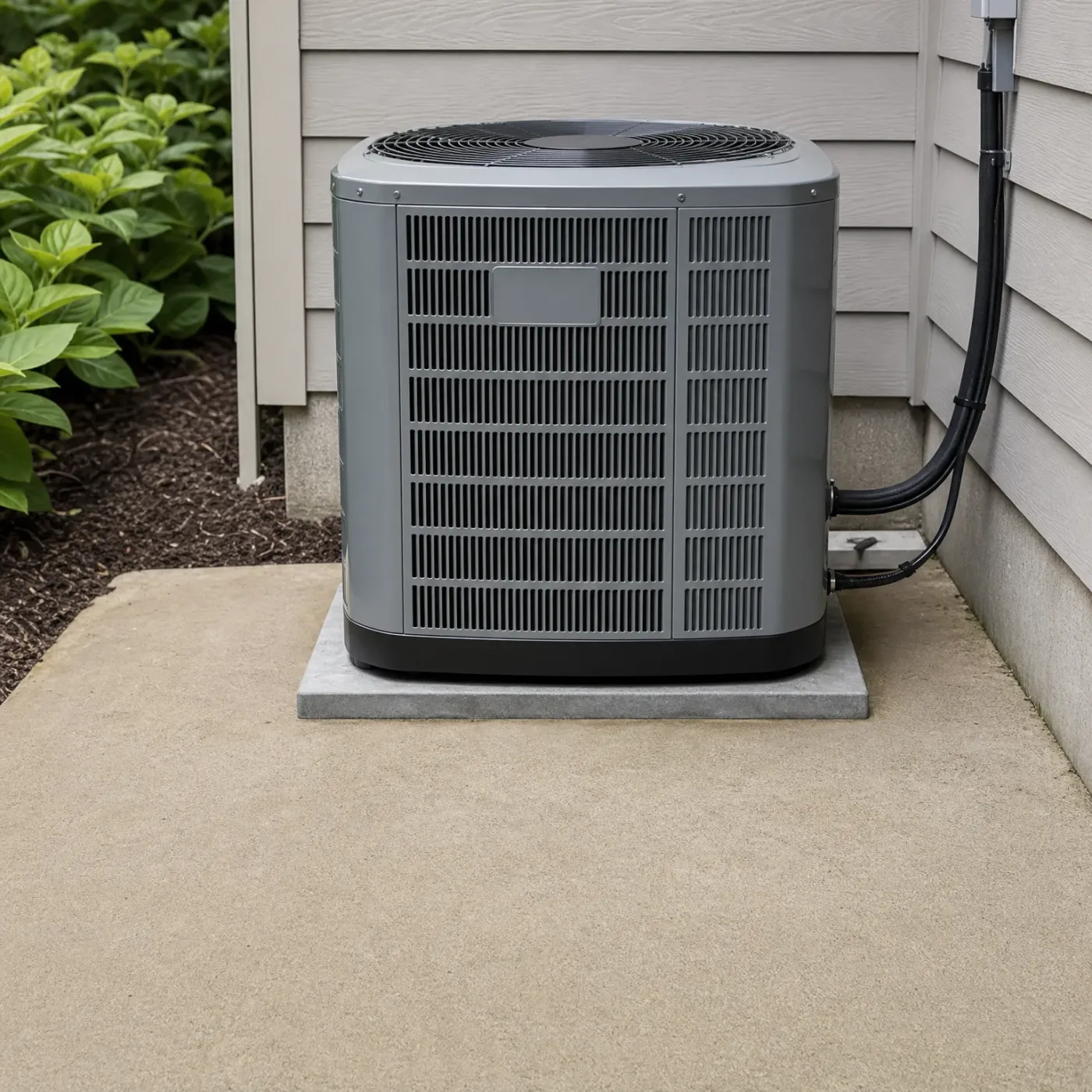
Clear and running right
The grilles are open and the coil underneath can pull in air the way it's supposed to. The disconnect box and lines sit undisturbed against the siding. A unit like this can move heat both directions without the compressor straining to make up for a clogged coil.
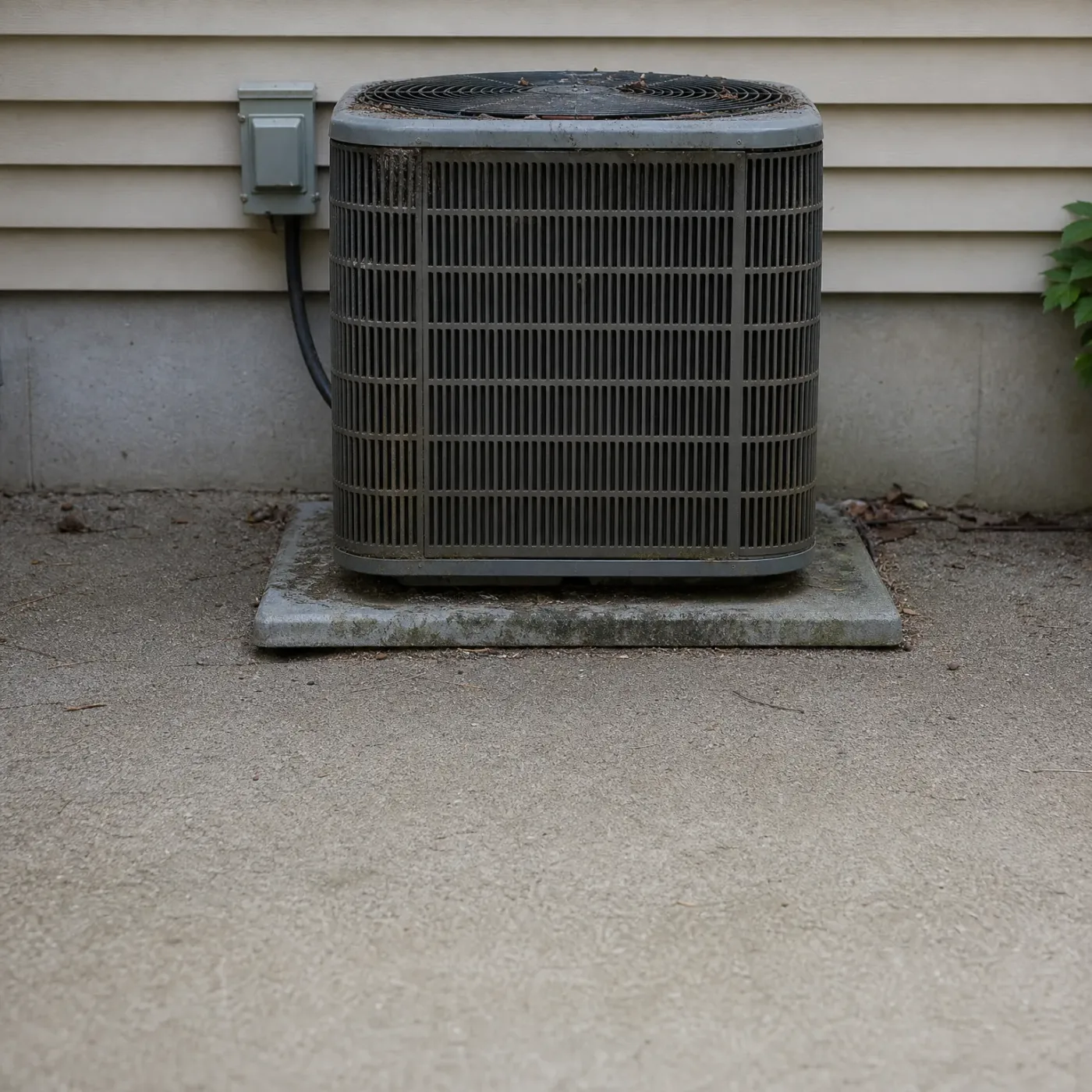
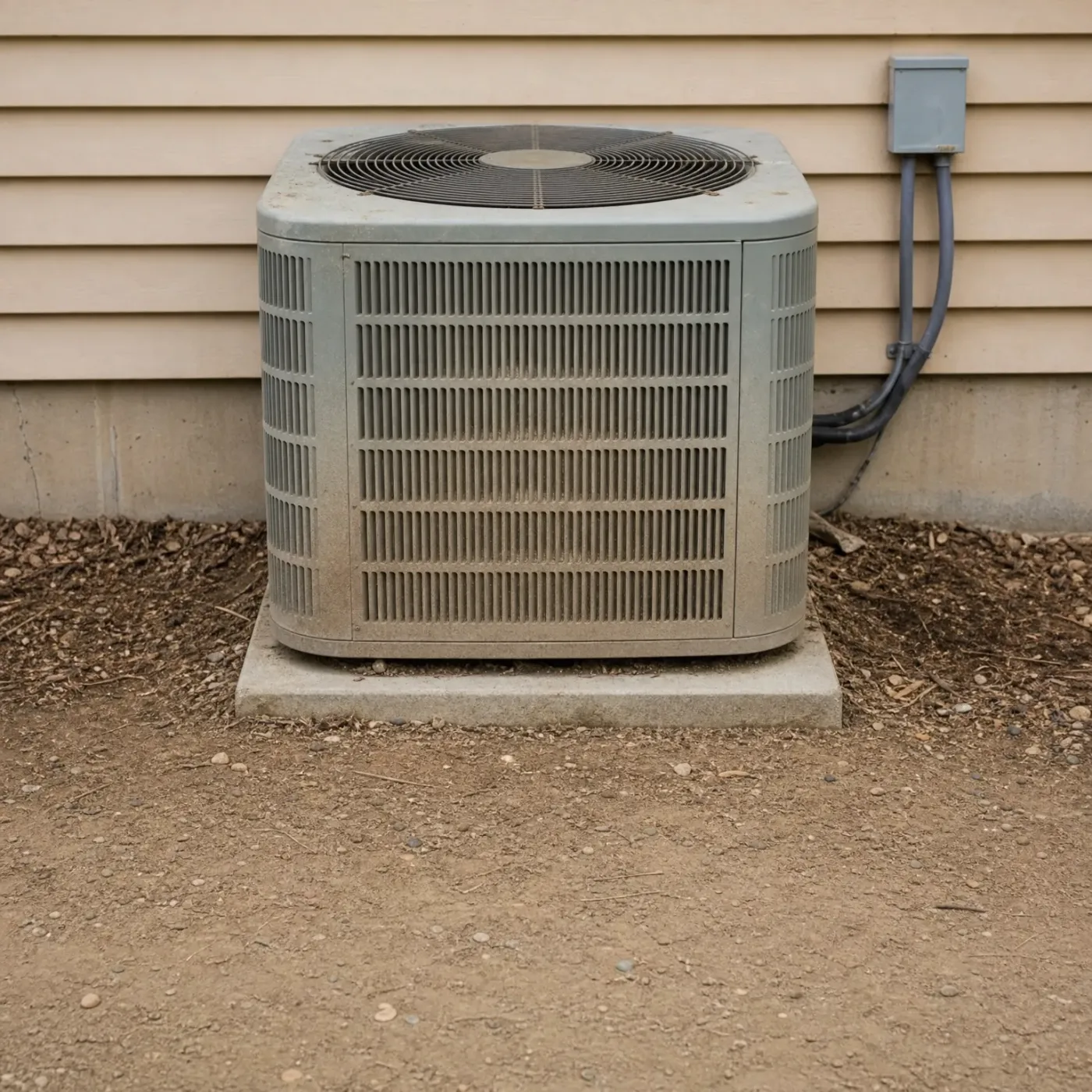
Caked with grime
Dust has built up across the grille and is working its way into the coil behind it. Airflow drops, so the compressor runs longer to move the same amount of heat. Left this way through another Clay County summer, it's wear the unit didn't need to carry.
12 to 15 years, less if nobody looks at it
A heat pump in Liberty gives you 12 to 15 years of double duty, cooling the house through summer and carrying the heat load all winter. Where yours lands in that range comes down to how the compressor has been treated and whether anything was caught before it wore down further. Past year ten, that's worth knowing rather than guessing at.
Someone who works on heat pumps in Clay County every season has seen what a unit like yours tends to need at this age, the reversing valve, the compressor, the coil, and what's still fine to leave alone. Getting matched with one licensed contractor local to Liberty means a single visit and a straight answer about where your system stands, not a handful of companies competing for the job.
Find a heat pump installation pro in Clay County
A licensed installer who works in Clay County gets your project.