



How long a heat pump lasts in Branson, MO

Step 1 of 3: Equipment

How long does a heat pump last in Branson, MO?

Your heat pump works harder here than it would in a milder climate, running the AC through sticky summers and then switching over to carry the heat load through a cold Taney County winter. With it earning its keep almost year round, you want a real number for how many years you can expect to get out of it before replacement is on the table.

About 10 to 15 years

A heat pump in Branson typically lasts 10 to 15 years. That range runs shorter here than it might somewhere milder, because most homes in the area heat with electricity, which means the heat pump is the primary source of heat all winter, not just backup. It runs in both directions nearly year round, cooling through the muggy summer months and then carrying the full heating load once it turns cold. That steady, two-way workload wears on the compressor and the outdoor unit faster than a system that only has to cool. If yours is pushing past 12 or 13 years, it's worth having someone check it before a cold snap tests it.

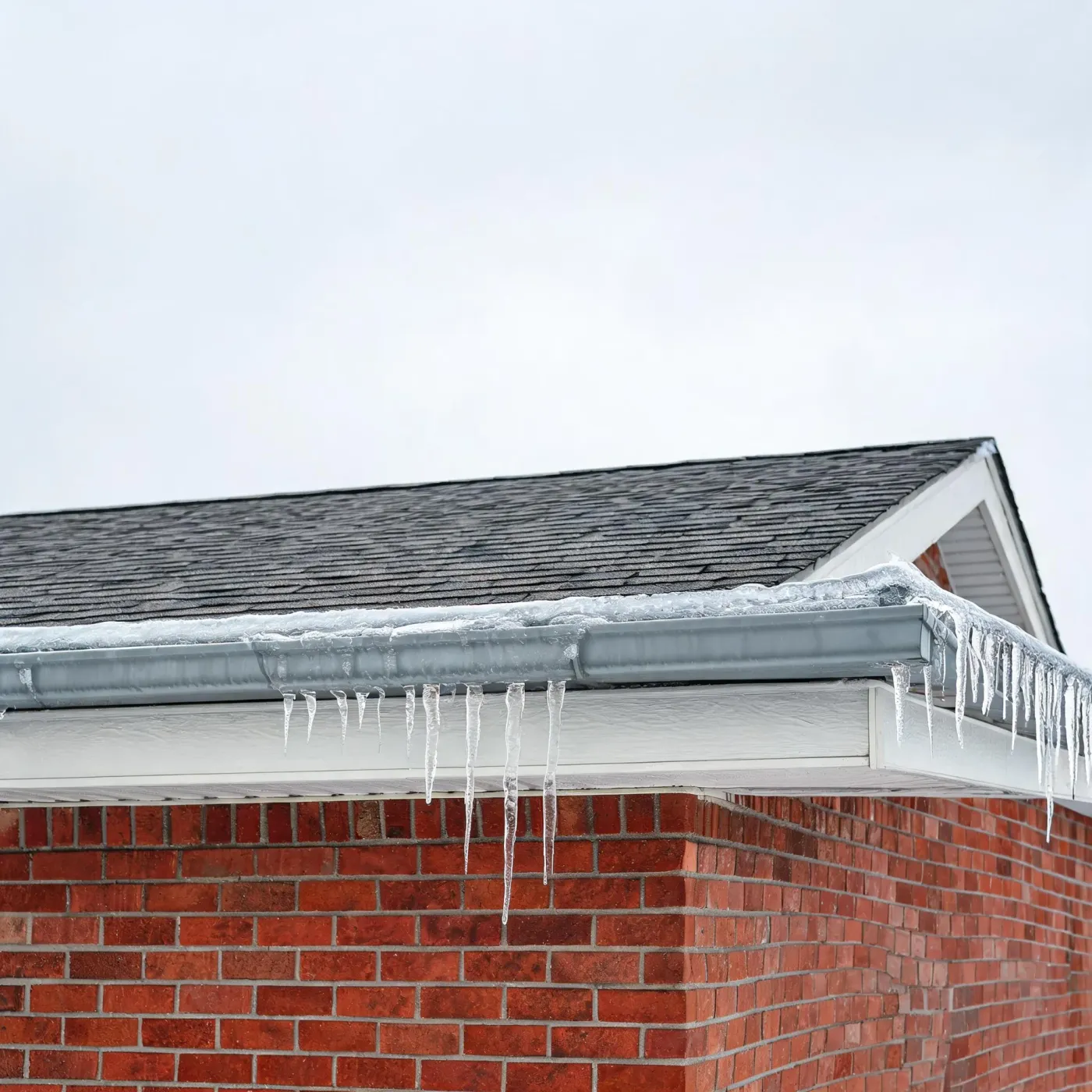
Corner of a brick house with asphalt shingle roof, white soffit and gray gutter, with icicles hanging from the gutter against an overcast sky.

Overnight lows here average 27°F across December, January and February, according to NOAA climate data for Taney County. That's below freezing most winter nights, and it's the range where a heat pump has to lean hardest on itself to keep a house warm. As the outdoor air gets colder, the unit pulls less heat from it per cycle, so it runs longer and more often to hold the same indoor temperature. Some systems bring on backup electric heat strips to make up the difference on the coldest nights. You might also notice a thin layer of frost on the outdoor unit during a cold snap, which is normal, but the defrost cycles that clear it add even more run time. All that extra work over the winter is part of what shortens a heat pump's life here.

NOAA nClimDiv 1991-2020

A woman with long gray hair wrapped in a checked blanket sits on a sofa by a window with yellow autumn foliage outside, with a lamp, framed picture and plant in the background.
An older woman in a cream knit sweater sits on a sofa by a window, looking out at sunlit trees with yellow and orange autumn leaves, with a bookshelf and lamp behind her.
A woman with gray shoulder-length hair in a dark knit sweater sits on a cushioned seat by a window, looking out at yellow autumn foliage, with a living room, armchair, houseplant and framed picture behind her.
An older woman with gray hair in a bun, wearing a cream knit sweater, sits on a sofa with a gray blanket and looks out a large window toward yellow-green autumn trees, with a lit table lamp and dark armchair behind her.

Running a heat pump year round

A furnace only has to carry a Taney County winter. Your heat pump carries that same winter and then turns around and runs the AC all summer too. That's twice the working hours compared to a furnace, spread across every month of the year instead of just the cold ones. The compressor outside cycles on in July heat and again in January cold, with nothing but a changeover valve between the two jobs. More hours running means more hours where a weak part gets found out, and it means the wear adds up on a schedule that doesn't give the system an off season the way a furnace gets one once spring arrives.

Where that leaves the lifespan

Most of that wear falls on the outdoor compressor, since it's the part working through both halves of the year. Keep the coil clean and the airflow right and a heat pump here can still reach a normal working life, but it's reasonable to expect it on the shorter end of what a heat pump can do elsewhere, simply because it never gets to rest. A system that's struggling to keep up on the coldest nights or the hottest afternoons is telling you something about where it stands in that life. Matching with a contractor who installs heat pumps means getting a straight read on your system's condition rather than guessing at it.

Why does a heat pump wear out faster here than somewhere milder?

  • Winter nights average 27°F

    Nights this cold mean the compressor spends long winter stretches pulling heat from outside air instead of just moving it, which is the hardest work a heat pump does.

  • Heat runs October through April

    Seven months of heating is most of the year spent leaning on the compressor, far more run time than a system that only has to warm a house a few months out of twelve.

  • Cooling runs June through September

    Four more months of cooling stack on top of that heating load, so the same unit is working nearly eleven months of the year with almost no real break.

NOAA nClimDiv 1991-2020

What you'll notice around year ten

The system takes longer to catch up on the coldest nights, and you may hear it running almost constantly once temperatures drop into the 20s. Some homeowners notice the house doesn't feel quite as warm as it used to on those January mornings, even with the thermostat set the same as always. That's the compressor working harder to pull heat from air that's barely above freezing. It's not broken, but it's telling you it's not working the way it did at year three. A contractor can check the refrigerant charge and the compressor itself to see how much life is left.
What it does to your power bill

A heat pump losing efficiency doesn't fail outright. It just costs more to run every month it ages, since it needs longer cycles and more electricity to move the same amount of heat. Over a Taney County winter, that adds up across seven months of heating and five months of cooling. You may not notice it as a single jump, more as a bill that creeps upward year over year even though your habits haven't changed. By the time it's old enough to worry about, the difference between a new unit and the one you have can be real money.

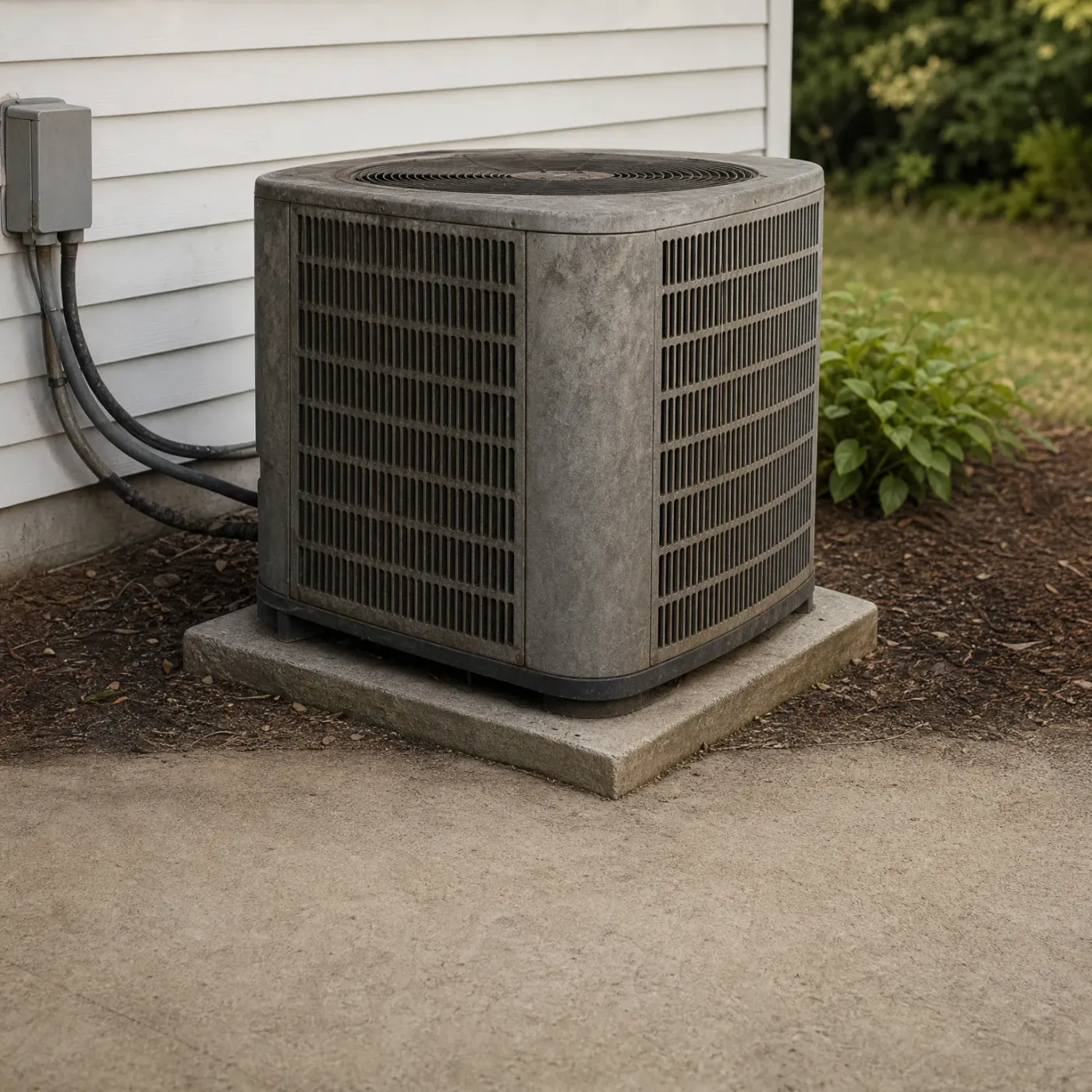
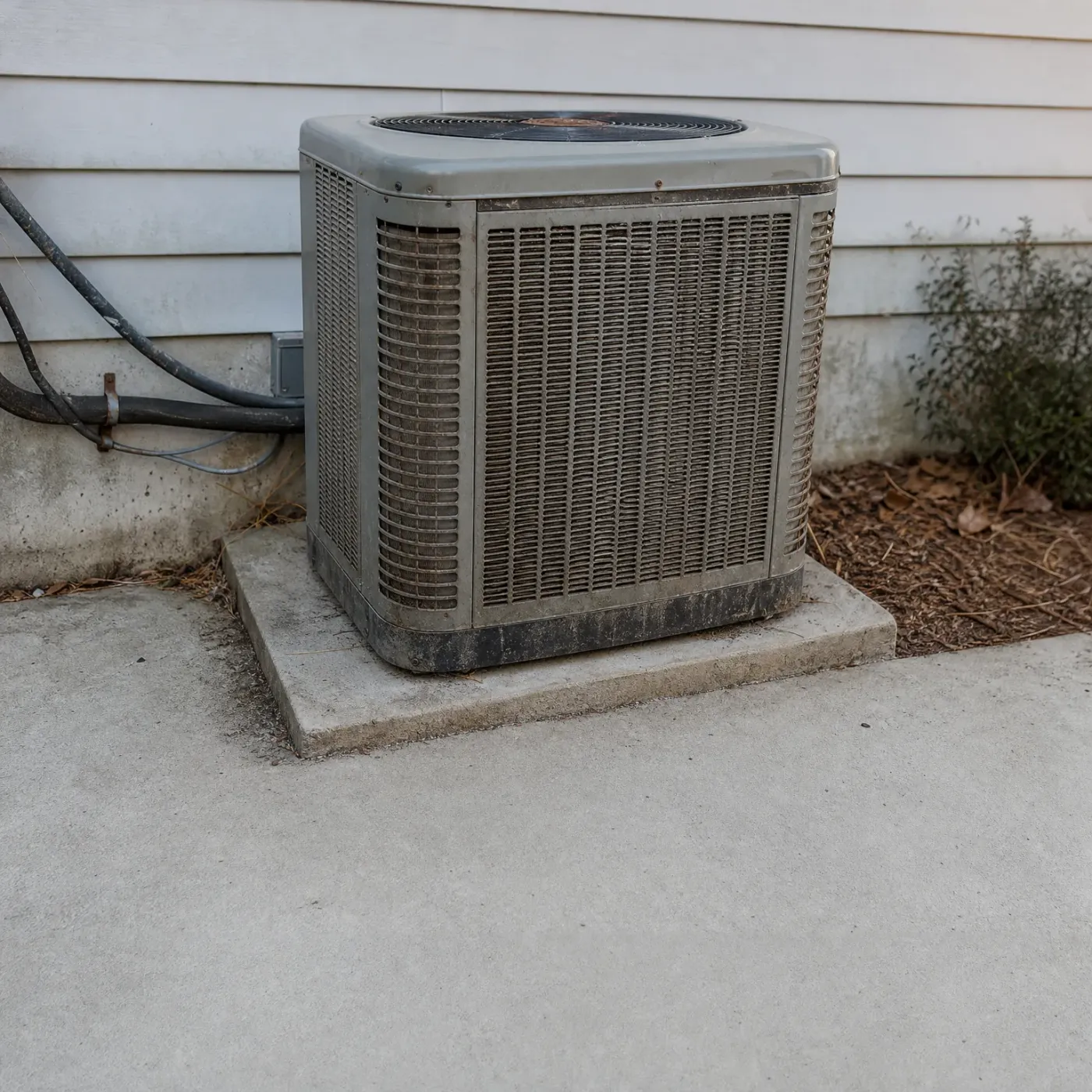
A weathered gray outdoor condenser unit sits on a concrete pad beside a house with horizontal siding, with refrigerant lines entering the wall at left and a mulched shrub bed at right.
Before you get your heat pump installation
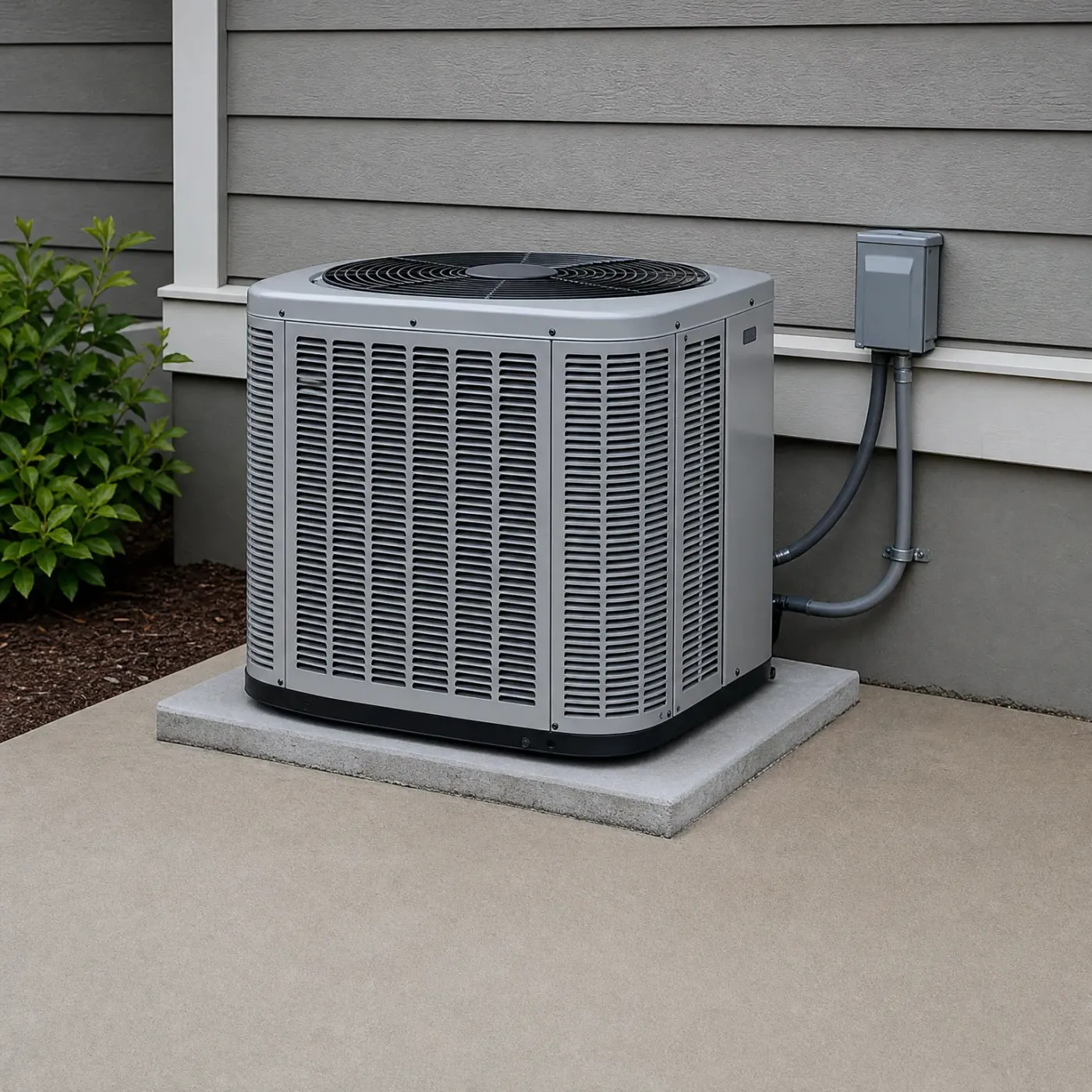
A gray outdoor condenser unit on a concrete pad beside a house with gray lap siding, connected by conduit and refrigerant lines to a wall-mounted disconnect box, with a green shrub and mulch bed at left.
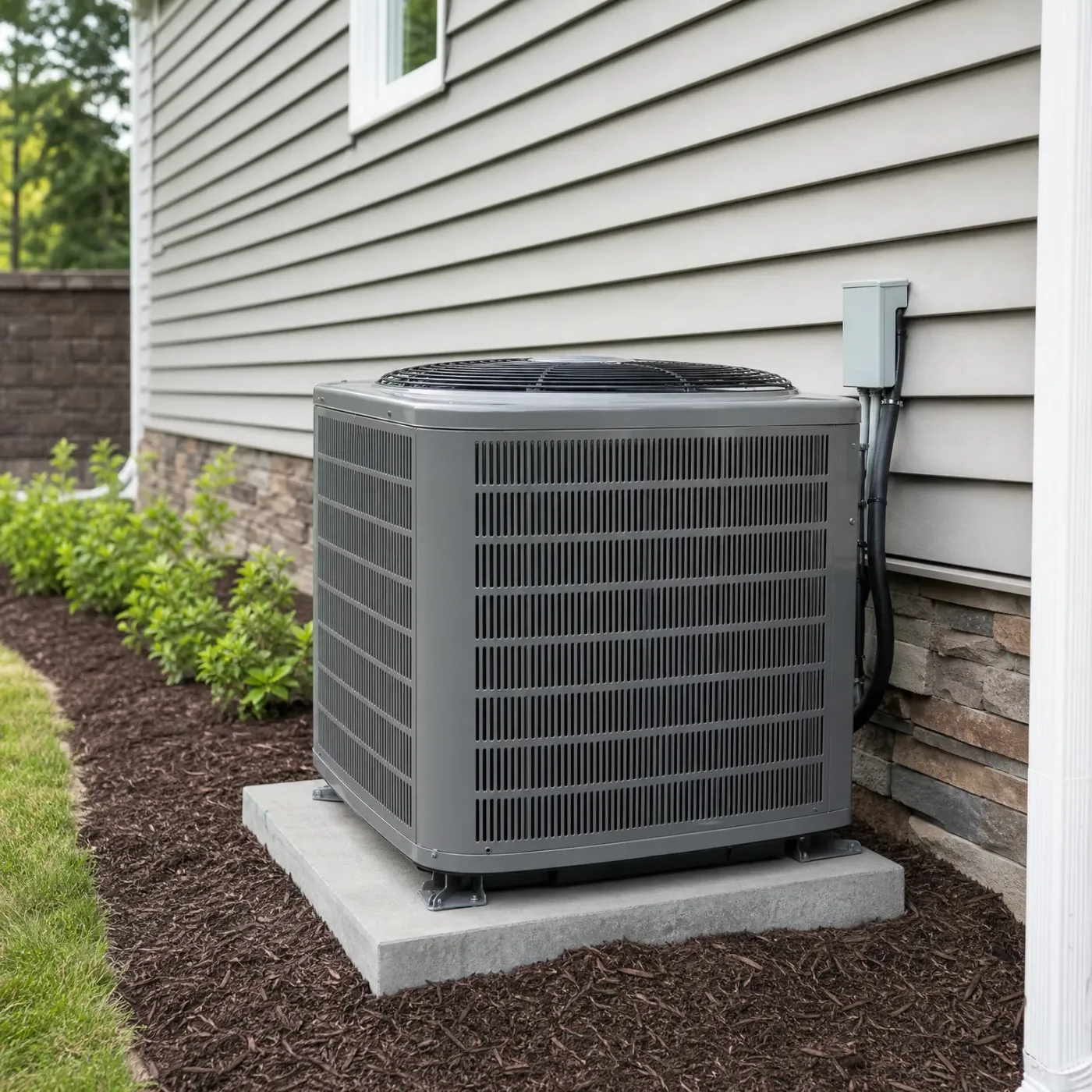
After you get your heat pump installation
A gray outdoor condenser unit on a concrete pad beside a house with horizontal siding and stone veneer, with a disconnect box and refrigerant lines on the wall, surrounded by mulch, shrubs, and lawn.

A heat pump pro near you

One request ends the search for a heat pump installer.

Get in touch with a local installer about a new heat pump.

Get a heat pump pro

There's no charge for the request.

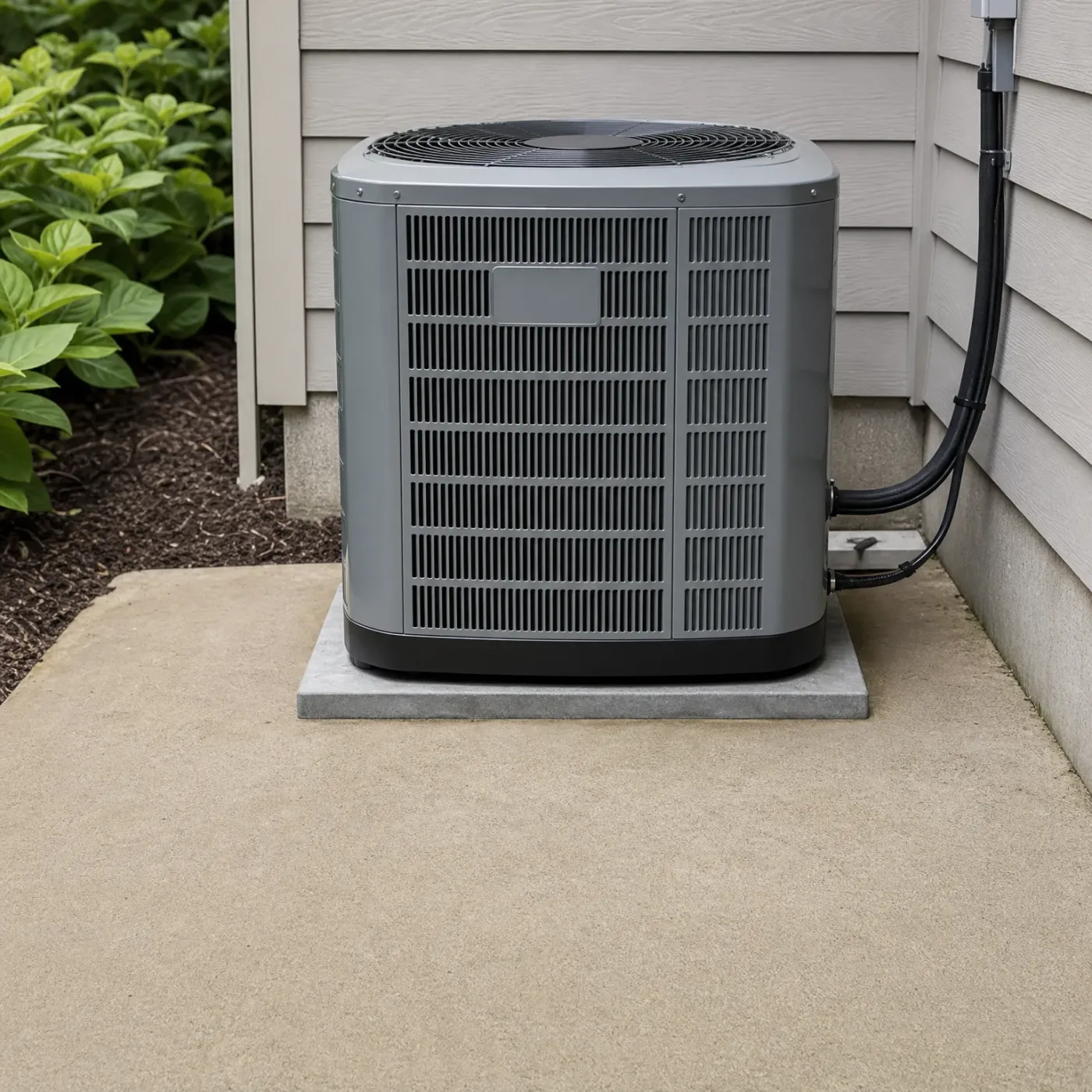
A gray outdoor air conditioner or heat pump unit on a concrete pad beside a house with horizontal lap siding, with conduit and refrigerant lines running up the wall and green shrubs and mulch at left.
Clean lines, solid pad, nothing straining to keep up with a Taney County summer or winter.
An outdoor air conditioning condenser unit sits on a concrete pad beside a white horizontal-siding house, with a gray electrical disconnect box and insulated refrigerant lines on the wall, mulch and green shrubs to the right, and a concrete slab in the foreground.
Weathered cabinet working past its years, with wear that shows up as higher bills before it shows up as a breakdown.

A heat pump heats by moving heat, not making it, and that is where the reversing valve comes in. In summer the valve sends refrigerant one way and the outdoor coil dumps heat outside while the indoor coil pulls it from your air. In winter that same valve switches direction, so the outdoor coil becomes the one collecting heat, pulling it out of cold outside air even on a 27°F night, and the indoor coil releases it into the house. That valve switches every time the system changes mode, and it's doing that switching all year in a place that needs both sides of the job. Defrost is the other piece. When ice builds on the outdoor coil in winter, the system briefly reverses again to melt it off before going back to heating. Each of those reversals is a moving part working at the extremes, and it's that part, more than the compressor alone, that tends to show its age first in a climate that asks for both.

Power here costs 14.87 cents per kilowatt-hour

At 14.87 cents per kilowatt-hour, every extra year you squeeze out of a strained heat pump shows up on your power bill before the unit ever quits. A compressor leaning hard on cold nights pulls more kilowatt-hours to do the same job, and in Taney County that gets expensive well before it breaks down.

EIA-861 2025

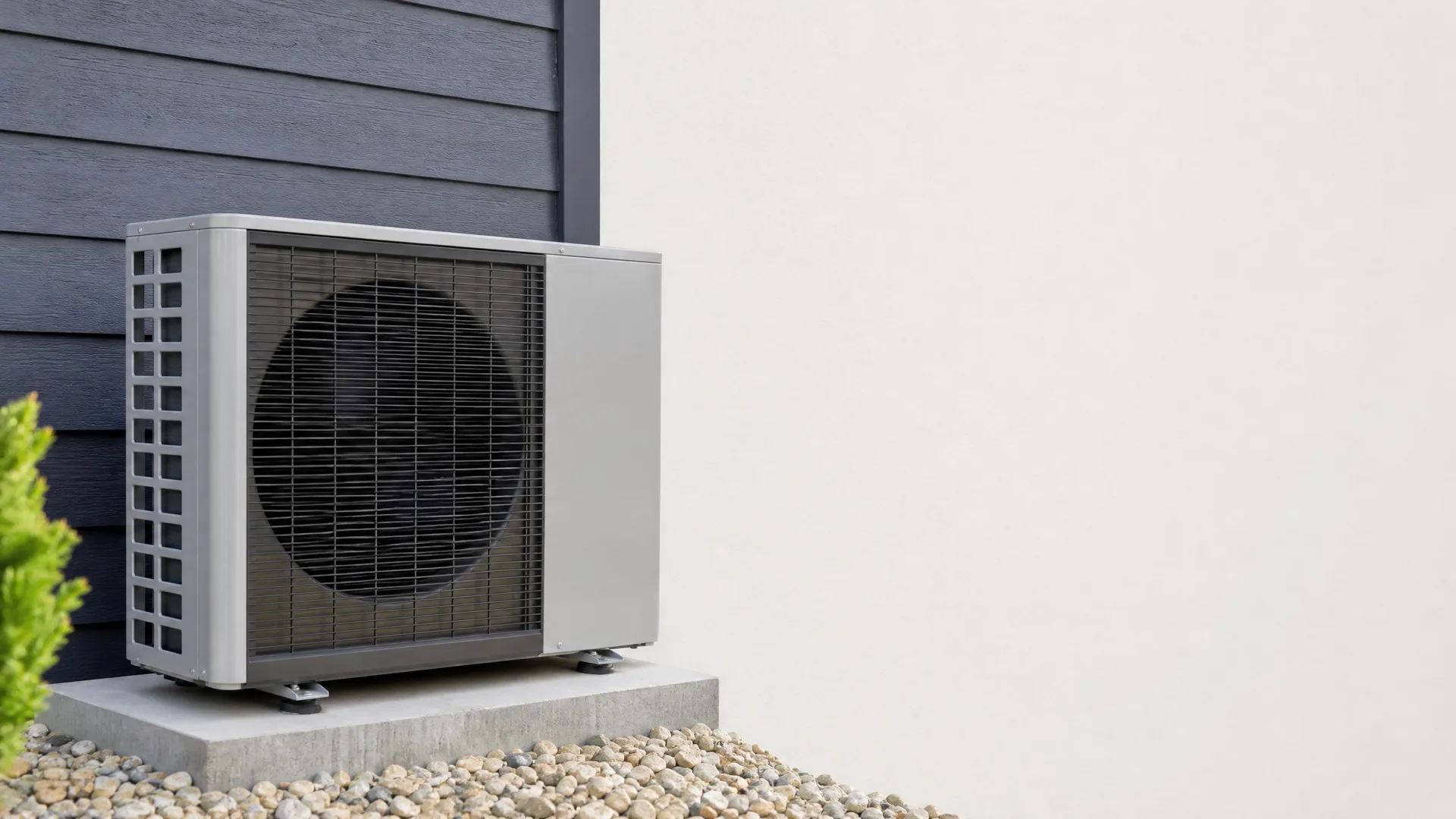
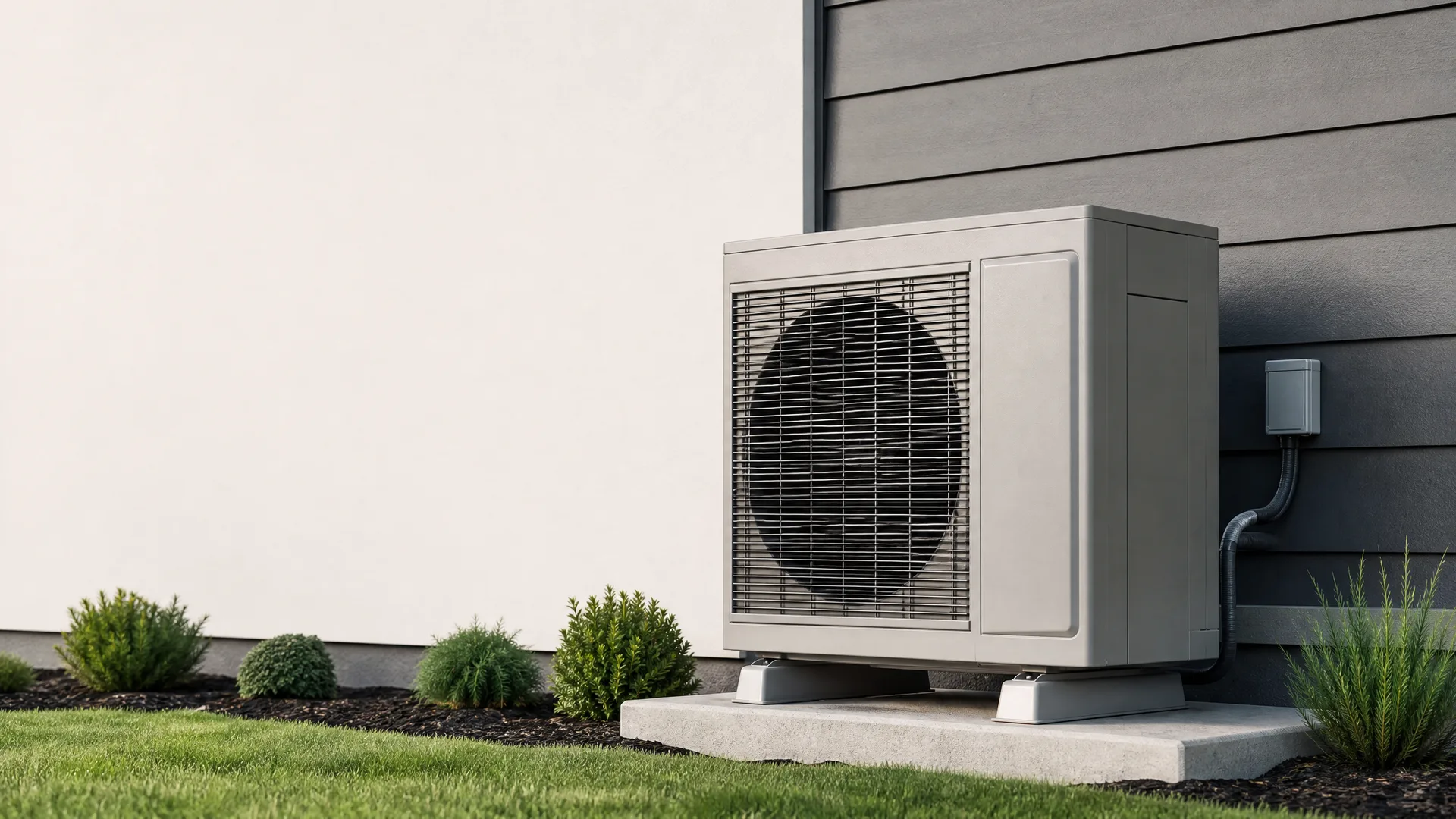
An outdoor air-source heat pump unit on a concrete pad beside a dark horizontal-board wall and a plain light-coloured wall, with gravel and a small green shrub in the foreground.

Running past its expected years

A heat pump that keeps going past the point where it should have been replaced isn't doing you a favor. The compressor is working harder for less heat and less cool air, and the refrigerant charge and electrical connections have had more winters and summers to wear loose. Replacement at that point is about a system that's already costing you more to run than a new one would, on top of whatever it costs to keep patching it.

A light gray outdoor heat pump unit on a concrete pad beside a house with white stucco and dark horizontal siding, with a conduit running to a wall-mounted electrical box and small shrubs and lawn in front.

Replacing before the failure

Putting in a new heat pump before the old one quits means you pick the time instead of a cold January night picking it for you. A contractor sizing the new system can match it to your house and to what a Taney County winter and summer actually demand of it, rather than working around whatever was installed years ago. You get a unit running at its rated efficiency from day one, not one already past the years where that efficiency holds.

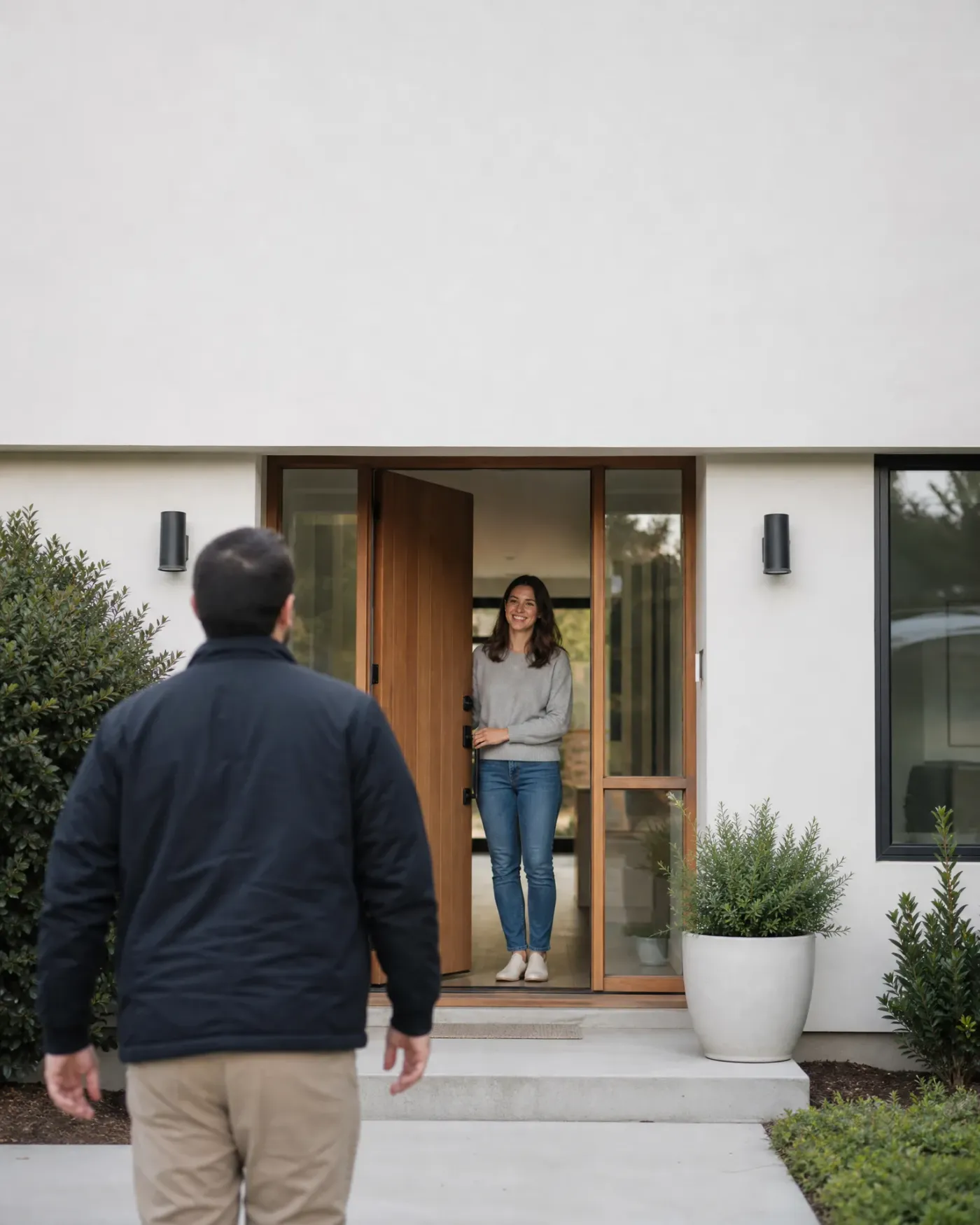
A woman in a gray sweater and jeans stands in an open wood front door of a white stucco house while a man in a dark jacket walks toward her on the entry path.

What this comes down to

A heat pump in Taney County earns its keep twice a year and wears accordingly. Most hold up for a reasonable run of years before the compressor and the coils start costing more to keep than to replace. The signs show up gradually, longer catch-up times on cold nights, a power bill that climbs before anything actually fails. Once you've seen those signs, the question isn't whether to replace it. It's who you call.

That's where this ends for you. A form on this page puts you in touch with a contractor who works on heat pumps in this area and knows what a Taney County winter asks of one. You won't spend time tracking down someone who services your equipment or figuring out if they know the climate here. That part is handled once you send it, and the contractor reaches out to you directly about what your system needs.

A large weathered ceramic vase and a shallow wooden bowl sit on a rustic wooden table beside a window with linen curtains, with a blurred sofa with cushions and a hanging fabric panel in the background.
A woman in a cream knit sweater sits in an armchair indoors, eyes closed and smiling, beside a window showing yellow and orange autumn foliage, with a mug on a wooden side table and shelves holding vases behind her.
A gray-haired man in a blue quarter-zip sweater sits in an armchair with his eyes closed, beside a large window with bare trees outside and a potted plant and lamp nearby.

Get matched with a heat pump pro in Taney County

A heat pump here runs twice the hours a furnace would, carrying the AC all summer and the heat load all winter, and that wears on the compressor faster than it would somewhere milder. Once a system is past its years, you pay for that age twice: in the power bill climbing at 14.87 cents per kilowatt-hour and in the breakdown that eventually comes on the coldest night. A new installation, sized and set up for a Taney County winter, ends both at once. The next step is getting matched with a contractor who installs them for homes like yours.

Connect with a pro

Send the form and the search for an installer is over.

You only hire the pro if you want to.