Seven months of heating
Liberty runs heat pumps October through April. That's seven months of defrost cycles wearing on the reversing valve, far more than a system in a milder climate sees.
Send the form, and lining up the heat pump tune-up stops being yours to chase.
Hand it offA heat pump tune-up in Liberty checks the refrigerant charge, cleans the outdoor coil, and tests the reversing valve that switches the system between heating and cooling. That valve and the defrost control get more work here than in most equipment, since Clay County winters push the heat pump to pull warmth from cold outside air for months at a stretch, and summers run long enough that the same unit works hard the other direction too. A coil caked with dirt or a charge that's run low forces the system to work harder for the same degree of comfort, and that shows up on the power bill and in how long the unit lasts. Scheduling this before the weather turns, in spring or fall, catches problems while they're still small. A technician checking the system now finds a weak capacitor or a sensor drifting out of range before it leaves you without heat on a cold morning or without cooling on a humid afternoon.
Winter nights average 22°F
Nights this cold put the system into defrost cycles over and over, which is why the reversing valve wears the way it does here.
Heat runs October through April
Seven months of heating means that valve switches back and forth far more than it would somewhere with a short winter.
Cooling runs May through September
Five months of cooling on top of that heating load gives the system twelve months of real work most years, with barely a rest in between.
NOAA nClimDiv 1991-2020
Skip the tune-up and the heat pump still runs in January, until the day it switches to defrost and never switches back, leaving you with strip heat alone on the coldest night of the year.
A tune-up catches a reversing valve that sticks before it fails outright, so the system keeps switching between heat and defrost the way it's supposed to all winter.
A technician starts by measuring superheat and subcooling and comparing both against what the manufacturer specifies, since a reading off in either direction points to a charge problem rather than something else. The reversing valve gets cycled by hand, not just checked on a gauge, to make sure it moves cleanly instead of hanging partway between heating and cooling. On the defrost board, the test is whether the outdoor sensor reports accurately and whether the cycle ends when it should, since a board that runs defrost too long or not long enough costs you heat on the coldest nights. At the electrical panel, connections at the contactor and capacitor get tightened, because a loose connection there is one of the more common reasons a breaker trips. Outside, the coil gets cleared of leaves and debris so it can move heat the way it needs to in both directions. The refrigerant lines get checked for insulation gaps along their full run, since a bare section changes how hard the compressor has to work to keep up.




Liberty runs heat pumps October through April. That's seven months of defrost cycles wearing on the reversing valve, far more than a system in a milder climate sees.
A reversing valve that sticks mid-cycle can leave you on strip heat alone when it's coldest out. A tune-up catches it before that night comes.


One form instead of hunting for a pro who does heat pump tune-ups.
One request and finding someone for the tune-up is handled.
You only hire the pro if you want to.
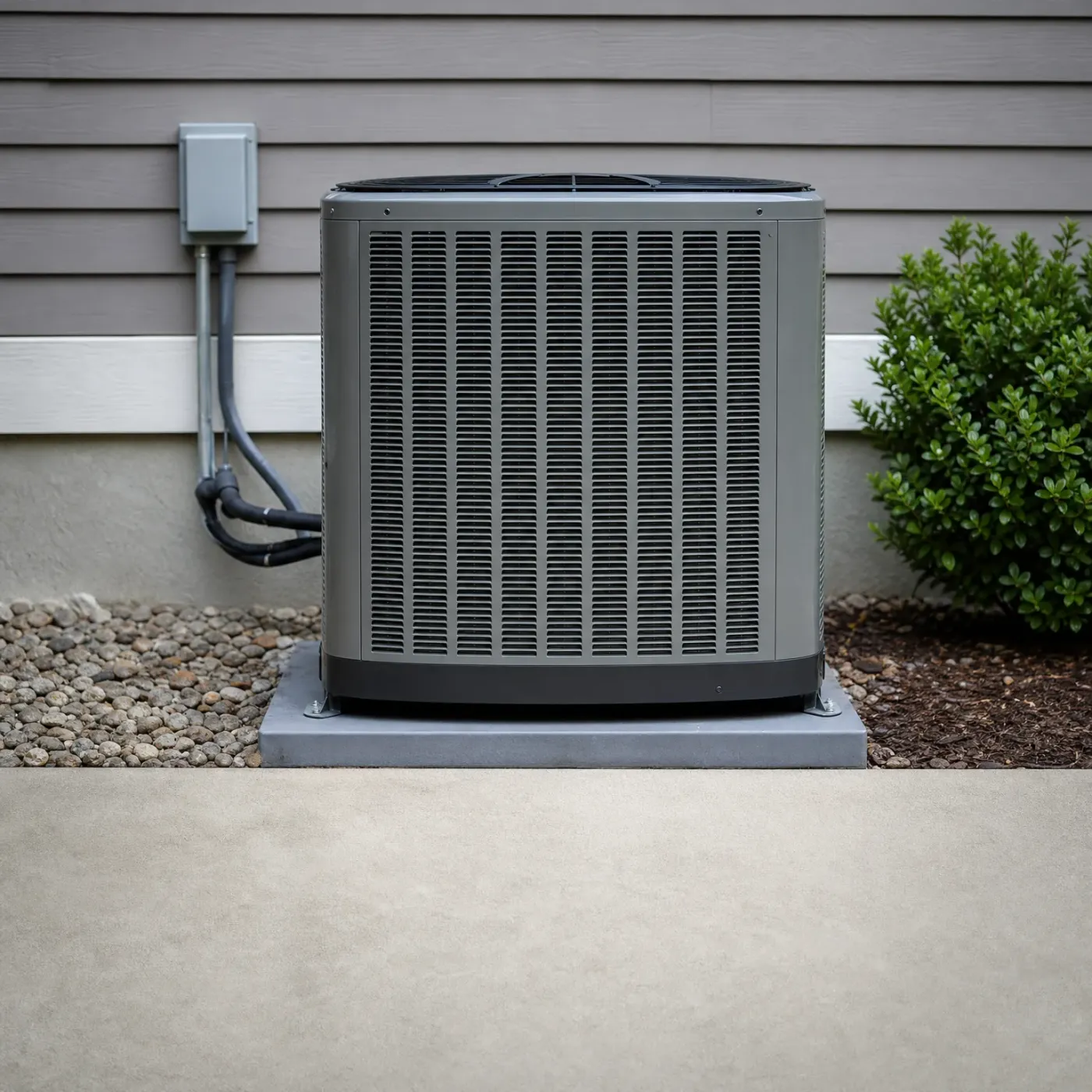
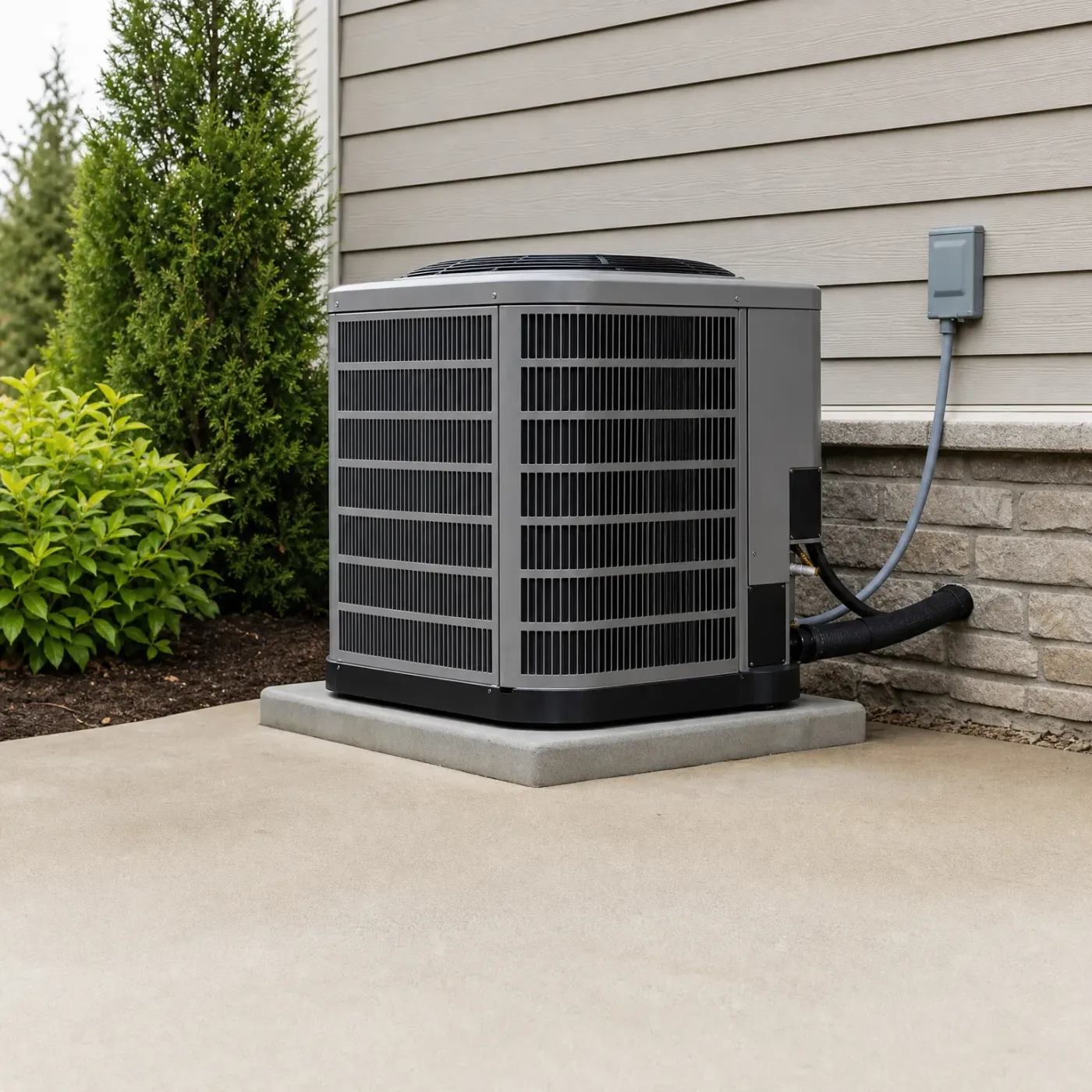
The outdoor unit sits clear and open, gravel around the base and the fins free of debris. Air moves through the coil the way it should, so the system switches between heating and cooling without strain on the reversing valve.
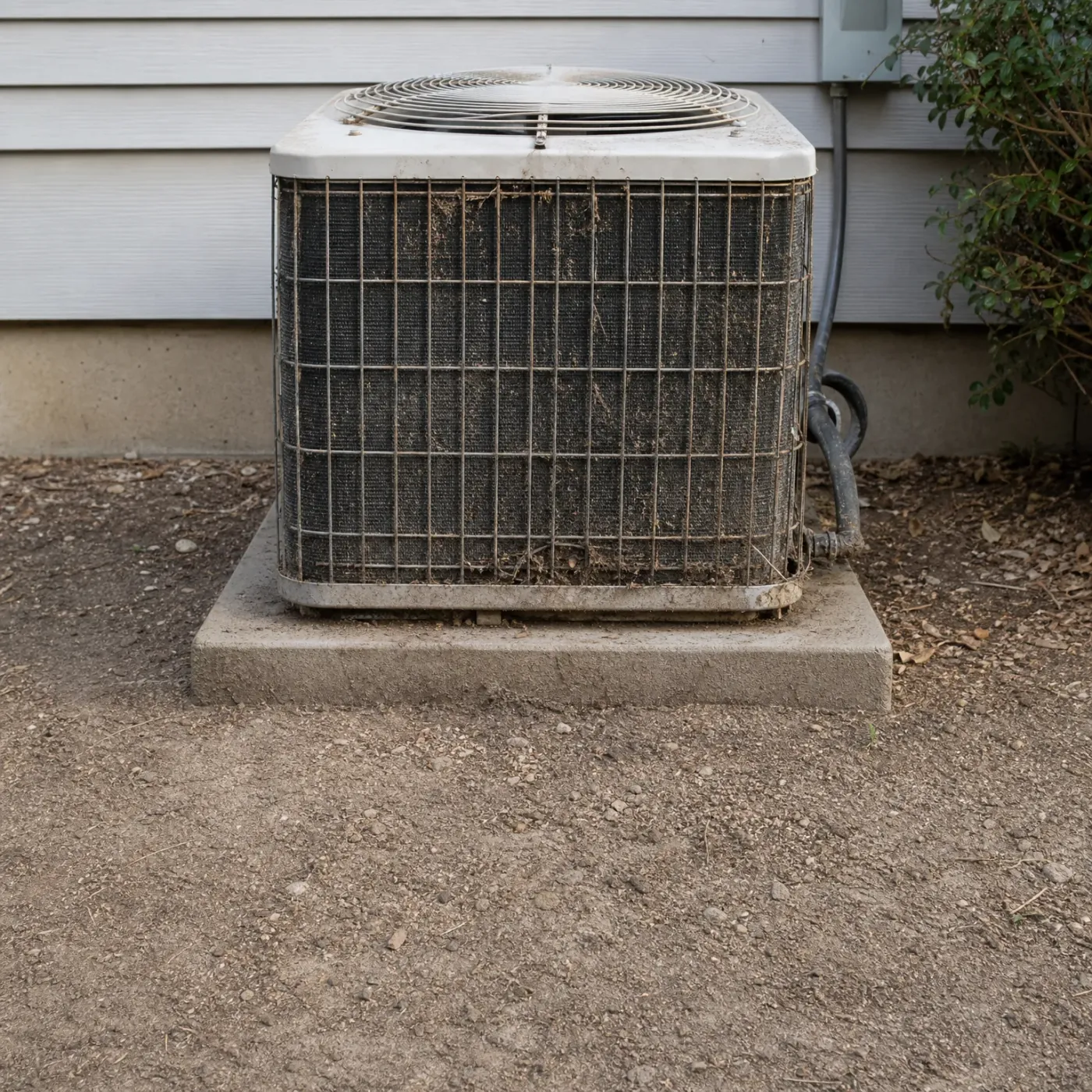
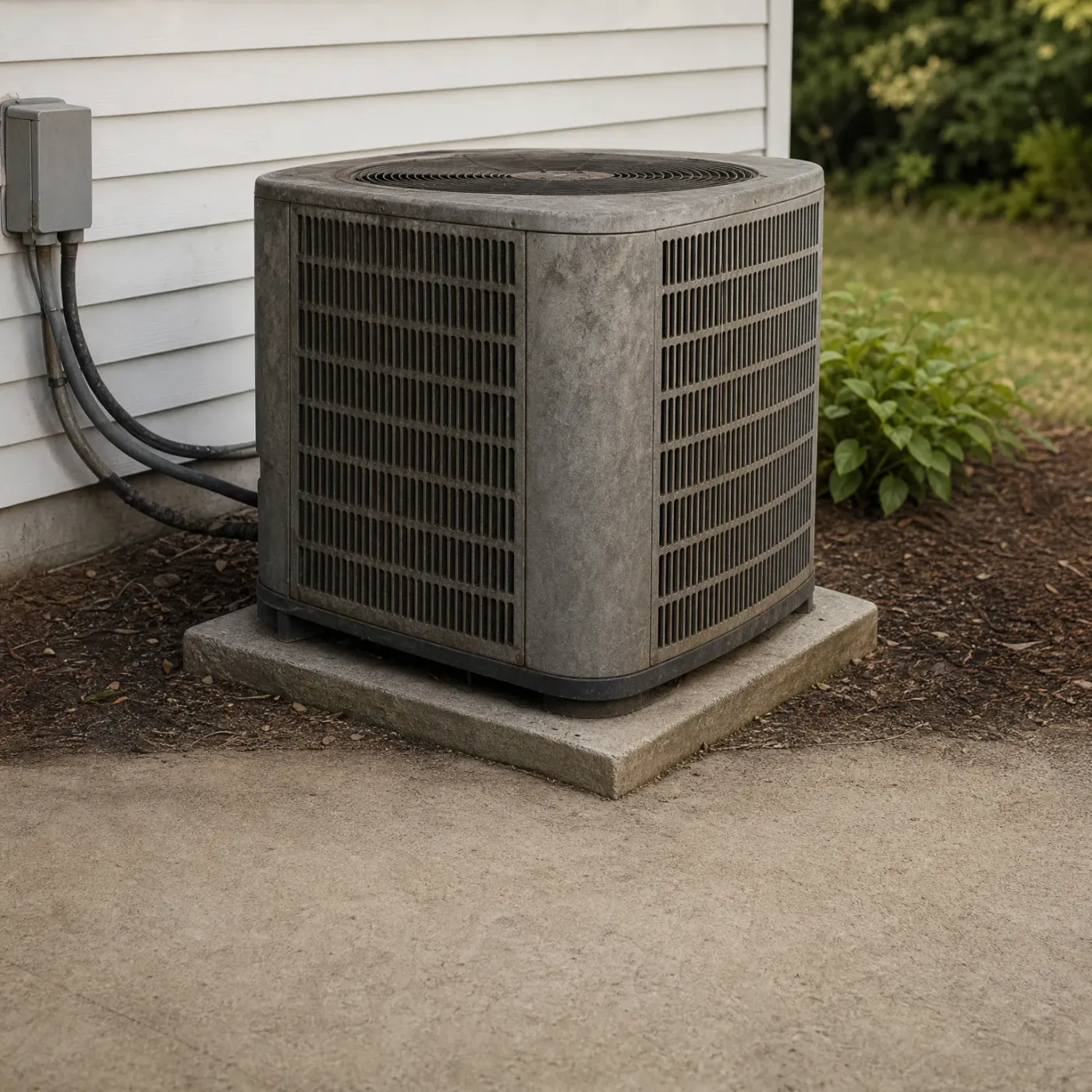
Dirt and plant matter pack the grille and fins, choking off airflow. The coil can't shed heat properly, so the compressor works harder and the reversing valve takes the brunt of it every time the system tries to switch.

A heat pump tune-up in Liberty comes down to one thing: making sure the reversing valve and the charge behind it are sound before the next cold snap or the next muggy stretch asks something of them. The checks are the same ones covered above, done on a schedule instead of after something fails.
You could spend an evening calling around, waiting on callbacks, and explaining the same symptoms to three different companies before one can even get a tech out. Send the form instead and that part is off your plate. Someone licensed for this gets in touch, and from there it's between you and them, on your schedule, with the system checked before it has to prove itself on the coldest or hottest day of the year.


Send one request and you're done looking