Tell us about the job
Takes about a minute. No obligation.
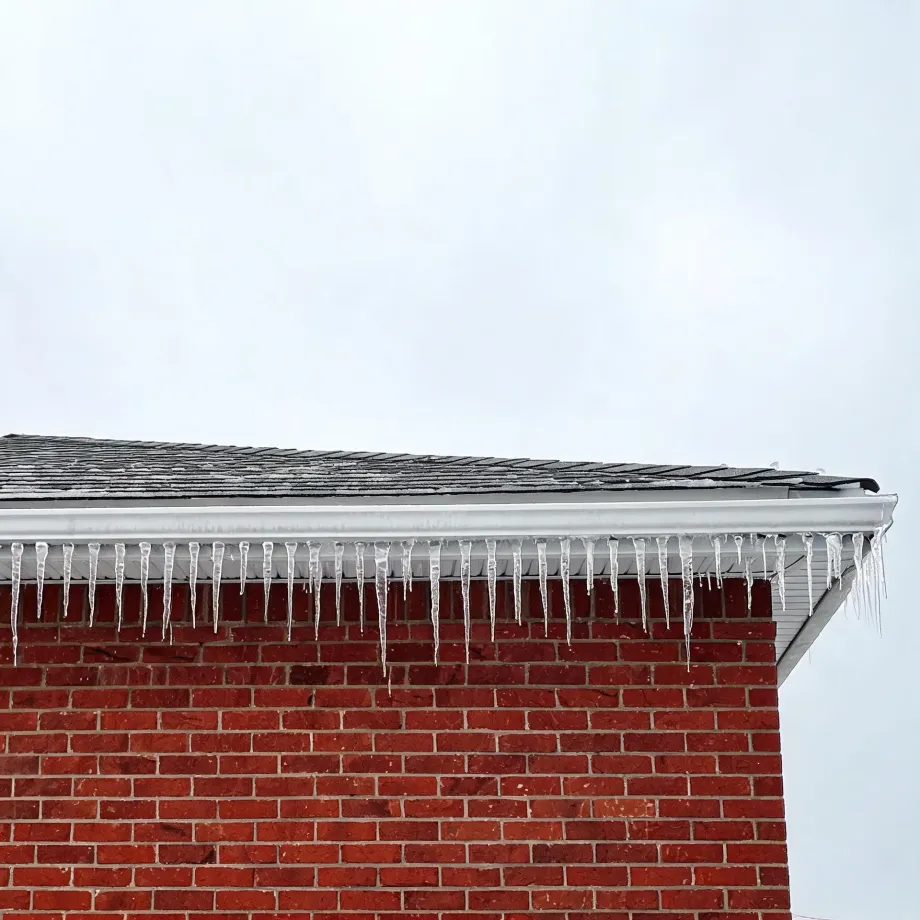
On a heat pump repair in Grundy County, a contractor works backward from the heating side first. Homes in Grundy County, MO run heat about seven months a year, from October through April. Capacity drops as outdoor temperatures fall, so the system runs longest and hardest exactly when conditions stress the refrigerant circuit most. The reversing valve takes the mechanical punishment of switching modes across every cold stretch, and the coil connections carry repeated thermal cycling until a small fault becomes a failure. A contractor who skips the refrigerant circuit on a repair call here is leaving the likeliest source of the problem unexamined.
Ductwork that has been spliced, re-routed, or sealed with whatever was on hand at the time carries real consequences for a heat pump repair. A contractor opening the system here is not just reading the unit's fault codes. Half the homes in Grundy County, Missouri were built in 1963 or earlier (2020-2024 ACS 5-year). That means the air distribution and the mechanical surroundings the heat pump has been running inside are products of adaptation over a long period, and refrigerant flow problems or airflow restrictions that look like equipment failure can trace back to how the house was put together. Parts for the unit itself are the faster question; the condition of what surrounds it takes longer to price.
The Parts of a Heat Pump a Contractor Checks First
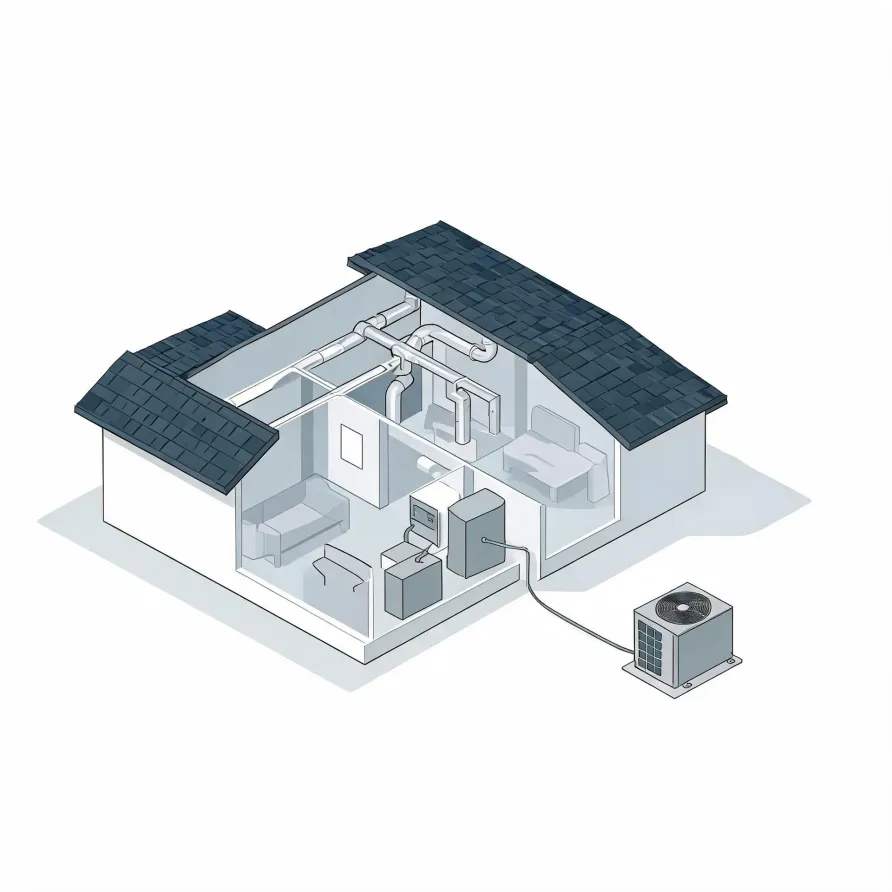
The outdoor unit is usually where a repair starts. It houses the compressor, which is the heart of the system, along with the outdoor coil and a fan that moves air across it. When the system stops heating or cooling, or makes a noise it did not make before, the compressor and that coil are where a contractor looks first.
Inside the house, the air handler holds the indoor coil and the blower that pushes conditioned air through your home. The refrigerant lines connect the two units, and the reversing valve inside the system is what lets a heat pump switch between heating and cooling. A fault in the air handler or a refrigerant line problem shows up as weak airflow or a unit that runs without changing the temperature.
The drawing shows the general layout of a heat pump system, and a licensed contractor determines which components apply to your specific home.
Find a contractor in Grundy CountyGrundy County, by the numbers
99 severe weather events were recorded in Grundy County, Missouri between 2015 and 2024.
NOAA National Centers for Environmental Information, Storm Events Database, bulk CSV export, events 2015-01-01 through 2024-12-31.Half the homes in Grundy County, Missouri were built in 1963 or earlier (2020-2024 ACS 5-year).
U.S. Census Bureau, 2020-2024 American Community Survey 5-Year EstimatesGrundy County, Missouri holds 4,834 housing units (2020-2024 ACS 5-year).
U.S. Census Bureau, 2020-2024 American Community Survey 5-Year EstimatesOwners occupy 69.7% of the occupied homes in Grundy County, Missouri (2020-2024 ACS 5-year).
U.S. Census Bureau, 2020-2024 American Community Survey 5-Year EstimatesSevere Weather Events in Grundy County
Weather puts real hours on heating and cooling equipment. The harder the swings a heat pump has to manage, the more those repair intervals become a local story rather than a general one.
99 severe weather events, 2015–2024. Source: NOAA National Centers for Environmental Information, Storm Events Database.