Tell us about the job
Takes about a minute. No obligation.
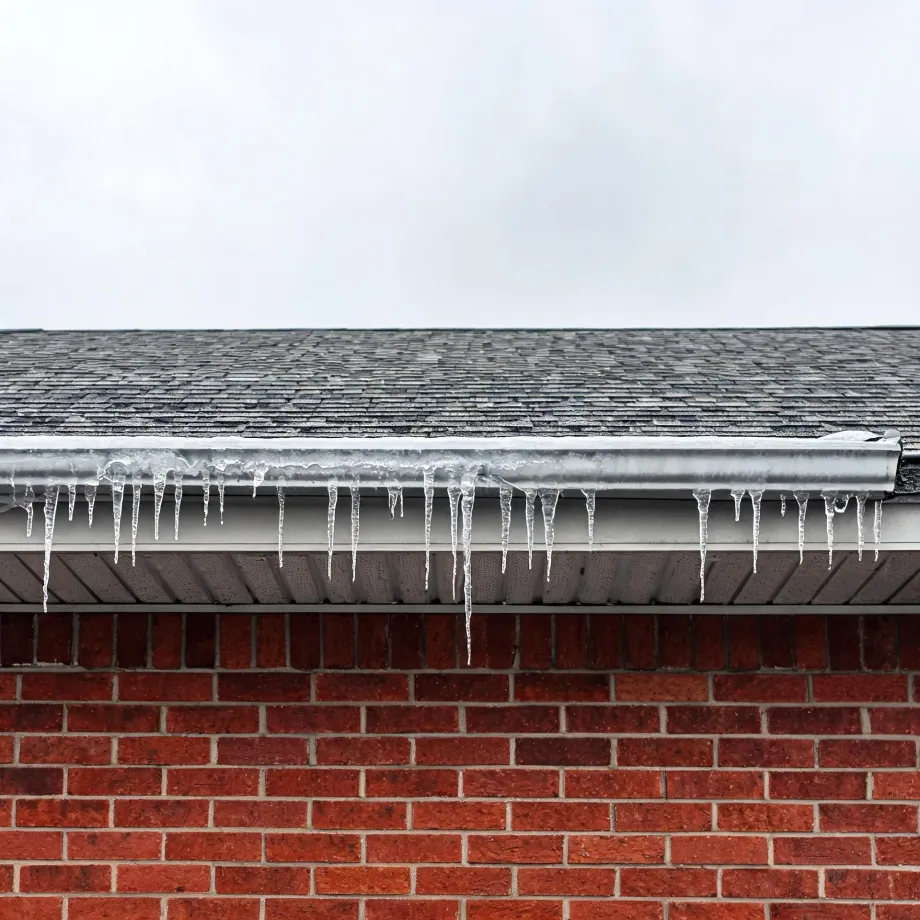
A heat pump running heat from October through April puts its hardest miles on the reversing valve, the refrigerant coil, and the contacts that cycle the compressor on and off across cold days. Homes in Taney County, MO run heat about seven months a year, from October through April. Capacity drops as outdoor temperatures fall, which means the system is working hardest exactly when it is most likely to expose a weak component. A contractor diagnosing a failed heat pump here checks those parts first, because cumulative wear points at them before it points at anything else.
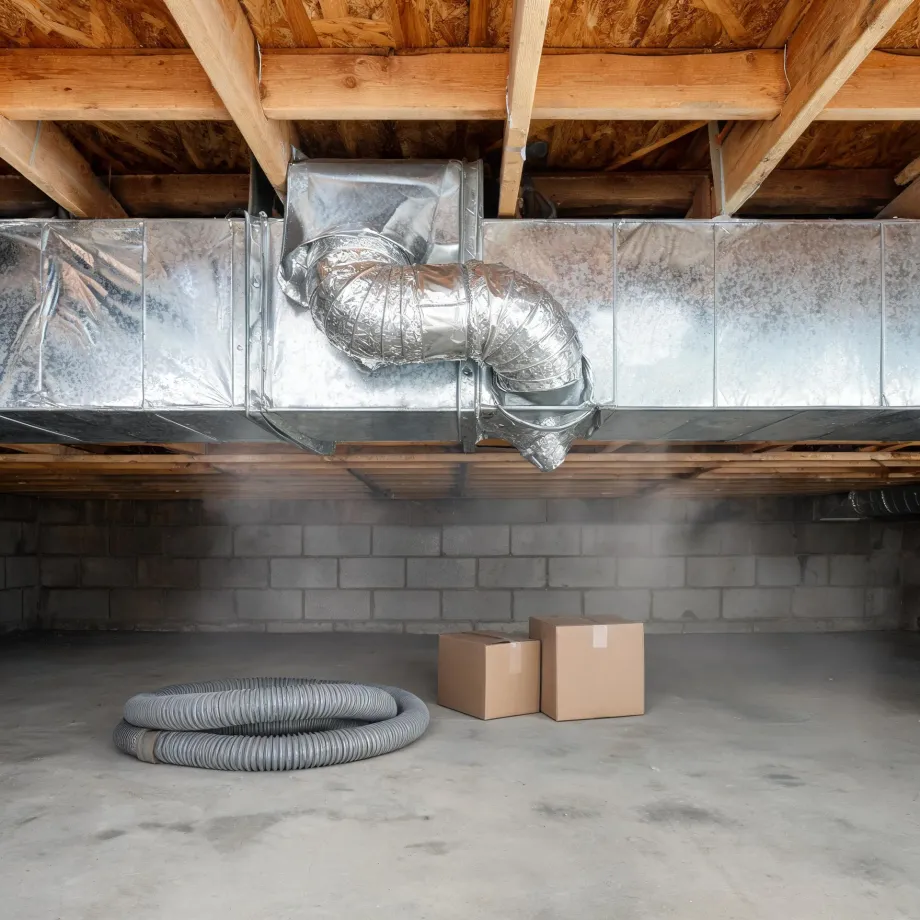
Ductwork sized and routed for a different generation of equipment shapes what a contractor finds when a heat pump repair goes deeper than the unit itself. Half the homes in Taney County, Missouri were built in 1995 or earlier (2020-2024 ACS 5-year). That history means the ducts and electrical service in a large share of local homes were put in for something other than what is running through them now. When a repair stalls, or when the same problem returns, the opened system often points back to airflow or supply conditions that the duct layout was never adjusted to handle. A contractor who traces that path finds a real answer; one who stops at the unit replaces a part that was not the problem.
The Parts of a Heat Pump a Contractor Checks First
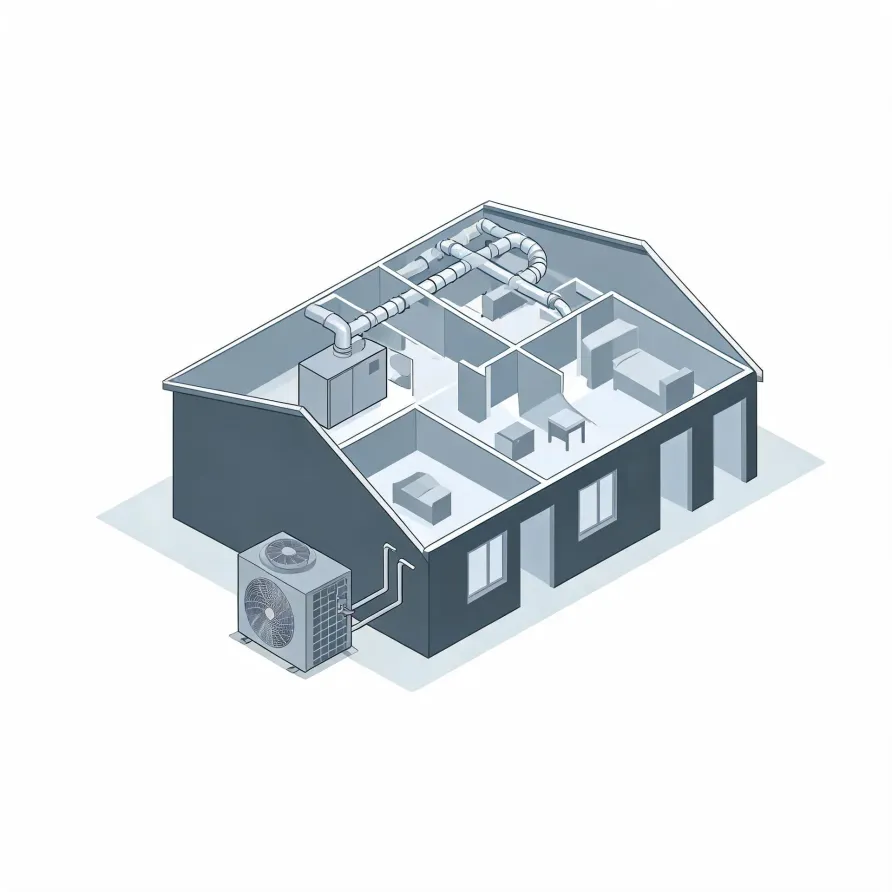
The outdoor unit sits on a pad beside the house and holds the compressor and the outdoor coil. The compressor is where most repair calls start. When the outdoor coil ices over or the compressor runs but moves no heat, the contractor begins here before looking anywhere else.
The air handler lives inside, usually in a closet, attic, or mechanical room, and it holds the indoor coil and the blower that moves conditioned air through the house. A reversing valve inside the system is what lets a heat pump shift between heating and cooling, and a fault there produces symptoms that can look like several different problems at once.
The drawing shows the general layout of a heat pump system, and a licensed contractor determines which pieces apply to your specific house and situation.
Find a contractor in Taney CountyTaney County by the Numbers
253 severe weather events were recorded in Taney County, Missouri between 2015 and 2024.
NOAA National Centers for Environmental Information, Storm Events Database, bulk CSV export, events 2015-01-01 through 2024-12-31.Half the homes in Taney County, Missouri were built in 1995 or earlier (2020-2024 ACS 5-year).
U.S. Census Bureau, 2020-2024 American Community Survey 5-Year EstimatesTaney County, Missouri holds 30,175 housing units (2020-2024 ACS 5-year).
U.S. Census Bureau, 2020-2024 American Community Survey 5-Year EstimatesOwners occupy 67.0% of the occupied homes in Taney County, Missouri (2020-2024 ACS 5-year).
U.S. Census Bureau, 2020-2024 American Community Survey 5-Year EstimatesSevere Weather Events in Taney County
Taney County weather puts real stress on heat pump systems, which run harder and wear faster when outdoor conditions swing hard. Repair demand here follows local climate, not a national average.
253 severe weather events, 2015–2024. Source: NOAA National Centers for Environmental Information, Storm Events Database.