

7 months a year
Your heat pump runs its heating side from October through April here, so the drain pan and line handle condensate most months, not just a few weeks in summer.
Water around the indoor unit is one of the more common calls a heat pump tech gets in Farmington, and it can come from a clogged condensate line, a cracked drain pan, or ice on the outdoor coil melting faster than the pan can handle. Figuring out which one takes someone who works on these systems regularly, not a guess over the phone. Searching around St. Francois County for someone who answers, explaining the drip and the puddle to one company after another, then weighing quotes against each other takes real time, and water damage doesn't wait on that. Submit this page's form and a licensed local contractor who works on heat pumps in this area calls you back. Just the one, so your phone isn't ringing off the hook with sales calls from companies you never asked to hear from. You explain the problem once, to the person who's going to look at it.
You've noticed water pooling near your indoor unit or dripping from it, and you want to know what's causing it before it damages your floor or the unit itself. It's not something to leave alone, but it also isn't always a sign of a major failure.
The indoor unit pulls moisture out of the air and that water is supposed to run out through a drain line into a condensate pan below. Algae, dust and debris build up inside that line over time, especially with Farmington's humid summers pulling a lot of moisture through the system. Once it's blocked, the water backs up and overflows the pan instead of draining outside. It can also mean the pan itself has cracked or rusted through, or that ice built up on the outdoor coil during a cold snap and melted faster than the pan could drain. A tech who works on heat pumps through the summer humidity and winter cold here can tell which one it is by looking at the line, the pan and the coil.
Warm air passes over the indoor coil and sheds moisture as condensation.
Condensate drips into the drain pan below the coil.
The pan channels water into the condensate line.
The line carries water outside through gravity or a small pump.
Winter nights average 25°F
Your heat pump runs on the heating side about seven months of the year, October through April, so the coil and drain pan rarely get a break.
Heat runs October through April
Nights average 25°F here in December, January and February, cold enough that outdoor coil ice is a real possibility, and melting ice overflows a pan built for condensation.
Cooling runs June through September
Cooling runs June through September, so for four more months the indoor coil is shedding water the other way, through the same line that may already be clogged.
NOAA nClimDiv 1991-2020
A heat pump that's leaking water doesn't stay contained to the unit for long. Water finds the path downhill, which in most houses means a trail across the floor, a stain soaking into carpet or subfloor, or a stream running down a wall if the unit sits in a closet or upstairs. Left a few days, that same water can warp wood flooring, swell baseboards, and work its way into drywall where it grows mold you won't see until the smell shows up. If the unit is in the attic or on a platform, the weight and spread of the water can stain the ceiling below before you ever notice the drip at the source. And ice buildup on the outdoor coil doesn't just mean a messy thaw. It means the system is struggling to heat your home efficiently while it's happening, so you could be paying more to get less warm air out of it. None of this means the heat pump itself is ruined. But every day it keeps leaking is a day the water has somewhere else to go.
Your heat pump runs its heating side from October through April here, so the drain pan and line handle condensate most months, not just a few weeks in summer.
That's roughly the clearance a clogged condensate line needs to back up and spill into the drain pan. A small clog is enough to send water where it doesn't belong.




Your request stays with one local pro.
Explain the heat pump problem once instead of to every shop in St. Francois County.
No fee to send it, and nothing to sign.
Look for a damp spot on the floor near the indoor unit, a stain spreading across the carpet, or water beaded along the baseboard. If the unit sits in a closet or utility room, check inside the cabinet for standing water in the bottom or rust starting on the frame. Some homeowners notice a musty smell before they see any water at all, which usually means moisture has been sitting for a while. If the indoor unit is in the attic, a brown ring on the ceiling below it is often the first sign anyone notices, and by then water has already gotten into the drywall or insulation. Left alone, this kind of leak can warp flooring, stain ceilings, and get into places that are far more work to dry out than the unit itself.
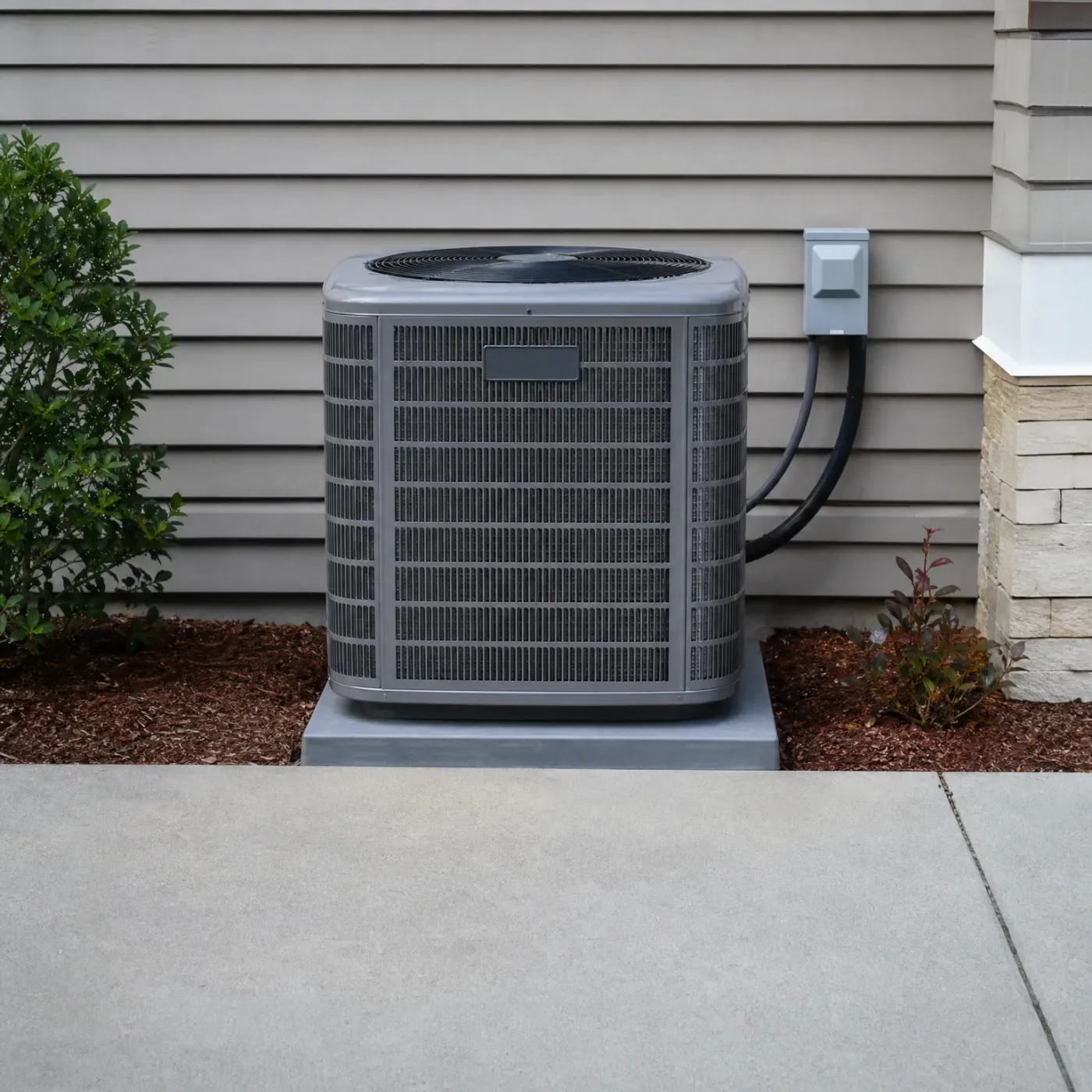
This is the outdoor side doing what it should. The pad is clear, the conduit runs straight to the disconnect, and nothing around the unit is holding moisture against it. A unit kept clear like this gives you one less place for water problems to start.
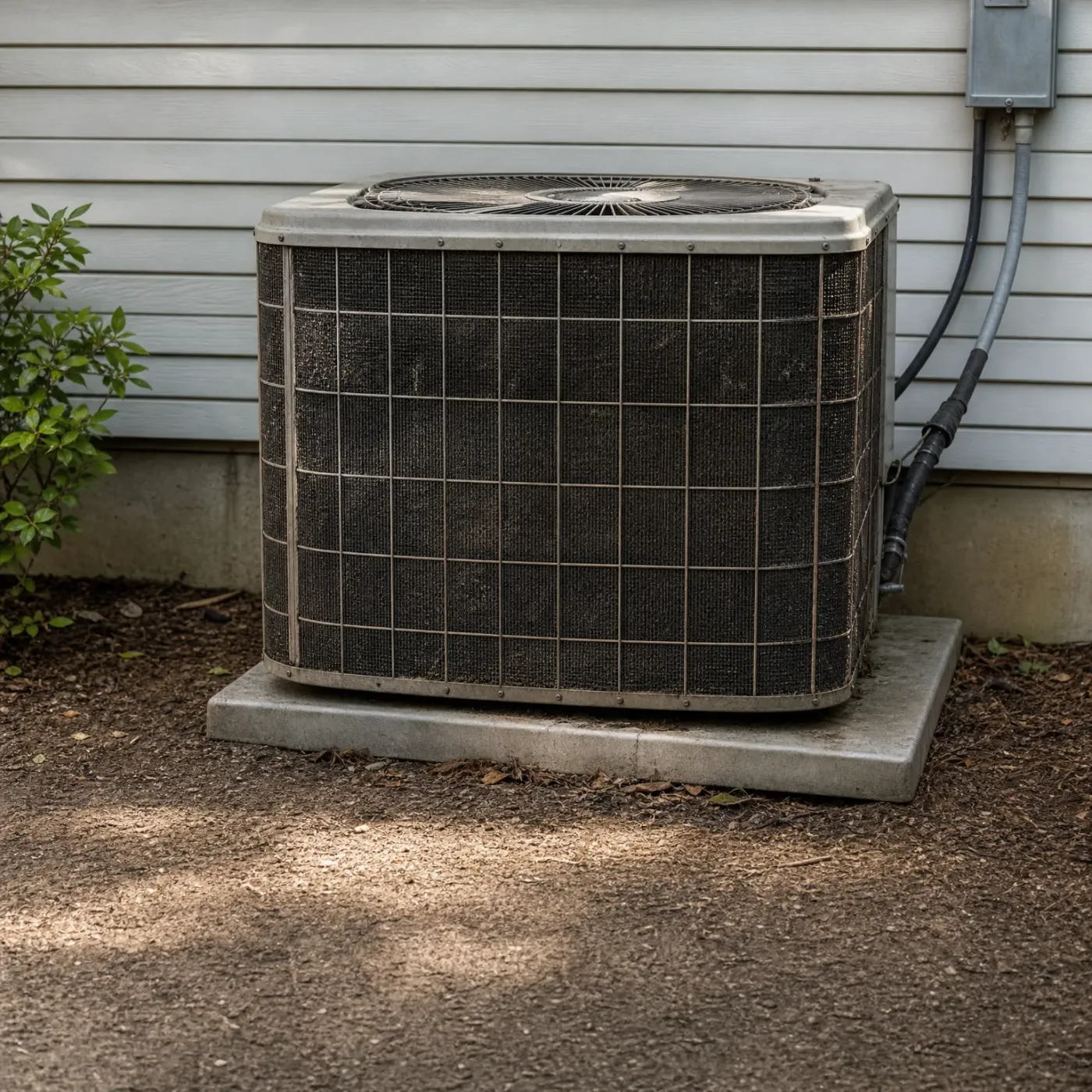
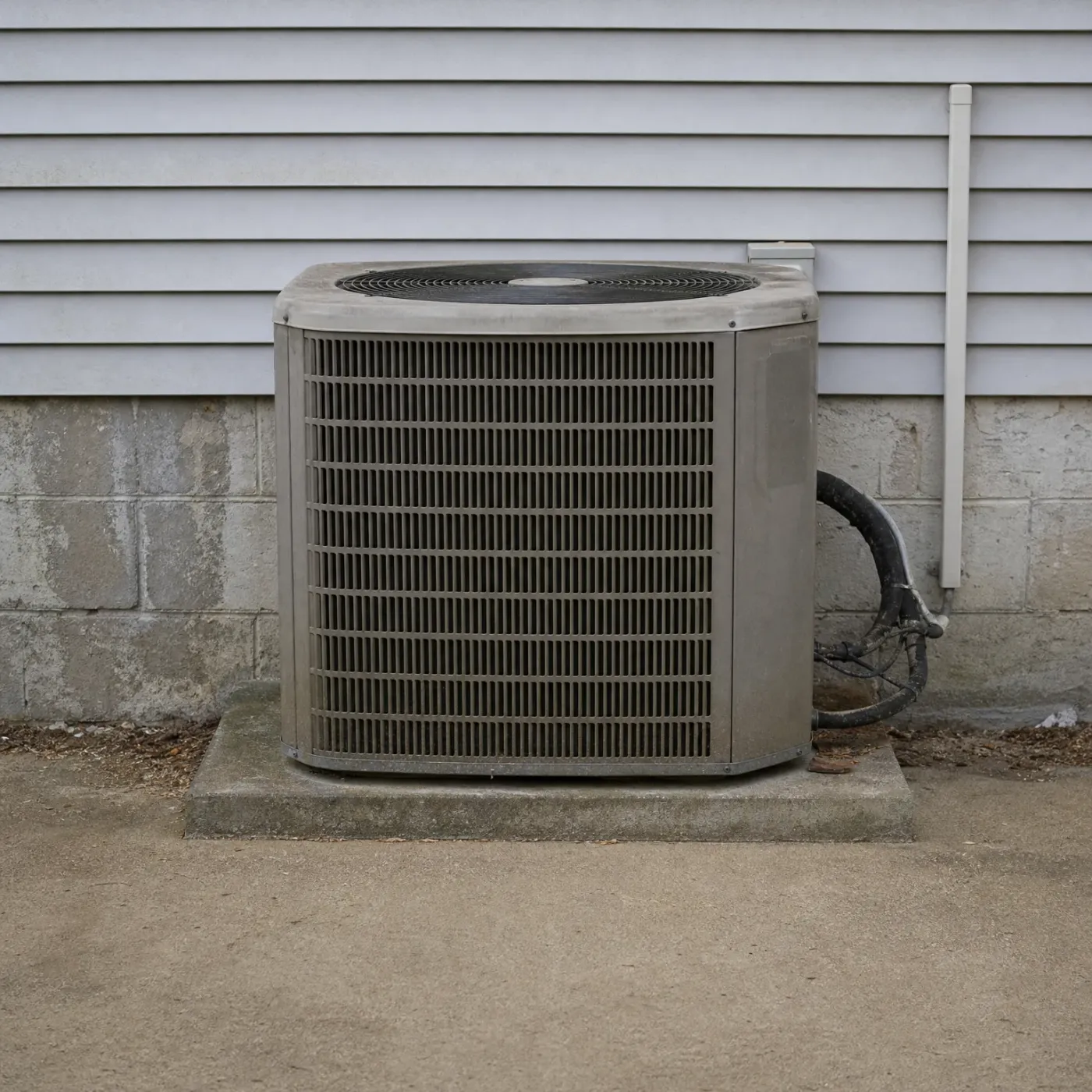
Years of dirt built up on the cabinet and fins like this make the coil work harder to move heat, and that extra strain shows up on the indoor side too. Bare soil against the pad holds water close to the lines instead of letting it drain away.
At 13.99 cents per kilowatt-hour, running your heat pump here doesn't cost much to begin with. But a clogged line or iced coil can make it run longer to keep up, and that shows up on your bill before you ever spot the water on the floor.
EIA-861 2025


Water by your heat pump has one of three sources: a clogged condensate line, a cracked drain pan, or coil ice melting faster than the pan can handle. All three show up the same way, as a puddle or a stain near the indoor unit, so the only way to know which one you have is to check the line, the pan, and the coil in order. That's a job for someone who's done it before, not a guess.
A contractor who services heat pumps around Farmington through a full winter has seen all three of these fail, often on the same kind of system sitting in the same kind of closet or utility room. That's not something a page can tell you about your unit specifically, but it's the difference between a tech who checks the likely spot first and one who starts from scratch. You get matched with one licensed, local contractor, not a handful of companies competing for the job, so you explain the problem once and get one diagnosis back.
The water itself isn't the damage. What it reaches is: the subfloor underneath it, the carpet it soaks into, the wall it runs down if the unit sits against one. None of that gets better by waiting through the rest of the season. Once the cause is found, whether it's a clog that needs clearing, a pan that needs replacing, or ice that points to a bigger problem with the outdoor coil, the fix is usually straightforward. Finding out which one you have is the part worth getting right.
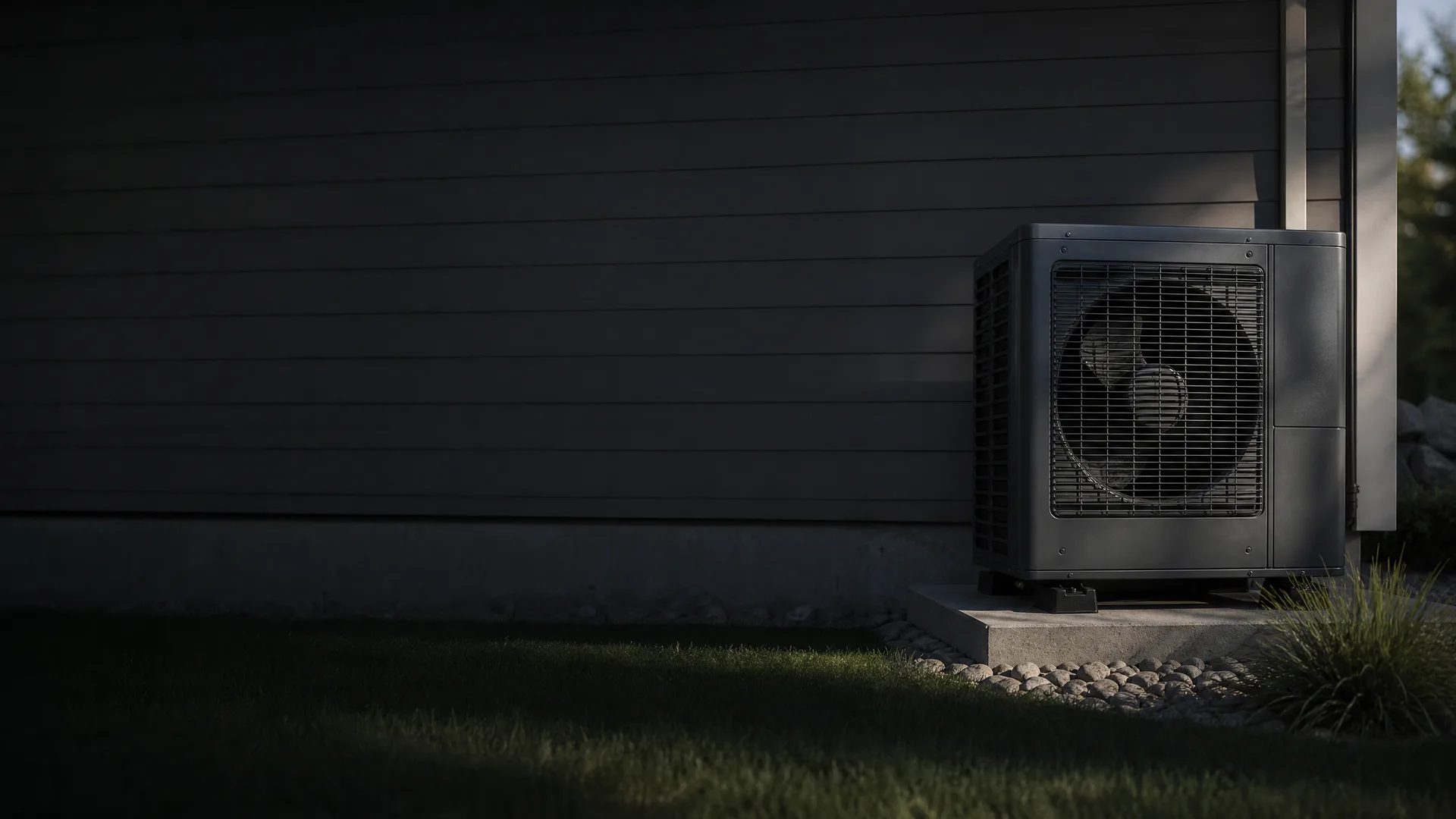
A licensed pro who repairs heat pumps in St. Francois County gets your request.