Tell us about the job
Takes about a minute. No obligation.
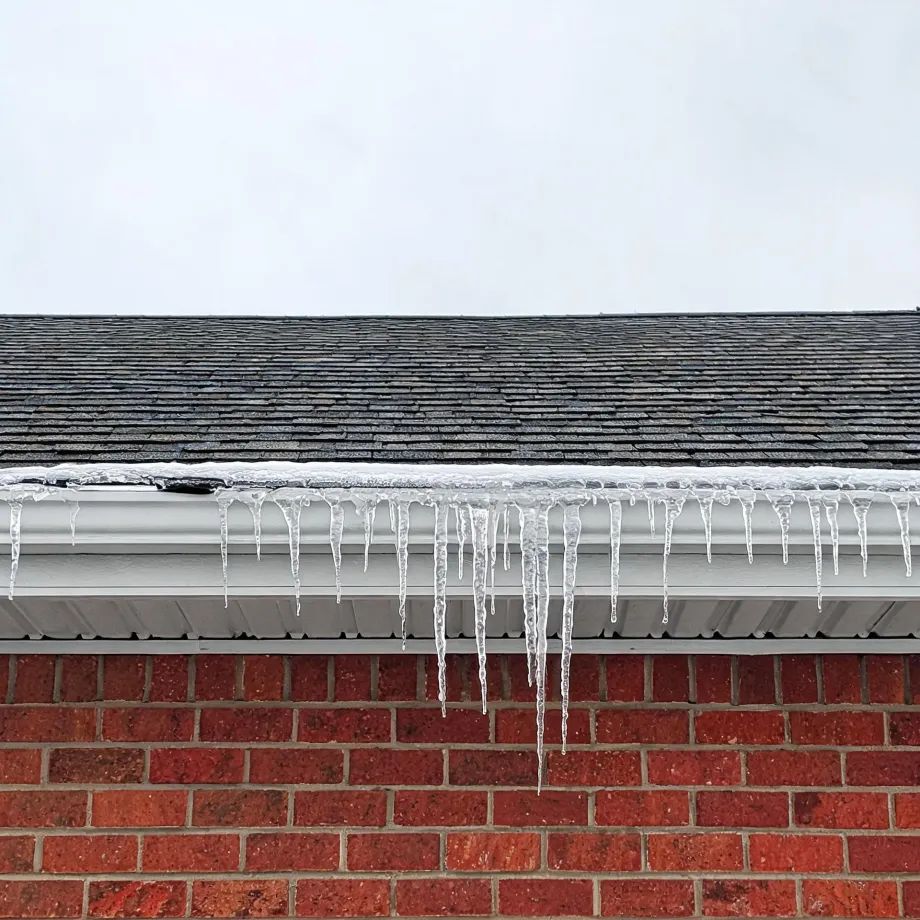
Sizing a heat pump for this county means working out how hard it has to perform on the coldest days of a long heating season, not just whether it can move enough heat on a mild afternoon. Homes in Pettis County, MO run heat about seven months a year, from October through April. A heat pump's capacity drops as the outdoor temperature drops, so the weeks at the bitter end of that stretch are where an undersized unit runs continuously and still cannot hold the setpoint. The contractor's load calculation has to pin down that gap and specify back-up heat to cover it, or the homeowner discovers the shortfall in January.
Ductwork laid down for a furnace and window units was not designed around the airflow a heat pump needs, and in Pettis County that gap shows up on the quote before the new equipment is ever specified. Half the homes in Pettis County, Missouri were built in 1974 or earlier (2020-2024 ACS 5-year). A contractor pricing a heat pump installation here has to assess what the existing ducts can carry and whether the electrical service will support the load, because those two things determine what gets replaced beyond the unit itself. If the ducts cannot move the air the new system requires, resizing them is part of the job.
What a Heat Pump Installation Puts in Your Home
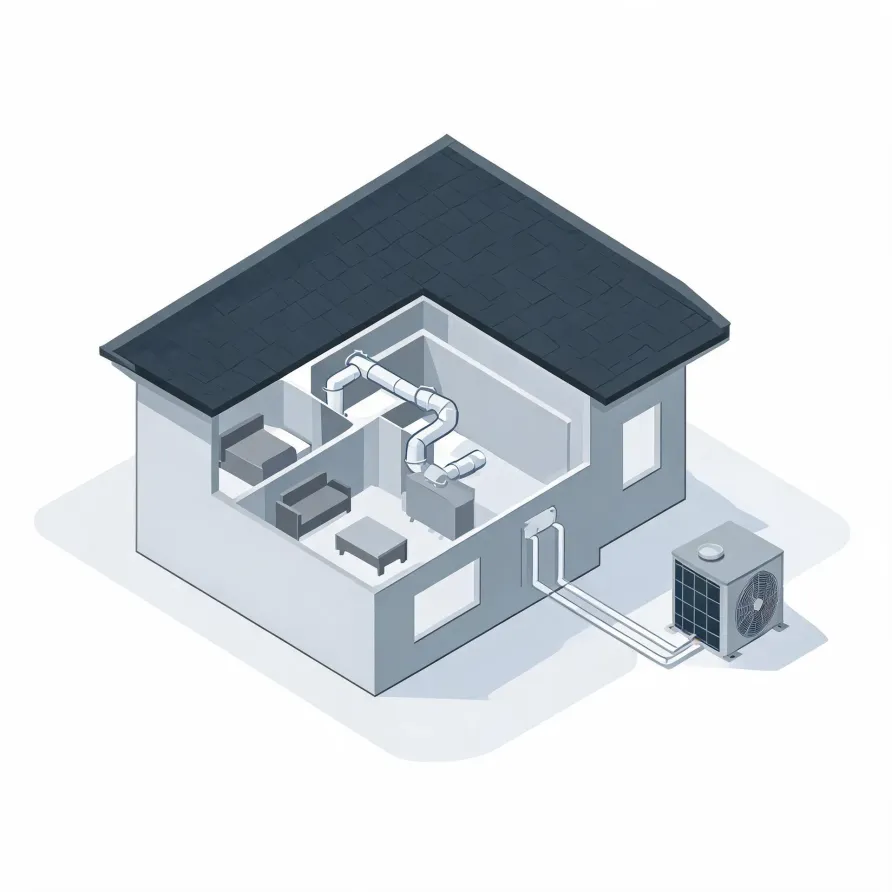
The outdoor unit sits outside the house, usually on a pad beside the foundation, and holds the compressor and the coil that exchange heat with the outside air. The indoor air handler mounts inside, often in a utility closet or attic, and moves conditioned air through the home. These two units are the core of what a contractor installs.
A refrigerant line set runs between the outdoor and indoor units, carrying refrigerant through insulated copper tubing along the exterior wall or through a chase. A thermostat mounts on an interior wall and gives the homeowner control over the whole system. The condensate drain line runs from the air handler to a floor drain or outside, clearing the moisture the indoor coil pulls from the air.
The drawing shows a typical layout, and a licensed contractor determines exactly how each piece fits the conditions in your house.
Find a contractor in Pettis CountyPettis County, by the Numbers
94 severe weather events were recorded in Pettis County, Missouri between 2015 and 2024.
NOAA National Centers for Environmental Information, Storm Events Database, bulk CSV export, events 2015-01-01 through 2024-12-31.Half the homes in Pettis County, Missouri were built in 1974 or earlier (2020-2024 ACS 5-year).
U.S. Census Bureau, 2020-2024 American Community Survey 5-Year EstimatesPettis County, Missouri holds 18,673 housing units (2020-2024 ACS 5-year).
U.S. Census Bureau, 2020-2024 American Community Survey 5-Year EstimatesOwners occupy 69.1% of the occupied homes in Pettis County, Missouri (2020-2024 ACS 5-year).
U.S. Census Bureau, 2020-2024 American Community Survey 5-Year EstimatesSevere Weather Events in Pettis County
Weather in Pettis County puts real demands on heating and cooling equipment, and those demands shape what a heat pump here needs to handle year after year. A contractor sizing and installing equipment for this area works from local conditions, not national averages.
94 severe weather events, 2015–2024. Source: NOAA National Centers for Environmental Information, Storm Events Database.