Tell us about the job
Takes about a minute. No obligation.
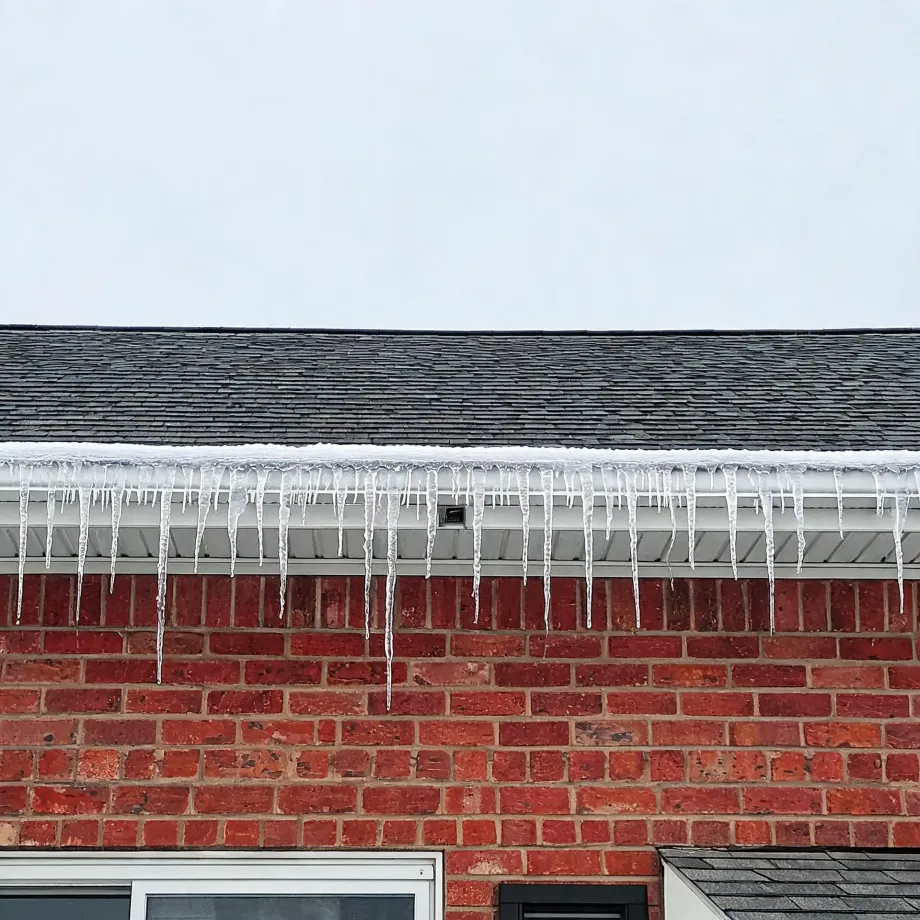
Sizing a heat pump for Dunklin County starts with what the coldest months actually ask of it. Homes in Dunklin County, MO run heat about seven months a year, from October through April. As outdoor temperatures drop, a heat pump's output drops with them, and a system that is close enough in mild weather falls short when the season presses hardest. A contractor calculating the load here also has to settle the back-up heat question before the quote is final, because a long heating season gives an undersized system repeated chances to fall behind.
Ductwork laid down for one generation of equipment and pressed into service for the next rarely fits the new load without adjustment. Half the homes in Dunklin County, Missouri were built in 1972 or earlier (2020-2024 ACS 5-year). A heat pump going in today draws on runs that were never designed around it, and a contractor pricing the job has to pull covers, measure airflow, and check the electrical service before the unit itself enters the conversation. What the ducts can carry, and what the panel will support, are the two questions that set the scope.
What a Heat Pump Install Covers, Piece by Piece
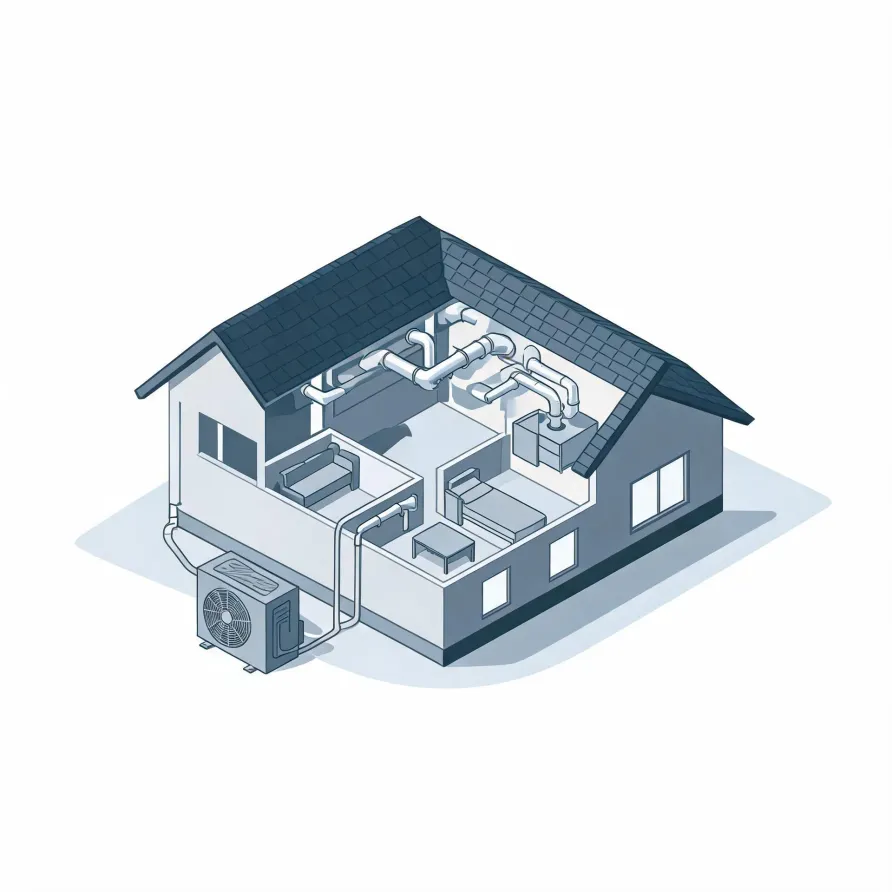
The outdoor unit sits on a pad beside the house and holds the compressor and the coil that pulls heat from outside air. The indoor air handler mounts inside, often in a utility closet or basement, and pushes conditioned air into the living space. Together these two units do the system's main work.
A refrigerant line set runs between the outdoor and indoor units, connecting them through a small penetration in the wall. A thermostat goes on an interior wall where it can read the home's air accurately and give the homeowner control over the whole system.
The drawing shows the general layout of these components, and a licensed contractor determines exactly how each one is positioned and connected in your specific house.
Find a contractor in Dunklin CountyDunklin County, by the numbers
111 severe weather events were recorded in Dunklin County, Missouri between 2015 and 2024.
NOAA National Centers for Environmental Information, Storm Events Database, bulk CSV export, events 2015-01-01 through 2024-12-31.Half the homes in Dunklin County, Missouri were built in 1972 or earlier (2020-2024 ACS 5-year).
U.S. Census Bureau, 2020-2024 American Community Survey 5-Year EstimatesDunklin County, Missouri holds 13,447 housing units (2020-2024 ACS 5-year).
U.S. Census Bureau, 2020-2024 American Community Survey 5-Year EstimatesOwners occupy 62.3% of the occupied homes in Dunklin County, Missouri (2020-2024 ACS 5-year).
U.S. Census Bureau, 2020-2024 American Community Survey 5-Year EstimatesSevere Weather Events in Dunklin County
Dunklin County's climate puts real demands on heating and cooling equipment over time. How hard a heat pump works, and how long it lasts, is a local question shaped by local conditions.
111 severe weather events, 2015–2024. Source: NOAA National Centers for Environmental Information, Storm Events Database.