Tell us about the job
Takes about a minute. No obligation.
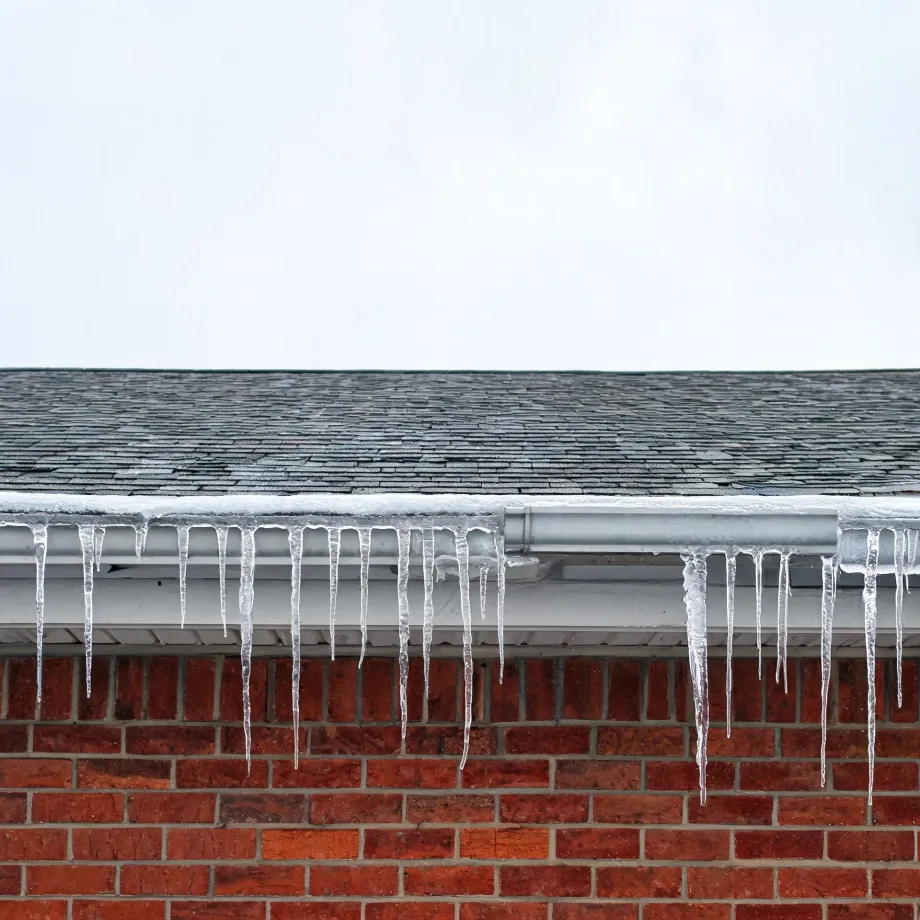
Sizing a heat pump for this area means working out how far outdoor temperatures drop and how often the refrigerant cycle loses ground to the cold, because that is the point where the system falls back on resistance heat. Homes in Boone County, MO run heat about seven months a year, from October through April. A contractor quoting an install here has to treat backup heat as a design question, not an afterthought, and that changes which equipment gets specified and how the system is configured. The heat exchanger and the compressor both carry a long heating load, and an undersized system will show wear on those parts well before a properly matched one would.
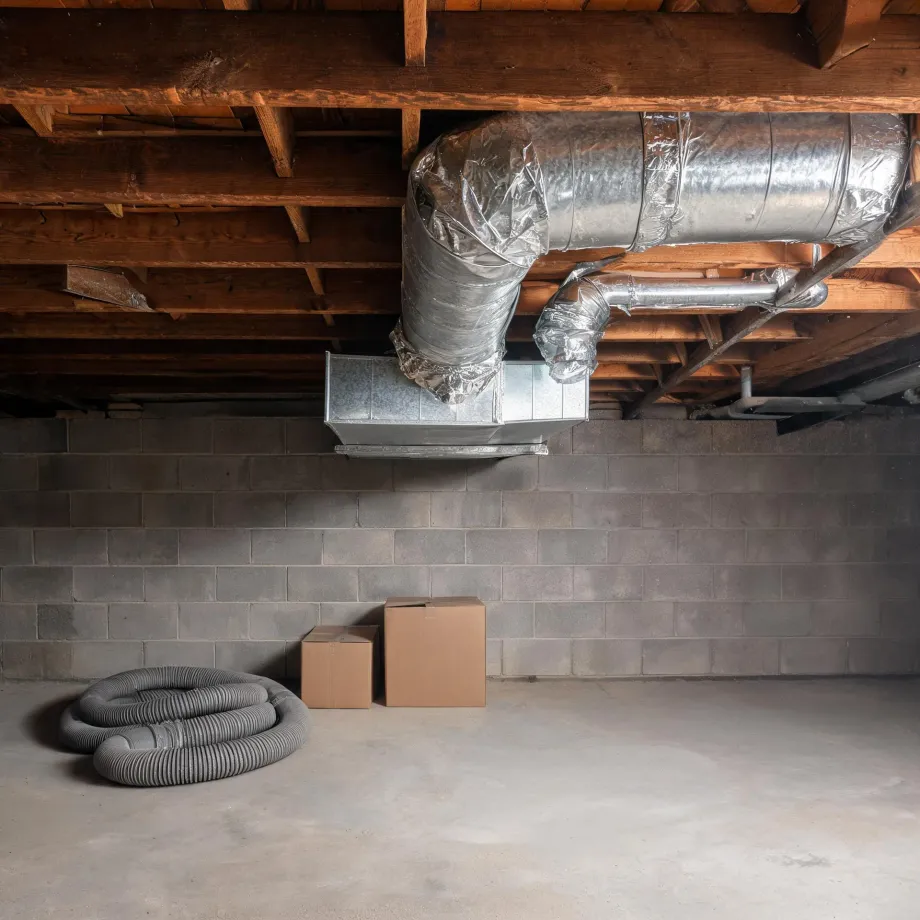
Ductwork sized for a different era of heating is what a contractor opens a heat pump installation around in much of this county. Half the homes in Boone County, Missouri were built in 1991 or earlier (2020-2024 ACS 5-year). That means a share of the housing stock was ducted for systems whose airflow requirements differ from what a heat pump delivers, and whether the existing runs can carry the new load is the question that shapes the quote more than the unit selection does. Electrical service gets checked too, but ductwork is where the scope either holds or grows.
What a Heat Pump Installation Puts in Your Home
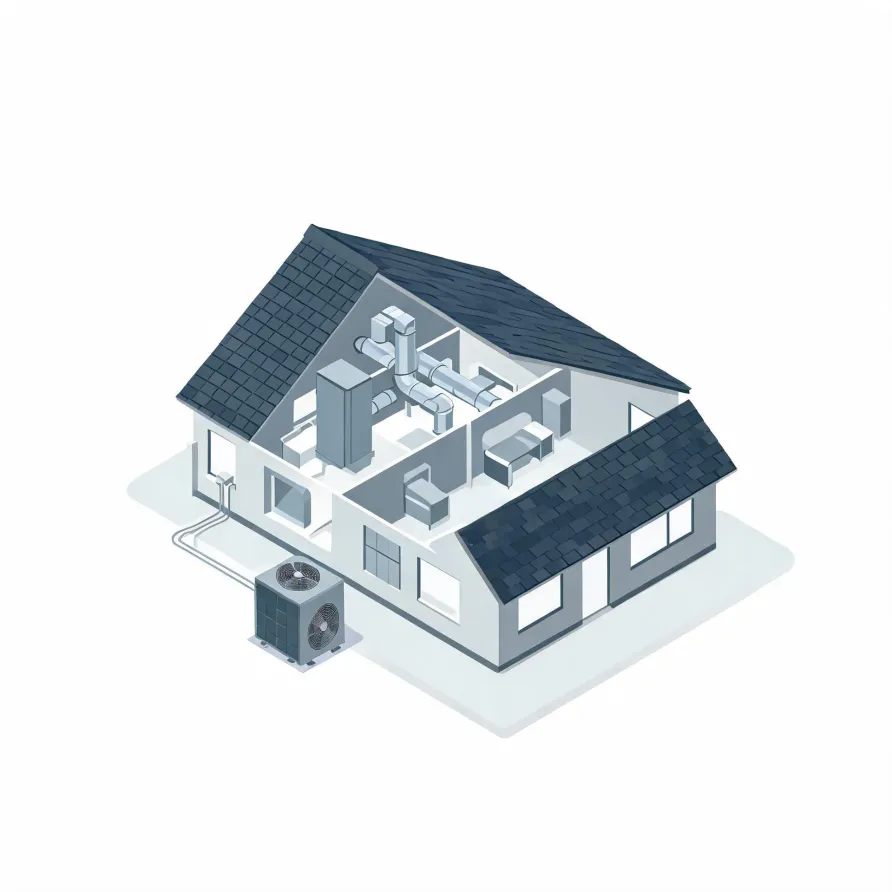
The outdoor unit is the piece most homeowners notice first. It sits on a pad beside the house and holds the compressor and the outdoor coil, which together do the core work of moving heat between inside and outside. The indoor air handler mounts in a utility space, a closet, or an attic and pushes conditioned air through the house.
A refrigerant line set runs between the two units, carrying the fluid that links them into one system. A thermostat mounts on an interior wall and acts as the control point, telling the system when to run and in which direction.
The drawing here shows a typical layout, and a licensed contractor determines exactly how these pieces come together in your home.
Find a contractor in Boone CountyBoone County, by the numbers
84 severe weather events were recorded in Boone County, Missouri between 2015 and 2024.
NOAA National Centers for Environmental Information, Storm Events Database, bulk CSV export, events 2015-01-01 through 2024-12-31.Half the homes in Boone County, Missouri were built in 1991 or earlier (2020-2024 ACS 5-year).
U.S. Census Bureau, 2020-2024 American Community Survey 5-Year EstimatesBoone County, Missouri holds 81,675 housing units (2020-2024 ACS 5-year).
U.S. Census Bureau, 2020-2024 American Community Survey 5-Year EstimatesOwners occupy 57.7% of the occupied homes in Boone County, Missouri (2020-2024 ACS 5-year).
U.S. Census Bureau, 2020-2024 American Community Survey 5-Year EstimatesSevere Weather Events in Boone County
Weather in this part of Missouri puts real demands on heating and cooling equipment, and those demands shape what a heat pump here needs to handle over its working life. A chart of recorded severe weather events puts that workload in concrete terms for Boone County specifically.
84 severe weather events, 2015–2024. Source: NOAA National Centers for Environmental Information, Storm Events Database.