Tell us about the job
Takes about a minute. No obligation.
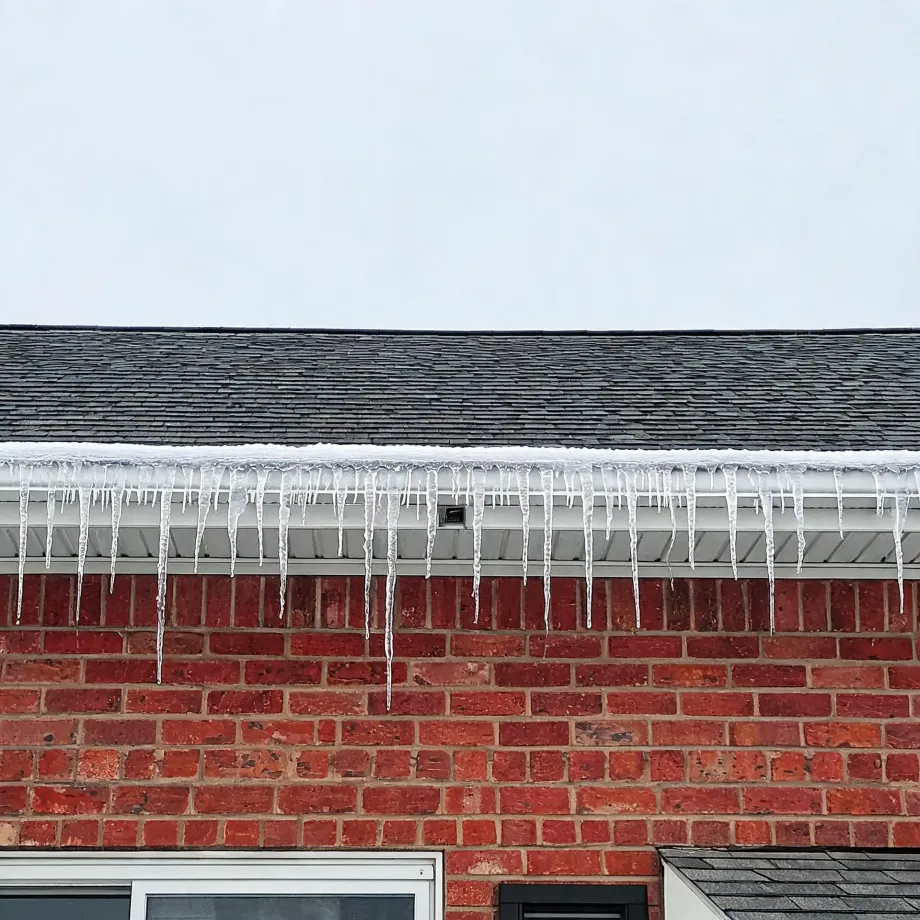
Sizing a heat pump for Bates County means working out what the system is being asked to do when outdoor temperatures fall hardest, not just on an average winter day. Homes in Bates County, MO run heat about seven months a year, from October through April. A heat pump loses heating capacity as the outdoor coil gets colder, so the coldest weeks of that run are where an undersized unit falls short and the backup resistance strip takes over. A contractor quoting the job has to run a proper load calculation for the house envelope and then establish the lowest temperatures the unit will face before recommending a model and a backup stage. Get that wrong at installation and no amount of servicing fixes it later.
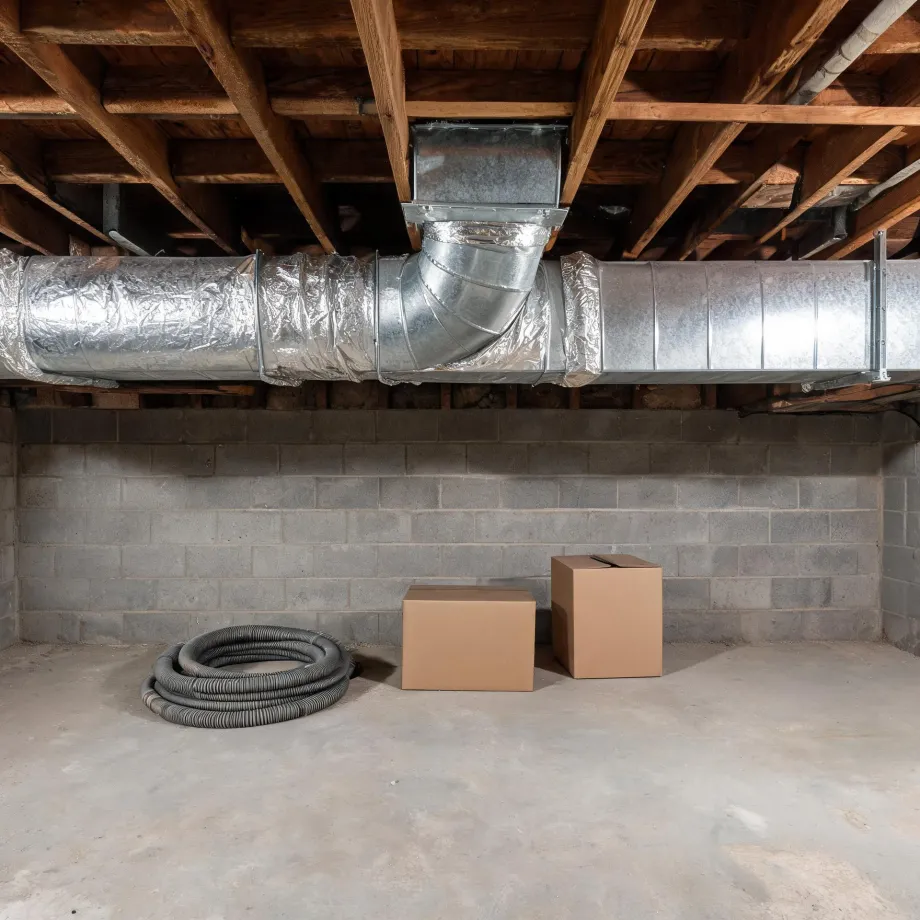
Ductwork laid out for older heating equipment carries assumptions about airflow, return placement, and static pressure that a heat pump does not share. Half the homes in Bates County, Missouri were built in 1976 or earlier (2020-2024 ACS 5-year). A contractor installing a heat pump in a house built for earlier systems has to assess whether the existing duct layout will move conditioned air the way the new unit needs it to, and whether the electrical service will carry the load. Those two findings decide the scope. The equipment selection comes after.
What a Heat Pump Installation Covers
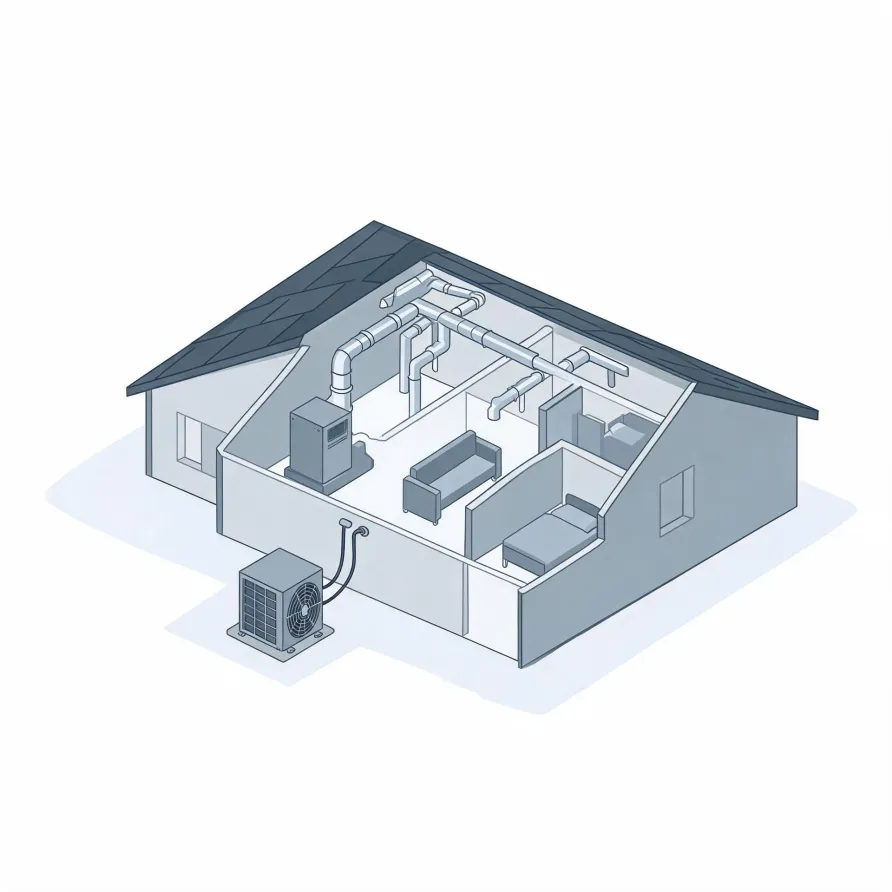
The outdoor unit sits on a pad beside the house and holds the compressor and the coil that exchanges heat with the outside air. Inside, the air handler mounts in a utility space, closet, or attic and moves conditioned air through the home. These two units are the core of what a contractor installs.
A refrigerant line set runs between the outdoor unit and the air handler, connecting the two through an exterior wall. A thermostat mounts on an interior wall and gives the homeowner control over the system. The condensate drain line runs from the air handler to a nearby drain, carrying away moisture the system pulls from the air.
The drawing shows a typical layout, and a licensed contractor determines what applies to your specific house and its existing setup.
Find a contractor in Bates CountyBates County, by the record
90 severe weather events were recorded in Bates County, Missouri between 2015 and 2024.
NOAA National Centers for Environmental Information, Storm Events Database, bulk CSV export, events 2015-01-01 through 2024-12-31.Half the homes in Bates County, Missouri were built in 1976 or earlier (2020-2024 ACS 5-year).
U.S. Census Bureau, 2020-2024 American Community Survey 5-Year EstimatesBates County, Missouri holds 7,192 housing units (2020-2024 ACS 5-year).
U.S. Census Bureau, 2020-2024 American Community Survey 5-Year EstimatesOwners occupy 74.9% of the occupied homes in Bates County, Missouri (2020-2024 ACS 5-year).
U.S. Census Bureau, 2020-2024 American Community Survey 5-Year EstimatesSevere Weather Events in Bates County
Weather in this part of Missouri puts real demands on heating and cooling equipment over its lifetime. How hard a heat pump works, and how long it holds up, is a local question shaped by local conditions.
90 severe weather events, 2015–2024. Source: NOAA National Centers for Environmental Information, Storm Events Database.